Author

Tim Roberts

Browsing

When Joe Cocker put his signature spin on “A Whiter Shade of Pale,” he did more than just cover a classic—he reimagined it. Originally released by Procol Harum in 1967, the song was already drenched in mystery and melancholia. But in Cocker’s hands, it becomes a completely new experience: raw, weathered, and deeply soulful.

Joe Cocker had a voice like no other—gravelly, aching, and completely uninhibited. Where Procol Harum’s version floated like a dream through its baroque organ lines, Cocker’s rendition grounds the song in a rough-edged reality. He doesn’t just sing the lyrics—he seems to live them. Every word drips with emotion, carrying the weight of life’s disappointments and loves lost.

Cocker’s version doesn’t simply replicate the original arrangement. Instead, he slows the tempo, strips back the layers, and leans into bluesy instrumentation. The result is something more intimate and confessional—less psychedelic poetry and more soul testimony. A subtle gospel influence simmers beneath the surface, giving the song a spiritual gravitas that’s entirely his own.

“A Whiter Shade of Pale” may not be the most commonly cited Joe Cocker hit, but it’s a perfect showcase of what made him so special. He had an uncanny ability to transform well-known songs into personal statements. Whether it was The Beatles’ “With a Little Help from My Friends” or this brooding ballad, Cocker didn’t cover songs—he possessed them.

There’s something timeless about Cocker’s take on “A Whiter Shade of Pale.” It reminds us that great music isn’t about perfection—it’s about truth. And in a world of polished performances and auto-tuned vocals, Cocker’s raw sincerity feels more powerful than ever.

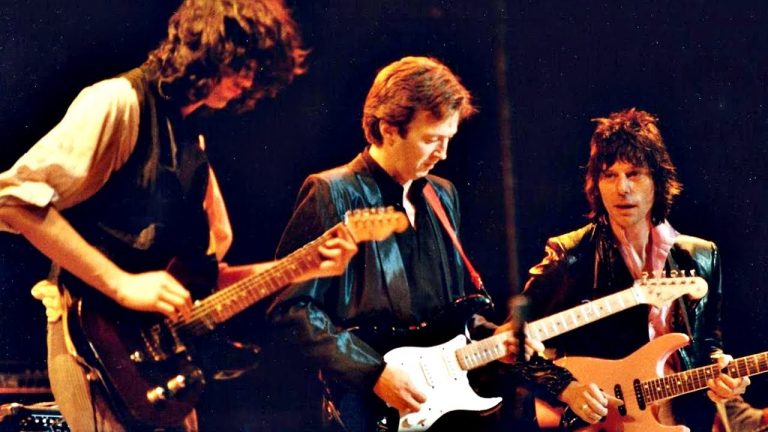
In a moment that still gives rock fans goosebumps, a once-in-a-lifetime performance unfolded in 2009 when guitar legends Jeff Beck and Jimmy Page joined forces with Flea of Red Hot Chili Peppers and the mighty Metallica to perform the classic rock ‘n’ roll anthem “Train Kept A-Rollin’.” It wasn’t just a jam session—it was a full-blown supergroup explosion that felt like a seismic shift in music history.

The historic performance took place during the 25th Anniversary celebration of the Rock and Roll Hall of Fame at Madison Square Garden in New York City. The event was already a star-studded affair, featuring some of the most iconic names in the business—but the lineup for this particular number was on another level entirely.

The Song: “Train Kept A-Rollin’”

Originally recorded in the 1950s by Tiny Bradshaw and famously reimagined by The Yardbirds (where both Beck and Page played), “Train Kept A-Rollin’” is a rock standard with a rebellious soul. Its relentless drive and blues-rooted riffs made it the perfect vehicle for a multi-generational celebration of rock evolution.

This wasn’t just a novelty act. It was a symbolic passing of the torch, with Beck and Page representing the golden age of British rock, Metallica flying the flag for modern metal, and Flea injecting contemporary flavor and stage chaos. Each brought their unique styles, yet the chemistry was undeniable. The result? A molten mix of swagger, solos, and pure sonic adrenaline that honored the past while electrifying the present.

Fans and critics alike have hailed this performance as one of the standout moments of the Rock Hall concerts. It was raw, spontaneous, and steeped in history—a reminder of rock’s boundless energy and collaborative spirit. Watching Beck and Page trade licks while Flea throws himself into the rhythm and Metallica grinds out the groove… it’s the kind of magic you simply can’t script.

In the ever-growing anthology of legendary live performances, “Train Kept A-Rollin’” from 2009 stands as a monumental tribute to rock’s enduring power. It wasn’t just a song—it was a celebration, a communion, and a glorious reminder that when legends meet, the train doesn’t just keep rollin’—it roars.


Back on June 10th, 2010, a then-unknown Ed Sheeran took part in Station Sessions—a grassroots initiative aimed at bringing live music to the heart of busy British train stations. At just 19 years old, Sheeran arrived at London’s bustling St Pancras station with little fanfare and a guitar slung over his shoulder. Humble and self-effacing in a pre-performance interview, he downplayed any dreams of stardom, admitting, “My music isn’t for everyone,” before adding that achieving success would simply make him “a very lucky man.”

Little did he—or anyone watching—know just how dramatically his life was about to change.

Fast forward just over a year, and Sheeran’s debut album + (pronounced “Plus”) hit shelves in September 2011, soaring to number one in the UK and cementing his arrival on the global music scene. But at the time of the St Pancras performance, Ed was still grinding. He had only independently released a handful of EPs, none of which had charted. That performance in the station concourse wasn’t just another gig—it was a pivotal moment where his music reached ears outside the London pub circuit.

The set opened with a haunting rendition of the 19th-century spiritual “Wayfaring Stranger,” delivered with maturity far beyond his years. Sheeran then chatted with a nearby interviewer, explaining his fascination with loop pedals—a tool that would soon become a hallmark of his live act. The real magic came in how he blurred genres, effortlessly gliding from tender folk ballads to sharp, rhythmic verses steeped in rap influences. He even invited the modest crowd to participate, encouraging singalongs and forming a tight circle for an unplugged number. This early glimpse showcased the charisma and musical versatility that would later define his stadium shows.

Fast forward to 2017, and Sheeran—now a household name—briefly returned to his street performance roots. In a spontaneous busking session, he stunned passersby by casually breaking into “You Need Me, I Don’t Need You” on a London street. This time, however, things were different. The crowd that gathered wasn’t skeptical or uninterested—they were starstruck, instantly recognizing the global superstar in front of them. His third album Divide was just about to drop and would go on to become the top-selling album worldwide that year.

Despite the meteoric rise, there was a striking continuity between the fresh-faced teen of 2010 and the seasoned hitmaker of 2017. His joy in performing live, particularly in raw, intimate spaces, hadn’t diminished. The difference now? Every fan in the crowd already knew the lyrics by heart.

Ed Sheeran’s musical journey—from echoing train stations to sold-out arenas—stands as a testament to authenticity, hustle, and a love for the craft that never fades. And if those surprise busking sessions are anything to go by, we haven’t seen the last of Ed Sheeran on the street corner yet.

In the digital age, emerging musicians often rise to fame by busking on the streets and reaching audiences through YouTube. It’s rare, however, to see global rock icons return to street performances — but U2 did just that during their appearance on The Tonight Show Starring Jimmy Fallon.

Fallon is known for orchestrating spontaneous, off‑the‑cuff moments with his guests. So when U2 visited the show, he dressed the band in elaborate disguises and stationed them undercover at New York’s 42nd Street subway platform. Unbeknownst to commuters, a hidden camera inside Fallon’s sunglasses—humorously dubbed the “U2cam”—captured the entire undercover busking act.

Before launching into live music, Fallon, donning his own mayor‑of‑Manhattan garb, announced the “native New Yorkers” as local street performers available to entertain at weddings, parties, or bar mitzvahs. The scene was set—and no one suspected the legends were about to play themselves into oblivion.

The set began with the iconic “I Still Haven’t Found What I’m Looking For.” For the first minute, passersby paid little attention—mall‑rats in motion. But Bono’s look-in‑the‑raw vocals inevitably began to draw a small crowd . After gauging the crowd, Fallon whispered, “Plan B,” revealed the band’s identity, and the assembled crowd erupted in cheers—on their way home from work, New Yorkers didn’t expect a surprise concert in the subway.

The show closed with an intimate, unplugged rendition of “Desire,” with The Edge joining in as clapping and sing‑along erupted—a once‑in‑a‑lifetime treat for commuters.

Kelly Clarkson treated fans to a heartwarming surprise during her Chemistry residency at Planet Hollywood in Las Vegas — a live duet with her 9-year-old daughter, River Rose. The mother-daughter pair took the stage dressed in elegant gowns, performing a touching rendition of Clarkson’s upbeat hit “Heartbeat Song.”

This special duet took place during the penultimate night of Clarkson’s Vegas run and was clearly a highlight for both the audience and Clarkson herself. As the two locked eyes and sang together, their bond was unmistakable — full of joy, connection, and shared love for the music.

Clarkson revealed to the crowd that the song choice was all River Rose’s idea. “She’s loved this song since she was a baby,” Clarkson explained. “When I asked her what she wanted to sing on tour, she didn’t even hesitate.” River even chose her own outfit for the big moment and nailed soundcheck earlier that day, impressing her proud mom.

During the performance, River Rose confidently joined in on the verses and bridge, her sweet vocals blending with Clarkson’s powerhouse voice as the band dropped out to spotlight the tender moment. The performance video quickly went viral, racking up over 1.5 million views — and counting.

Fans flooded the comments with emotional reactions: “A memory she’ll never forget — singing on stage with her mom,” one viewer wrote. Another gushed, “A star is born! Kelly gave her daughter the wings to fly.”

And the sweet family moments didn’t end there. The next night, River Rose returned to the stage — this time joined by her younger brother, 7-year-old Remington Alexander, adding another layer of adorable to Clarkson’s already emotional finale.

Clarkson shares River and Remington with ex-husband and former manager Brandon Blackstock. The pair, married in 2013, finalized their divorce in 2022 after nearly nine years of marriage. Despite the challenges, Clarkson has remained open about co-parenting and cherishing her role as a mom.

“Heartbeat Song,” originally released as the lead single from Clarkson’s 2015 Piece by Piece album, marked a major success for the pop icon. Certified Platinum in the U.S., the track topped the Dance Club Songs chart and landed high placements on global charts — a fitting anthem for this unforgettable family moment.

The encore began like so many before it—lights low, crowd humming with excitement, the energy of 66,000 fans vibrating through the arena. Robbie Williams stepped back on stage, mic in hand, ready to close out the night.

But this time, he didn’t walk out alone.

Beside him, barefoot and glowing in a simple white dress, was his wife of 15 years, Ayda Field Williams.

Then, with a cheeky smile and a soft voice, Robbie leaned into the mic:

“She thinks I forgot her birthday… but how could I ever?”

🎶 A Song for One, Shared with Thousands

As the first chords of “Something Stupid” floated through the air—the classic duet once made famous by Nancy and Frank Sinatra and later reimagined by Robbie himself—the audience realized they weren’t just witnessing a duet.

They were watching a moment. A memory being made.

This wasn’t showmanship. It was sincerity, dressed in song.

💌 Not a Spa Day—A Song and a Stadium

Earlier in the day, Ayda had posted nothing. No birthday selfies. No glamorous celebrations. Sources close to the couple said she planned to “keep it quiet” this year, with Robbie on tour and the kids in tow.

But Robbie had been planning something far better than a bouquet or dinner reservation.

Backstage, their four children—Teddy (11), Charlie (9), Coco (5), and Beau (3)—sat quietly watching in oversized headphones, as their parents turned the biggest stage in Britain into something achingly intimate.

Midway through the song, Robbie turned to Ayda and said:

“This is your gift. No fancy meal, no spa day. Just this moment… and 66,000 people to prove I remembered.”

Tears on Stage, Cheers in the Stands

By the final verse, Ayda’s eyes welled up. Her voice softened. Her hand found Robbie’s. And when the music ended, they embraced—not with the polish of performance, but with the unfiltered warmth of something deeply real.

The audience? Unraveled.

Social feeds exploded. One fan wrote:

“I’ve seen Robbie live more times than I can count. But tonight? I felt something. That was love—not lyrics.”

Another post read:

“Ayda, you just got the most beautiful birthday serenade ever. He didn’t just remember — he made the whole world remember with him.”

👨‍👩‍👧‍👦 From Pop Star to Family Man

Robbie Williams' wife, Ayda Field, describes 'shame' over using a surrogate

In recent years, Robbie has slowly traded tabloid headlines and outrageous antics for something more grounded: fatherhood, marriage, meaning. And during this stop on his 2025 Britpop Tour, he proved that sometimes, the most unforgettable performances come not from the pyrotechnics—but from the heart.

The final night of Bruce Springsteen’s “Long Road Home” tour was already soaked in nostalgia. Held at New Jersey’s MetLife Stadium—Springsteen’s stomping ground—the show was a thunderous celebration of a career that defined American rock. Nearly 90,000 fans came together to shout every lyric, sway through memories, and say goodbye.

But in the final moments of this storied journey, Bruce gave them something no one expected—something that wasn’t about goodbye at all.

As the house lights dimmed and the band took a breath, Bruce stepped alone into the center of the stage. His guitar rested quietly on his shoulder, and for a few long seconds, he said nothing.

Then, his voice cracked the silence:
“There’s someone I’ve missed on every stage for the last fourteen years. But tonight… I want to play one last song with him.”

Suddenly, a single spotlight lit the far-left side of the stage. There, empty but glowing, stood the mic stand where Clarence Clemons—the “Big Man” and Bruce’s irreplaceable musical brother—had once stood for decades.

The band began “Jungleland.”

Bruce sang the opening lines with a deep, lived-in ache, his voice heavy with memory. When it came time for the iconic sax solo, the stadium screens filled not with flashy effects, but with golden footage—Clarence, in his glory days, playing that very solo. The crowd erupted, voices breaking with emotion.

And then, from the shadows, a new figure emerged: Jake Clemons, Clarence’s nephew and now saxophonist in the E Street Band. He walked to the spotlight carrying Clarence’s actual saxophone. As he raised it to his lips, the air seemed to freeze.

The solo didn’t try to mimic the past—it expanded it. Jake’s tone was tender, faltering, then bold. It wasn’t perfect. But it was real. It was family. And in that moment, Clarence lived again—not in memory, but in legacy.

Bruce turned toward Jake with a quiet smile. A private moment in front of 90,000 people. No words were exchanged. None were needed.

When the last chord faded into silence, Bruce looked down and whispered, “We love you, Big Man.”

The crowd responded, thunderous and unified:
“Big Man!”

When legends unite, music history is made—not just on the stage, but behind the scenes as well. One of the most iconic collaborations in rock history unfolded in a deeply emotional moment: the rehearsals for “Under Pressure” featuring Queen, David Bowie, and Annie Lennox in April 1992. This wasn’t just a rehearsal. It was a meeting of musical titans, a poignant tribute, and an unforgettable piece of artistry in motion.

The setting was the lead-up to the Freddie Mercury Tribute Concert, held on April 20, 1992, at Wembley Stadium. Organized just months after Freddie’s passing, this event was more than a concert—it was a global celebration of the life, legacy, and fearless creativity of Queen’s frontman. The lineup read like a hall of fame list: Elton John, Metallica, George Michael, and more. But one of the most anticipated moments was the joint performance of “Under Pressure.”

Originally released in 1981, “Under Pressure” was the result of a spontaneous jam session between Queen and David Bowie—a rare and raw blend of creative genius. Fast forward to 1992, and with Freddie gone, it fell to Bowie and the incomparable Annie Lennox to carry the emotional weight of the song live.

The Rehearsals: Raw Emotion and Rare Footage

The rehearsal sessions were powerful. In rare backstage footage, we see David Bowie focused, introspective, his unmistakable voice echoing with both power and vulnerability. Annie Lennox, dressed in dramatic white and already embodying the theatrical spirit of the moment, sings with breathtaking emotion. Though she was stepping into a song deeply tied to Mercury’s legacy, Lennox brought her own soul to it—fierce, reverent, and utterly riveting.

Queen’s surviving members—Brian May, Roger Taylor, and John Deacon—stood steady behind them, their chemistry still potent, still powerful. These rehearsals weren’t just technical run-throughs; they were moments of reflection and tribute. Every chord, every glance, every lyric carried the weight of absence—and celebration.

When the time came to perform it live, the energy was electric. Annie Lennox stunned in her theatrical white suit and makeup, her performance balancing reverence with defiance. David Bowie, ever the chameleon, was vulnerable and commanding all at once. Together, with Queen’s unmatched musicianship, they resurrected “Under Pressure” not as a copy, but as a tribute—haunting, hopeful, and heartbreakingly beautiful.

Legacy of the Moment

Decades later, that rehearsal footage remains a powerful testament to what music can do. It bridges time, honors memory, and elevates emotion into something that reaches millions. For fans, watching Bowie and Lennox interpret a song so strongly associated with Mercury is both emotional and affirming. It proves that while artists may pass, their spirit endures through the music—and through those bold enough to carry it forward.

Adam Lambert has never been one to hold back when it comes to live performances—whether fronting Queen on the world’s biggest stages or captivating fans with his own chart-topping tracks. But one performance, filmed on the streets of Melbourne, Australia, stands out for its raw emotional power and stripped-down intimacy.

In this unique version of his 2009 hit “Whataya Want from Me,” Lambert stepped away from the bombastic production and presented the song as a gentle piano ballad. Accompanied by just a single pianist, Lambert transformed the track into something deeply personal—proving once again that it’s his voice and emotion that truly drive the music. The video, uploaded by YouTuber Rainscapes in August 2012, was part of Channel V’s Guerilla Gig series, capturing surprise pop-up performances in public spaces.

Originally released as a single on November 20, 2009, “Whataya Want from Me” became a major hit for Lambert, especially in Australia, where it climbed to number four on the charts. Considering its popularity down under, it made perfect sense for him to include the song in his Melbourne set.

While the polished studio version is known for its rock edge, hearing the song in this raw, acoustic form is almost like hearing it for the first time. The emotional weight of the lyrics is amplified, and Lambert’s powerhouse vocals—full of both vulnerability and strength—shine in a whole new light.

Fans might also remember another remarkable rendition of the song: his Live from YouTube Space performance in New York City. Backed by a tight three-piece band, Lambert delivered a more energetic yet equally captivating version that had fans praising his consistency and vocal power. “He sounds just as incredible live as he does on the album,” one fan wrote. Another simply called him “a vocal beast.”

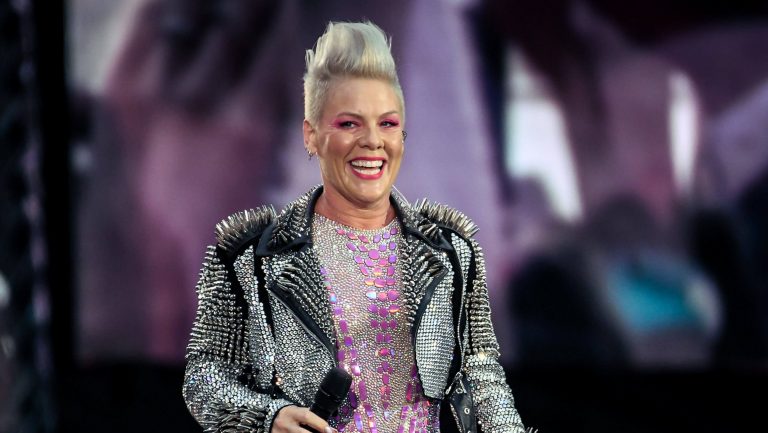
Few may know that the song actually has roots in another pop star’s work. “Whataya Want from Me” was penned by Max Martin, Pink, and Karl Schuster. Pink had originally recorded it for her 2008 album Funhouse, but it didn’t make the final cut. Fortunately, Lambert made it his own—and it went on to become the defining single from his debut album For Your Entertainment.

Since then, Lambert has performed the song in countless ways: fully produced, acoustic, solo, and with a band. According to Setlist.fm, it’s his most frequently performed solo track, having graced the stage nearly 300 times—a testament to its enduring resonance with fans and with Lambert himself.

At its core, “Whataya Want from Me” continues to be a powerful reminder of Adam Lambert’s artistry, and this Melbourne street version shows that sometimes, all you need is a voice, a piano, and a bit of heart to make magic happen.

What do you get when you mix the velvet-rich baritone of Sir Tom Jones with the vocal firepower of Helene Fischer? A performance that’s equal parts sultry, powerful, and completely unforgettable. That magic moment happened on The Helene Fischer Show in 2020, where two musical forces collided for a red-hot rendition of Tom Jones’ iconic hit “Sexbomb.”

From the moment they hit the stage, it was clear this wasn’t going to be just another duet. Backed by a full live band and a mesmerizing light display, the atmosphere was electric—almost cinematic. Helene and Tom didn’t just sing the song—they owned it, trading flirtatious glances, powerhouse notes, and undeniable chemistry. It was a reminder that Tom Jones still commands the stage like few others, and that Helene Fischer is more than just a pop star—she’s a vocal powerhouse in her own right.

Viewers around the world were left stunned. Social media lit up with praise: “Who is this woman?! Her voice just knocked me out!” wrote one new fan, clearly discovering the magic of Fischer for the first time. And that’s not surprising—Helene has sold over 15 million records and has built a massive following throughout Europe with her blend of pop, Schlager, and theatrical flair.

As for Tom Jones, the Welsh icon needs no introduction. With a career that’s spanned more than six decades, he remains one of music’s most recognizable and beloved voices. From his breakout hits in the 1960s like “It’s Not Unusual” and “She’s A Lady,” to his continued success as a touring artist and television personality, Jones has done it all. And yet—at 80+, he’s still bringing that unmistakable swagger to the stage, proving that legends don’t fade… they just evolve.

Beyond the music, Tom Jones has also charmed audiences on screen. He’s appeared in films like Pleasure Cove and famously played a hilariously exaggerated version of himself in Tim Burton’s cult classic Mars Attacks! These days, you’ll also find him mentoring aspiring artists as a coach on The Voice UK, passing on the wisdom and soul of his incredible journey.

But back to “Sexbomb.” This performance wasn’t just a throwback—it was a celebration of timeless talent, intergenerational collaboration, and the kind of musical chemistry that gives you chills. Whether you’re a lifelong fan of Tom Jones or just discovering Helene Fischer, this duet is a must-watch moment of pure entertainment brilliance.