The curtain has officially been lifted on Springsteen: Deliver Me From Nowhere, the much-anticipated biopic chronicling a transformative chapter in Bruce Springsteen’s career.
Directed by acclaimed filmmaker Scott Cooper and based on Warren Zanes’ acclaimed book, the film casts The Bear breakout star Jeremy Allen White as Springsteen. Sharing the screen is Succession’s Jeremy Strong, stepping into the role of longtime manager Jon Landau, while veteran actor Stephen Graham brings emotional weight as Springsteen’s late father, Douglas “Dutch” Springsteen.
Set during the making of Springsteen’s stark 1982 album Nebraska, the film delves into the artist’s internal struggle as he veered away from the grand, anthemic sound that defined his earlier work. This deeply personal project captures a moment where The Boss wrestled with fame, identity, and his roots—all while crafting what many consider his most hauntingly honest record.
The trailer, running two and a half minutes, offers glimpses of raw intensity and soul-searching performances. It closes with a jolt of energy: Jeremy Allen White channeling Springsteen in a rousing rendition of Born to Run, a nod to the artist’s enduring legacy.
According to 20th Century Studios, Deliver Me From Nowhere tells the story of a young Springsteen at a crossroads. Alone in his New Jersey bedroom with just a 4-track recorder, he poured his soul into what became Nebraska—a stripped-down masterpiece filled with shadowy characters and quiet desperation, capturing a man grappling with the ghosts of his past and the weight of a rising legend.
It was a scene that could have come straight from the pages of American history — and yet, it unfolded in real time, with a rawness that left the nation trembling. Beneath the solemn gaze of Abraham Lincoln’s statue, two voices of resistance, Joan Baez and Bruce Springsteen, came together for an unforgettable moment that pierced through political noise and reached straight into the heart of America.
The event, titled “Voices for America,” was no ordinary concert. It was a call — a cry — for unity, justice, and moral courage in a country grappling with division. And as dusk fell over Washington, D.C., thousands gathered at the Lincoln Memorial, holding candles, handmade signs, and hope that their voices still mattered.
As Bruce Springsteen strummed the haunting opening chords of “The Ghost of Tom Joad,” the crowd fell into a reverent hush. His voice — gravelly, urgent, unmistakable — began to fill the air:
“Men walkin’ ‘long the railroad tracks / Goin’ someplace, there’s no goin’ back…”
And then, out of the shadows, Joan Baez emerged. Dressed in black, with silver hair glinting under the lights and fire in her eyes, she approached Bruce slowly. The music paused. The audience seemed to collectively hold its breath.
Without a word, Baez wrapped her arms around Springsteen in a fierce, almost maternal hug. Microphones caught her soft but shaking voice as she whispered:
“I have to be here. America is becoming a terrible country — but your voice still gives us hope. The Boss has a rebel queen by his side tonight.”
The crowd erupted. Cheers turned into tears. For many, it felt like a torch being passed — or perhaps rekindled — from one generation of protest to another.Joan Baez has never been a stranger to resistance. From marching with Martin Luther King Jr. to defying war and injustice through her music, she has stood on the frontlines of conscience for over six decades. And Bruce — with his gravel-voiced poetry of working-class struggle — has long been the voice of America’s silent majority: weary but proud, bruised but never broken.
That night, they were one.
They launched back into “The Ghost of Tom Joad” — now a duet, now an anthem — with Bruce on guitar and Joan harmonizing with a voice that still held the quiet strength of every movement she ever stood for. Together, they resurrected the ghost of resistance.
And then came a silence more powerful than any sound.
Joan Baez stepped forward again. She looked out at the sea of faces — young and old, Black and white, immigrant and native-born — and said:
“I’ve sung this song in churches and jails. I’ve sung it for Dr. King and Cesar Chavez. But tonight, I sing it because I’m scared — and because I still believe in the power of love and nonviolence.”
Bruce picked up his harmonica, the crowd joined in, and for a few minutes, the entire nation seemed to stand still.
Cameras flashed. Children climbed onto their parents’ shoulders. An elderly man in a Vietnam vet jacket saluted with tears streaming down his cheeks.
People weren’t just singing. They were remembering. And reclaiming.
The performance felt like a prayer and a protest all at once — not against one man, one policy, or one election, but against the creeping numbness that had settled into the soul of a troubled country.
Backstage, Joan and Bruce didn’t say much. They didn’t need to.
He handed her his guitar pick. She handed him a peace sign pendant she’d worn since 1968.
“Keep going,” she told him.
“I will,” he replied, simply.
That night, the headlines would scream:
“Joan Baez and Bruce Springsteen Reignite the Spirit of Protest at Lincoln Memorial.” “‘The Boss Has a Rebel Queen’: Baez’s Hug Steals the Show at ‘Voices for America’ Concert.”
But for the people who stood there — who cried and sang and believed — it wasn’t about headlines. It was about healing. It was about remembering that truth still matters, that compassion is not weakness, and that music can still be a weapon for good.
For one night, Joan Baez and Bruce Springsteen reminded us who we are — and who we still have a chance to become.
Social Media Erupts:
“I cried. Joan Baez hugging Springsteen… that’s America to me.” — @truthoverfear “She called herself ‘The Rebel Queen’ and we BELIEVE her. Long live the Queen.” — @libertyrocks “This is what democracy sounds like.” — @activistmom
As candles flickered out and the crowd slowly dispersed into the D.C. night, one thing was certain:
The fight for the soul of America is far from over — but as long as voices like Joan’s and Bruce’s sing out, there is still light.
Joan Baez on America Under Trump: ‘It Feels Like Torn Fabric’
The folk singer and social activist on the reasons protesting has gotten “dangerous,” why it’s essential to still show up, and what she felt seeing A Complete Unknown for the first time
Pull into the tree-cloaked driveway of Joan Baez’s home south of San Francisco and roam around her house and the first thing you’ll notice are oversize portraits she’s painted of Volodymyr Zelensky, Martin Luther King Jr., Anthony Fauci, Gandhi, and the late congressman John Lewis. For years, Baez would display two at a time in her front yard, but now they lean forlornly on a porch.
“Just after Trump got elected [last fall], somebody tattled to somebody in the city, who says, ‘Does she have permits?’” Baez says. “It was clearly a snitchy kind of thing.” While one of her friends cut the paintings down, Baez went into the tree house in her front yard and blasted recordings by soprano opera singer Renée Fleming. “It was my way of civil disobedience,” she says with a mischievous grin. “Just to do something.”
For decades in the public eye, Baez has been doing something in the name of music, social justice, and civil rights. She’s been lionized, condemned (even sometimes by the left), mocked, dismissed, revered, and occasionally rediscovered. That part of her life seemed to start winding down six years ago, when Baez wrapped up a farewell tour that, she insists, is genuinely final.
At that point, Baez, now 84, entered what should have been her chill-out years, devoted to painting and writing poetry, dancing daily around her property to the Gipsy Kings, and spending time in the rambling, funky-but-chic house where she’s lived for 55 years. The place currently has 13 chickens that roam its grounds, provide her with fresh eggs and, now and then, wander into her kitchen to peck away at some cat food. “Now, I also get to paint my nails,” Baez says, wriggling her hand to reveal aqua-blue fingernails.
Sức mạnh của âm nhạc: Pete Seeger và Bruce Springsteen | unionavenue706
But as seen by the hubbub over her paintings of activists and public figures, Baez keeps getting pulled back into the spotlight. Start with the Bob Dylan biopic, A Complete Unknown, which thrust her fraught, long-ago relationship with Dylan (played by Timothée Chalamet) back into the spotlight. Monica Barbaro’s largely spot-on performance introduced Baez, her music, and her folk-Madonna image to a generation born decades later. And then there is, once more, Trump. When Rolling Stone last visited Baez here, he had just been elected president for the first time. Now that he’s returned to the White House, more disruptive and alarming than before, Baez has again found herself at rallies and released a new protest song, “One in a Million,” with fellow veteran troubadour Janis Ian. Baez is also helping devise a name for a new organization she’s joining that would provide support for families of immigrants whose breadwinners have been scooped up and imprisoned by ICE agents, and she posts words of wisdom on her social media accounts, including Facebook. (Observing a newborn songbird in her driveway, she writes, “Her beauty itself will offer us hope in the darkness and deliver us from all that is evil.”)
But as Baez admits, both today at her home and in a follow-up interview, she is also entering a new and challenging world. Brewing up a fresh pot of coffee, Baez, in a black turtleneck with her hair in a silver bob, settles in at her kitchen table. “This is an interesting time,” she says, “because I’ve never been here before.”
When we last talked here, it was right after Donald Trump’s 2016 election. Who would have thought we’d be here again? Surprised the shit out of me. Nobody could have dreamed this up. Nobody could have predicted that it would turn into what it’s turned into, because that’s for other countries, the “shithole countries.” This is turning into a shithole country because of them. It’s all the evil things that shithole countries do. On the other hand, we’ve all sort of known that the Heritage Foundation has been plugging away and making plans, and we just weren’t prepared.
Where were you on election night when you heard the results? Oh, here. I didn’t hear the results. I saw my neighbor’s face. I knew it was a disaster. But the truth is it’s been in the works for 50 years. It’s not even about Trump. He just turned out to be this wizard of a disgusting human being who gives people the right to do what he does.
Is there anything in particular this administration has done that has really shocked you? In the first 100 days, sending people like that [snaps fingers] to prisons known for torture. All the work I did in Chile, Argentina, Brazil, and the Eastern Bloc, and it’s the same mechanism, with all the ruthlessness and the steps to the dictatorship.
Some songs don’t just echo through time — they seem to stand outside of it entirely. Procol Harum’s “A Whiter Shade of Pale” is one of those rare musical moments, and in 2006, nearly four decades after its original release, the band proved once again why the song remains a cornerstone of rock and soul.
Performed live in Denmark, this rendition of “A Whiter Shade of Pale” captures the haunting beauty and emotional depth that first mesmerized listeners in 1967. The 2006 performance wasn’t just a nostalgic nod to the past — it was a reaffirmation of the song’s enduring power and Procol Harum’s refined musicianship.
As the opening notes of Matthew Fisher’s iconic organ line rang out, a hush seemed to fall over the audience. Gary Brooker, the band’s longtime frontman, delivered the poetic lyrics with a weathered grace that only years of life and performance can bring. His voice, still rich and resonant, carried the song’s melancholy soul with a subtle power that left the crowd spellbound.
There was no flashy production, no over-the-top spectacle. Instead, the performance was elegant and stripped down — a masterclass in letting a song breathe, and allowing its emotional weight to carry the moment. Each verse felt like a quiet conversation between artist and audience, weaving mystery and meaning in every line.
What made this performance so special was its sense of reverence. The band didn’t try to reinvent the song; they simply let it speak for itself, enriched by the experience and soul they brought to it. In that Danish venue, the timelessness of “A Whiter Shade of Pale” was not just heard — it was felt.
For longtime fans and new listeners alike, this 2006 live version is a reminder of why certain songs never fade. They grow deeper with age, more profound with every listen. And sometimes, in the right moment, they become not just a performance, but a memory you carry with you.
Watch the performance and let yourself drift into the haunting, beautiful world of “A Whiter Shade of Pale” — just as powerful now as it was on that summer day in 1967.
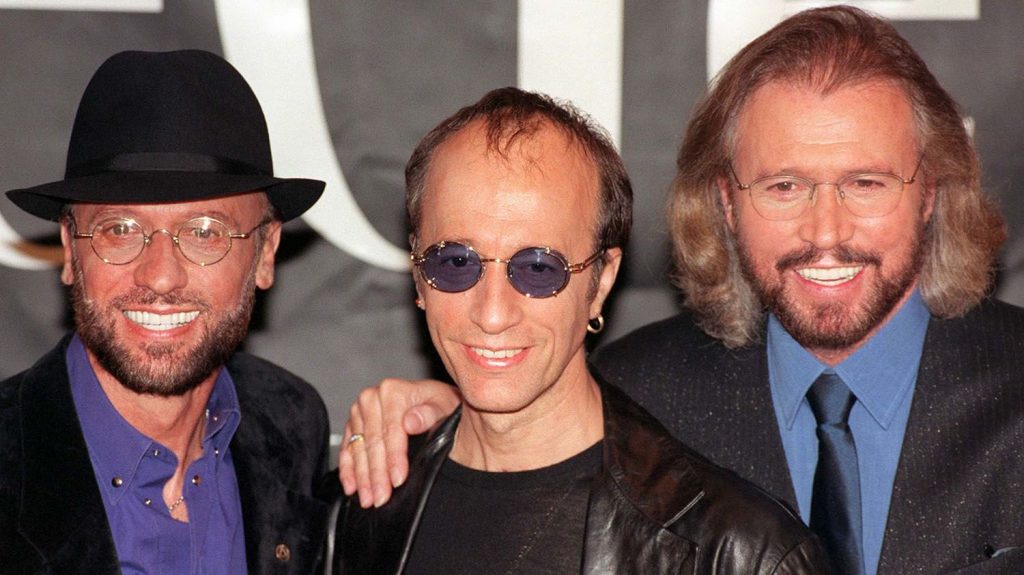
The Bee Gees are often celebrated for their unmistakable harmonies, silky falsettos, and chart-topping hits—but one of their most endearing qualities was something far less polished: their mischievous brotherly bond.
During a 1989 concert in Melbourne, a moment unfolded that fans still cherish—not just for the music, but for the laughter behind it. As Barry and Robin Gibb mesmerized the crowd with a medley of seven classic songs, their stage presence was as professional as ever. Flawless vocals, perfect timing—pure Bee Gees magic.
But just out of the spotlight, Maurice Gibb was staging a one-man comedy act of his own.
Determined to make his brothers laugh mid-performance, Maurice pulled out every trick in the book—silly faces, exaggerated gestures, and perfectly timed antics. The audience was none the wiser, but the footage tells a different story: a legendary performance laced with brotherly sabotage.
“I was this close to cracking up,” Barry later confessed. “Maurice was doing everything he could to break us. I don’t know how we kept it together, but somehow, we did. Every note landed, even while he tried to derail the whole thing!”
It’s a moment that goes beyond the music. That night, fans witnessed not just the power of the Bee Gees’ voices, but the unshakable joy of three brothers doing what they loved—together, and with a healthy dose of mischief.
More than just a performance, it was a glimpse into the heart of the band: legendary musicians who never lost touch with their humanity, humor, and the deep love they had for each other.
For fans, the Melbourne footage remains a gem—not just a showcase of vocal mastery, but a snapshot of the spontaneous, joyful chaos that made the Bee Gees unforgettable.
In 2003, the Rock & Roll Hall of Fame witnessed one of its most electrifying moments when AC/DC, the thunderous force behind some of rock’s most unforgettable anthems, was officially inducted. To commemorate the honor, they delivered a scorching performance of “You Shook Me All Night Long”—but this time, with a special twist: Steven Tyler, the dynamic frontman of Aerosmith, joined them on stage.
What followed was pure rock & roll magic.
With AC/DC’s signature riff kicking things off and Tyler’s raw, unmistakable voice crashing in, the performance surged with adrenaline. “You Shook Me All Night Long,” a centerpiece of their legendary 1980 Back in Black album, has always been a stadium shaker—but with Tyler adding his vocal firepower, the track reached a new level of intensity.
From the very first chords, the crowd was on its feet, the atmosphere electric. Angus Young, in his trademark schoolboy outfit, tore through the guitar licks with his usual fervor, while Tyler prowled the stage with explosive charisma. Their synergy was undeniable—a meeting of two icons from different corners of the rock universe, blending seamlessly into one unforgettable performance.
The moment wasn’t just a celebration of AC/DC’s career—it was a powerful tribute to the unifying spirit of rock music. Here were two of rock’s most enduring giants, coming together to remind the world why this music moves us like no other. It was gritty, loud, and gloriously over-the-top—the very essence of rock & roll.
Today, that performance remains etched in rock history and continues to rack up millions of views, serving as a time capsule of everything that makes live rock performances legendary.
AC/DC’s Hall of Fame induction honored their trailblazing legacy, but it was this high-voltage collaboration with Steven Tyler that turned the night into an all-time classic—one that fans still revisit for a dose of pure, unfiltered rock glory.
In the glittering heart of Las Vegas, Coldplay’s Chris Martin took the stage at Allegiant Stadium on June 7, 2025, delivering a performance that resonated far beyond the music. The sold-out crowd witnessed more than just a concert; they saw a man grappling with personal loss, his voice carrying the weight of heartbreak. Reports of Martin’s split from Dakota Johnson, his partner of nearly eight years, had surfaced just days earlier, casting a poignant shadow over the night. Yet, in a moment that left fans both stunned and moved, Martin paused to give a heartfelt shout-out to Johnson’s upcoming film, *Materialists*, proving that love, even after loss, can endure in unexpected ways.
A Love Story’s End
Chris Martin, 48, and Dakota Johnson, 35, began their romance in 2017, a relationship that blossomed quietly but deeply. From Johnson directing Coldplay’s “Cry Cry Cry” music video to Martin serenading her from the stage during a 2021 performance of “My Universe,” their bond was one of mutual support and shared creativity. The couple, reportedly engaged since 2020, faced an on-again, off-again dynamic, with a brief split in 2019 reconciled with the help of Martin’s ex-wife, Gwyneth Paltrow. But sources confirmed to *People* on June 4, 2025, that this time, the breakup was final. “It feels final this time,” one insider said, citing the couple’s diverging paths—Johnson’s desire for children clashing with Martin’s contentment with his two children, Apple and Moses, from his marriage to Paltrow.
Johnson, devastated by the split, expressed particular sorrow over her close relationship with Martin’s children. “I love those kids like my life depends on it,” she told *Bustle* in March 2024. The decision to part was described as amicable but painful, with Johnson reportedly left in tears over the years of trying to make it work.
As Coldplay closed their Las Vegas show, Martin’s performance was electric, yet it was his words between songs that stole the spotlight. “Thank you so much everybody. Be kind to yourself, be kind to each other,” he said, his voice steady but heavy with emotion. Then, in a move that sparked confusion and hope among fans, he added, “Don’t forget to see *Materialists*. We love you!” The shout-out to Johnson’s rom-com, set for release on June 13, 2025, starring Chris Evans and Pedro Pascal, was unexpected given the breakup news.
Fan reactions, captured in a viral video shared by Deuxmoi, ranged from speculation of a reconciliation to admiration for Martin’s grace as an ex. “‼️THEYRE NOT BROKEN UP‼️,” one fan captioned, while another commented, “I can totally see him supporting her even after the breakup.” The moment was a testament to Martin’s character—supportive, even in heartbreak.
When Chris Martin sang Coldplay- Fix You in Vegas,I could see his singing was different than his usual Fix You live. It’s like he tried not to shed a tear & his vocal tone’s different. He sang piece by piece. Ofc he smiled later.He’s professional. He still supports Dakota too👍. pic.twitter.com/T3yZDhR47x
Though no tears were explicitly reported during the performance, the emotional weight was undeniable. Martin’s weathered voice and introspective demeanor echoed the raw vulnerability of his 2019 Las Vegas performance of “Tears in Heaven,” a song born from the tragic loss of his son. While that earlier show channeled a father’s eternal grief, this one carried the ache of a love lost, making every note feel like a confession.
Few artists have managed to achieve the rare blend of longevity, crossover success, and universal admiration quite like Lionel Richie. From his early days leading the Commodores to his solo superstardom, Richie’s influence has spanned more than five decades, producing anthems that have become part of the soundtrack to millions of lives.
For Lionel Richie, one name rises above the rest as a personal guiding light: Neil Diamond. While Richie is often associated with the soulful sounds of Motown and smooth R&B ballads, he’s never shied away from crediting Diamond as a key influence—the very reason he chose to pursue a life in music.
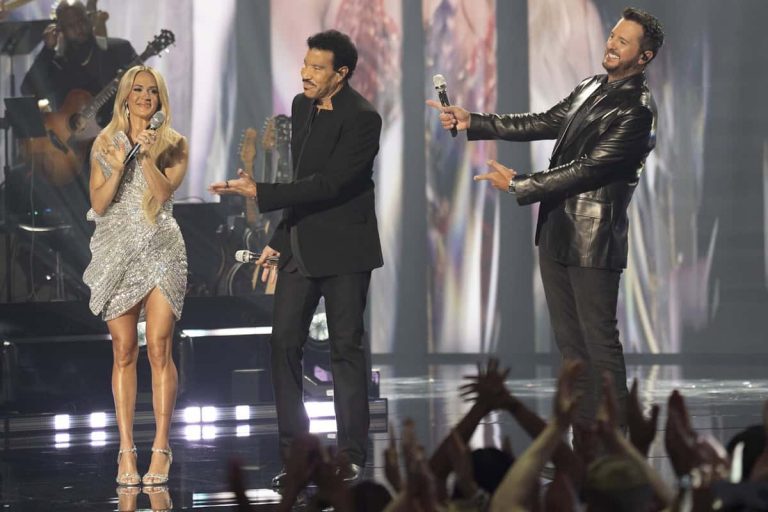
In a poetic twist of fate, Richie was invited in 2011 to perform at the Kennedy Center Honors in tribute to none other than Neil Diamond himself. For Richie, it was more than just a performance—it was the realization of a journey that began with admiration and culminated in a heartfelt homage to the man who inspired it all.
That evening, Richie took the stage and delivered an impassioned rendition of Diamond’s introspective 1971 classic, “I Am… I Said.” Known for its raw emotional honesty and themes of identity and belonging, the song found new life in Richie’s hands. He didn’t mimic Diamond—he honored him by pouring his own soulful interpretation into every line. The performance was both a thank-you and a declaration: Richie had walked the path Diamond lit for him, and now stood tall in his own right.
Lionel Richie’s musical journey began in the 1970s with the Commodores, where he wrote and sang beloved hits like “Easy,” “Still,” and “Three Times a Lady.” The group’s ability to mix funk, soul, and pop made them Motown heavyweights, but it was Richie’s shift to a solo career that transformed him into an international sensation.
The 1980s saw Richie dominate the charts with hits such as “Hello,” “All Night Long,” “Stuck on You,” and “Dancing on the Ceiling.” His warm, genre-defying voice and emotive storytelling earned him a place among the greats—and not unlike Neil Diamond, Richie became known for writing songs that transcended time and culture.
Richie’s talents didn’t stop at performing. He penned timeless pieces for other icons as well—“Endless Love” with Diana Ross and “We Are the World” with Michael Jackson are just two examples of his far-reaching influence as a songwriter.In 2017, just six years after honoring Neil Diamond, Richie stood in the same spotlight as a Kennedy Center Honoree. The moment was symbolic—one visionary artist passing the torch to another, both celebrated for shaping American music with sincerity, style, and soul.
That performance in 2011, Richie singing “I Am… I Said,” wasn’t merely a cover—it was a full-circle moment. It was one artist paying homage to the music that lit his spark, and in doing so, affirming the timeless truth: that great music doesn’t just entertain—it inspires, connects, and endures.
In the pantheon of unforgettable live performances, few moments shine as brightly as the night rock royalty came together to perform one of the most beloved anthems in music history—“Hey Jude.” Picture this: Paul McCartney at the helm of his Beatles classic, joined by an ensemble of legends—Sting, Elton John, Eric Clapton, Mark Knopfler, and Phil Collins. A musical dream team, each with a legacy of their own, standing shoulder to shoulder in a moment that transcended eras and genres.
The performance wasn’t just a celebration of the song—it was a celebration of decades of music that shaped generations. McCartney, the song’s original voice, led with his timeless charisma, while Sting’s soulful harmonies added depth and warmth. Elton John brought his unmistakable flair, Clapton’s guitar wept gently beneath the chorus, Knopfler added his signature smooth touch, and Collins—ever the versatile showman—kept the energy alive with his rhythmic precision.
Originally written in 1968 as a comfort to John Lennon’s son Julian, “Hey Jude” has long stood as an anthem of reassurance and hope. But in the hands of these six giants, it became something even bigger—a tribute to music’s unifying power. As the chorus swelled into the now-iconic “na-na-na” refrain, the stage—and hearts around the world—felt the magnitude of what was happening: legends weren’t just performing; they were passing the torch, embracing each other’s legacies, and inviting fans into an unforgettable moment of unity.
Whether you’re a die-hard Beatles fan, a lover of ‘80s ballads, or a blues-rock aficionado, this performance is a time capsule of talent and emotion—a reminder that when music legends join forces, magic is inevitable.
If you haven’t seen it yet, do yourself a favor. Watch it. Feel it. Sing along. And let the legends take you home.
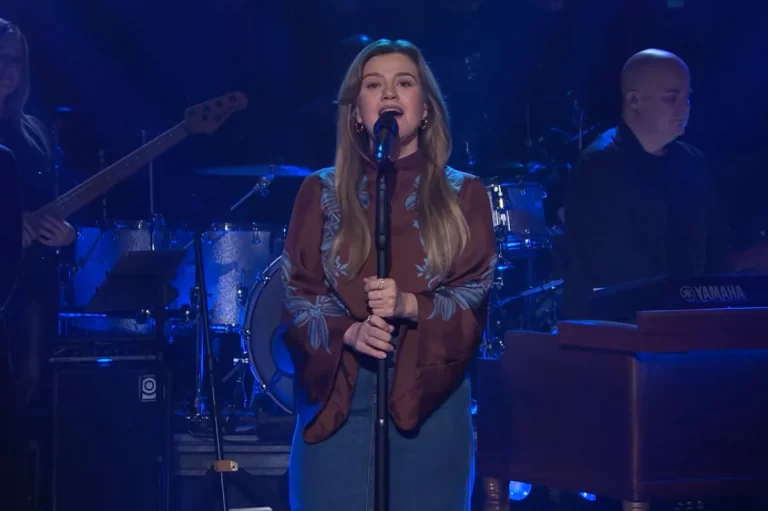
The Kelly Clarkson Show, viewers witnessed a heartwarming moment as Kelly Clarkson’s 8-year-old son, Remington (Remy), stole the spotlight with a soulful rendition of Frank Sinatra’s “My Way.” With Clarkson’s live band providing the backdrop and the crowd—along with his big sister River, 10—cheering him on, Remy confidently sang, “I planned each charted course, each careful step along the byway…” bringing classic crooner vibes to the modern daytime stage.
Clarkson, beaming with pride, shared how the mini-performance came to be: “He just walked right in like a little professional and said, ‘Who do I talk to about singing my song?’ I was like, ‘Well, OK then, boss!’” she said with a laugh. “My kids keep life so fun—I’m obsessed with them.”
It’s not Remy’s first time around music, nor is it a family first. River, Clarkson’s daughter with ex-husband Brandon Blackstock, lent her vocals to the track “You Don’t Make Me Cry” on the deluxe edition of Clarkson’s 2023 album Chemistry. Clarkson previously shared that River’s contribution was spontaneous: “She came into the studio and said, ‘Can I sing?’ And my producer just let her take over the track. It was absolutely adorable.”
While both kids clearly have a natural talent for music, Clarkson insists she’s open to whatever path they choose. “I won’t push—but I won’t hold them back either,” she explained. “This industry’s tough, and I’d be lying if I said it wasn’t. But it’s also magical. If they fall in love with it, I get it. And if they want to be a scientist, a teacher, or a vet—I’m all in.”
She also reminisced about a concert earlier in 2023 where both kids joined her onstage. “It was pure magic. They looked at me like I was Thor,” she joked. “To have your children see you in that light—it’s a kind of joy you never forget.”
There are blues songs—and then there are blues experiences.
“So Many Roads”, performed by John Mayall and The Bluesbreakers featuring the extraordinary Gary Moore, falls firmly into the latter. It’s not just a track; it’s a slow-burning journey through heartbreak, memory, and emotional release.
Originally written by Marshall Paul, So Many Roads is a classic blues lament. But in the hands of Mayall and Moore, it becomes something even deeper—a soul-stirring exploration of the roads we take, the ones we leave behind, and the pain we carry with us.
John Mayall, a pioneer of the British blues scene and mentor to a generation of guitar greats, delivers the lyrics with quiet authority. His voice is honest, lived-in, and reflective—less a performance and more a confession.
Then comes Gary Moore.
With one of the most emotionally powerful guitar tones in blues-rock history, Moore elevates the track to a near-spiritual level. His solo is pure feeling—an aching, slow-burning cry that winds through the heart of the song. Every bend, every sustain, is deliberate, pulling you into the weight of the story being told.
What makes this version stand out isn’t just the talent—it’s the connection. There’s a shared language between Mayall’s grounded storytelling and Moore’s sky-reaching solos. They’re not just playing music—they’re living the blues in real time.
For longtime blues lovers or curious newcomers, this recording of “So Many Roads” is a must-listen. It reminds us why the blues endures: because it speaks the truth, one note at a time.