Category

Rock

Category

Alex Goldschmidt, a lifelong Taylor Swift devotee from California, managed to create the kind of engagement party most fans only dream about—when the superstar herself showed up to sing.

The intimate celebration, hosted at a neighborhood pub, turned into pure magic the moment Swift walked in with her guitar and delivered an acoustic rendition of “King of My Heart.”

The story began with Alex sending Taylor a hopeful email, inviting her to be part of the milestone. To his surprise, his message actually reached her—and she said yes.

On the night of the event, Alex teased his guests about a special figure connected to his and Ross’s love story. Smiling, he said, “There’s someone who isn’t here, but who had a part in bringing us together. So please help me welcome… my friend Taylor.”

The room erupted in shock and excitement as Swift casually strolled in. Keeping it light, she joked about being off the road, telling everyone, “I’ve been off tour for a while but hopefully it’s still alright.” Then, turning to Ross, she added, “This is from Alex. It’s sung by me, but it’s from Alex,” drawing laughter from the crowd before striking the first chords.

Though “King of My Heart” isn’t among her most mainstream hits, its heartfelt lyrics made it a flawless choice for the occasion. Her stripped-down performance filled the room with warmth, leaving Alex, Ross, and their loved ones completely moved.

A video of the surprise performance later surfaced online, drawing in millions of views and sparking an outpouring of love from fans worldwide. Many praised Swift not just for the beautiful song, but for the generosity of showing up and making one fan’s dream moment even more unforgettable.

Richard Wright, one of Pink Floyd’s founding members, carried a unique perspective on the band’s evolution. From their early days experimenting under different names to the heartbreaking decline of Syd Barrett, Wright witnessed every twist in the group’s story. Although creative tensions sometimes arose between him and his bandmates, he, too, sensed when the golden age of Pink Floyd began to dim.

Roger Waters—who eventually assumed the role of the band’s dominant creative force—once reflected that their 1973 triumph, The Dark Side of the Moon, signaled both their highest point and the start of their downfall. To fans and the wider world, it was a masterpiece beyond imagination, but to Waters, its monumental success “finished” the band.

After Barrett’s health deteriorated, Waters stepped into the leadership vacuum. Barrett’s eccentric style had defined the group, and his absence left a creative gap. With David Gilmour now in the lineup, Pink Floyd struggled at first to forge a new identity. They stumbled, experimented, and produced uneven work, but by the time they crafted Echoes for 1971’s Meddle, the band had discovered its true voice.

The following year brought Obscured by Clouds, but it was 1973’s The Dark Side of the Moon that carved Pink Floyd’s permanent place in rock history. This concept album, exploring mortality, fame, and mental strain, was both a commercial juggernaut and a critical triumph. It also cemented Waters’ role as the band’s principal lyricist. For him, however, this achievement was a bittersweet peak—one he doubted they could ever surpass.

Yet, Pink Floyd defied that expectation. Many fans and even Wright himself believed 1975’s Wish You Were Here was the band’s true masterpiece. Written as a tribute to Barrett and built around themes of absence and alienation, the record struck a deep emotional chord with both the band and their listeners.

In a 2001 interview for The Pink Floyd and Syd Barrett Story, Wright openly declared, “I think it’s our best album, personally, I love it. I love the flow of it, and I will listen to that album for pleasure—there’s not many of the Floyd albums I can, but that one.”

He particularly praised Shine On You Crazy Diamond, the nine-part epic that bookends the album. Wright marveled at its progression—from the hauntingly delicate introduction featuring wine glasses and saxophone to its soaring climax built on complex chords. “I just think it’s a great piece,” he said, recognizing it as one of the band’s crowning achievements.

For Wright, Wish You Were Here was more than just a beautiful record; it represented the last time Pink Floyd truly functioned as a unified creative force. In his words, “It was the last album where we worked well together.” Just as the album’s themes reflected loss and disconnection, Wright believed it also foreshadowed the fractures within the band itself—a poignant close to their era of harmony.

In a September 2, 2025, interview on the Independent Ink podcast, Pink Floyd co-founder Roger Waters harshly criticized Ozzy Osbourne, describing him as having brought “idiocy and nonsense” into popular culture over “hundreds of years.” He added he couldn’t care less about Black Sabbath or Osbourne’s notorious antics—such as the head-biting episodes—and even made a poor appearance of them himself. When corrected that it was actually a bat, not a chicken, Waters responded with a mortified reaction, saying “Oh my god, that’s even worse”

Jack Osbourne’s Response

Ozzy’s son, Jack Osbourne, fired back via Instagram, fiercely defending his father during grieving period. His response was blunt: “Hey Roger Waters – fu*** you. … My father always thought you were a cunt – thanks for proving him right.”

Jack Osbourne, Instagram

In country music history, there are few moments as powerful as when four legends—Johnny Cash, Willie Nelson, Waylon Jennings, and Kris Kristofferson—stood together on stage as The Highwaymen. Each of them already had careers that shaped American music, yet when united, they created something greater than the sum of their parts.

One performance that continues to resonate deeply with fans is their live version of “Loving Her Was Easier (Than Anything I’ll Ever Do Again)” from American Outlaws: Live at Nassau Coliseum, 1990. This song, written by Kris Kristofferson in the early 1970s, was already a classic. But hearing it delivered by The Highwaymen, with four unique voices weaving together, turned it into something timeless.

A Song Written From the Heart

Kristofferson first recorded “Loving Her Was Easier” in 1971, a gentle ballad about love’s purity and simplicity. Unlike many country songs of the era that leaned on heartbreak or honky-tonk storytelling, this one stood out for its poetic tenderness. The lyrics spoke of love not as drama, but as grace—something that came naturally, effortlessly, and beautifully.

When The Highwaymen decided to include the song in their setlist, it wasn’t just a nod to Kris’s catalog—it was a way to let the group showcase their strengths as storytellers. Each member brought a different emotional color: Johnny Cash’s depth and authority, Willie Nelson’s unmistakable phrasing, Waylon Jennings’ rugged smoothness, and Kris Kristofferson’s raw sincerity.

The Nassau Coliseum concert in 1990 was a historic night. Thousands of fans gathered to watch four of country music’s greatest icons share the stage. Amid rowdy outlaw anthems and crowd-pleasing hits, the group’s rendition of “Loving Her Was Easier” offered a moment of quiet reflection.

As the song began, the audience was drawn into the tenderness of the melody. Kristofferson’s words felt even more powerful when carried by four voices instead of one. The Highwaymen didn’t treat the performance like a solo showcase; instead, they passed verses and harmonies back and forth, blending their styles into a seamless whole.

Willie’s guitar and phrasing gave the song its easy flow, Waylon’s baritone added warmth, Cash’s bass voice grounded it, and Kris—ever the poet—anchored it with the soul of the original. The chemistry among them was undeniable, and the live recording captured both the intimacy of the lyrics and the magnitude of the moment.

The Legacy of American Outlaws

American Outlaws: Live at Nassau Coliseum remains one of the most celebrated live albums in country music. It captured The Highwaymen at their peak, performing not only their greatest hits but also honoring each other’s catalogs. Among the many highlights, “Loving Her Was Easier” stands out as a song where the group set aside their outlaw bravado and leaned into vulnerability.

It’s rare for a live performance to feel both intimate and monumental, but that’s exactly what happened that night in 1990. The audience got to witness a song written from one man’s heart transformed into a collective masterpiece by four.

When This Is Tom Jones aired in the late 1960s, it quickly became one of television’s most exciting variety shows. Week after week, Tom Jones welcomed some of the world’s biggest names in music, comedy, and film to share the stage with him.

Among the standout guests was a young Stevie Wonder—just 19 years old at the time—already making waves as a prodigious singer-songwriter from the United States.

No one quite knew what to expect when the two artists came together for a duet. But as soon as Stevie began his soulful 1966 hit “A Place in the Sun,” Tom’s powerful voice slipped in beside him. What followed was pure magic: four minutes of extraordinary vocal interplay and effortless harmony.

The duo didn’t stop there. They moved seamlessly into a medley of hits, showcasing not just their vocal ability but their playful energy. The chemistry between them was undeniable—something that still shines through even when you watch the footage more than 50 years later.

That unforgettable moment came during the very first season of Jones’ show. This Is Tom Jones went on to run for three seasons, ultimately producing 65 episodes before wrapping up in 1971.

But their story didn’t end there. In 1992, the two icons reunited for Tom Jones: The Right Time. This time, Stevie sat at the piano, serenading Tom with classics like “Uptight (Everything’s Alright),” “Nothing’s Too Good For My Baby,” and of course, Tom’s own signature hit “It’s Not Unusual.”

Their bond was as natural as ever. At one point, Stevie cheekily smiled at Tom while singing his song, pausing mid-performance to laugh and joke, “I might mess your words up.” Tom instantly burst into laughter as soon as he heard the familiar chords ring out from the piano.

Moments like these captured not only the brilliance of their music but also their joy in performing together. Whether in the 1960s or the 1990s, Tom Jones and Stevie Wonder shared a rare musical connection—one that fans still treasure today.

In 2006, just before Amy Winehouse became a global phenomenon, she walked onto a small stage in Dingle, Ireland, to perform on Other Voices—a unique music series set inside the intimate St. James’ Church. What followed was one of the most raw, soulful, and haunting live performances of her career: “Back to Black.”

A Sacred Setting for a Sacred Song

Unlike the large arenas and festival crowds she would later command, this performance took place in front of only a handful of people. The setting couldn’t have been more perfect: stained glass windows, candlelit ambience, and an audience so close they could feel every vibration of her voice. This stripped-back environment allowed Amy to focus entirely on the song’s emotional weight.

“Back to Black” wasn’t just another track—it was the centerpiece of her 2006 album of the same name. Written about heartbreak and loss, the song captured the dark side of love in a way only Amy could. Hearing it inside a church gave the lyrics an almost spiritual quality, transforming the performance into something deeply personal and universal at the same time.

The Power of Amy’s Voice

At just 23 years old, Amy Winehouse already had a voice that carried decades of wisdom and pain. Her delivery on Other Voices was controlled yet vulnerable, mixing jazz phrasing with soul power and a touch of blues grit. Every note carried intention. She wasn’t just singing about heartbreak—she was living it in real time.

The line “We only said goodbye with words, I died a hundred times” cut through the church like a confession. Amy’s ability to make her struggles sound poetic was unmatched, and this live rendition remains a masterclass in how to channel emotion into performance.

The Band and Arrangement

Supporting Amy that night was her touring band, who matched her intensity with a tight yet understated groove. The arrangement leaned on classic Motown influences, but left space for Amy’s voice to take the spotlight. The organ swelled gently behind her, the bass locked into a slow heartbeat rhythm, and the backing vocals gave the chorus a ghostly echo.

Together, they created an atmosphere that felt timeless—like it could have been recorded in the 1960s, yet still spoke directly to modern audiences.

Why This Performance Matters

Over the years, “Back to Black” has been covered by countless artists, but Amy’s live version at Other Voices remains definitive. It captures everything that made her special: authenticity, vulnerability, and an ability to make a room stop breathing for three minutes.

What’s most striking is how different this performance feels compared to glossy award-show appearances. In Dingle, there were no flashing lights or big stage effects—just a young woman, her truth, and a voice that demanded to be heard.

For fans, this performance is a reminder of Amy’s genius. For newcomers, it’s the perfect introduction to why she is remembered as one of the greatest artists of her generation.

Legacy of “Back to Black”

“Back to Black” would go on to define Amy Winehouse’s career. The album earned five Grammy Awards and sold millions worldwide, cementing her as a once-in-a-lifetime talent. Sadly, just a few years later, Amy’s life was cut short at the age of 27, leaving fans with a legacy that feels both brilliant and tragically unfinished.

The Other Voices rendition stands as a precious time capsule—a moment before fame completely consumed her life, when she was still simply a young artist singing her heart out in a small Irish church.

At 83, Sir Cliff Richard — one of the true pioneers of British rock and roll — is finally lifting the veil on parts of his life he kept guarded for decades. For those who grew up with his music and have followed his career since his teenage breakthroughs, his openness feels like a rare treasure: an invitation to see the person behind the polished star.

Cliff’s rise was meteoric. From the moment he burst onto the charts, he was hailed as Britain’s answer to Elvis Presley — adored by fans, pursued by the media, and celebrated on stages across the globe. Yet behind the roar of the crowds and glitter of success, there were shadows. Cliff carried with him the weight of heartbreaks, including a love that slipped away, and stretches of loneliness that no hit record or sold-out show could truly mend.

His path wasn’t without turmoil. At one point, a relentless storm of headlines threatened to overshadow everything he had achieved. He weathered it with determination, but the experience left its mark. While the world saw the icon, very few glimpsed the private man fighting quiet battles away from the spotlight.

Now, with a mix of wisdom and courage, Cliff is sharing that hidden side. He isn’t just recounting the triumphs, but also the struggles — the sacrifices made, the relationships lost, and the cost of guarding his personal world so fiercely. His honesty reminds us that even the brightest legends carry stories of pain, resilience, and reflection.

What makes this revelation compelling isn’t the drama, but the vulnerability. Cliff speaks less like a superstar and more like an old friend confiding over a quiet conversation. He shows that love, even when it doesn’t last, leaves behind lessons and beauty. And he reminds us that true strength is not in avoiding hardship, but in standing tall again with grace.

For lifelong fans, this moment strengthens the bond with an artist they’ve cherished for generations. For Cliff himself, it signals a new era — one not measured in record sales or headlines, but in authenticity, peace, and the freedom to finally let his voice carry his truth.

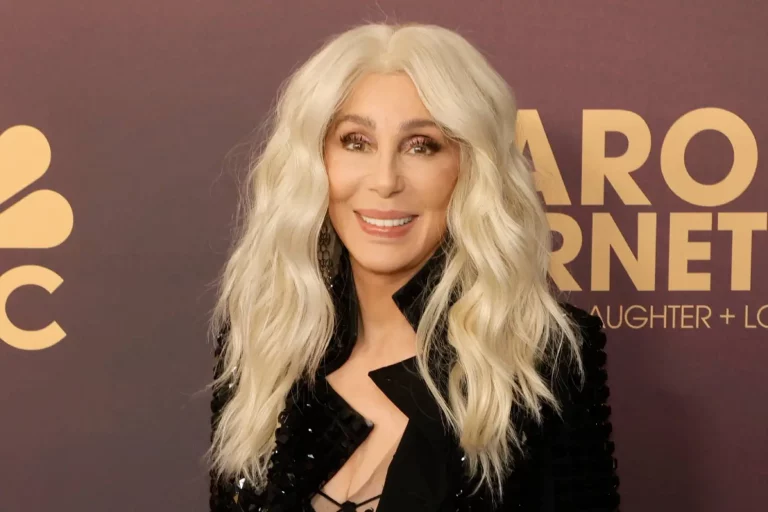
Cyndi Lauper didn’t just finish a tour — she threw a party that read like a who’s-who of music history. On the final night at the Hollywood Bowl, Lauper welcomed surprise guests across generations: Joni Mitchell, Cher, SZA, John Legend, Trombone Shorty and others turned a farewell concert into a celebratory reunion of voices and stories.

The night felt like an affectionate collage of Lauper’s career. Early on the evening shifted from brass-band energy (Trombone Shorty popped up for an upbeat moment) to an intimate, spine-tingling duet when Joni Mitchell — making one of her rare public appearances this year — joined Lauper for a tender take on “Carey.” That pairing bridged Lauper’s pop-theatrical world with Mitchell’s folk-poetic legacy, and it landed like a private moment shared across a huge arena.

Later, John Legend added warmth to Lauper’s catalogue by singing alongside her on “Time After Time,” while SZA surfaced during the encore for a soulful rendition of “True Colors” — a reminder of how Lauper’s songs have woven into multiple generations of artists. The finale — a rollicking, confetti-strewn “Girls Just Want to Have Fun” — featured Cher stepping in to trade verses and turn the closing into a joyful, slightly mischievous singalong.

A few small, human moments made the night linger in memory. When Lauper was presented with a massive bouquet, she tried to pass it to Cher; instead Cher playfully shoved it back while calling Lauper “the queen” — a brief, unscripted exchange that underlined the affection between peers who’ve shared decades of stages and stories.

Lauper’s farewell tour has been about control and celebration on her terms. She’s been candid about stepping away from the grind of touring while still wanting to say goodbye in a big, energetic way. Ending in Los Angeles — with an audience full of fans, friends and fellow artists — felt like closing a long, colorful chapter in public and with a wink.

Clips and short videos have already circulated online — showing Mitchell and Lauper sharing the stage, Cher cutting loose on the final number, and moments when fireworks and confetti turned the Hollywood Bowl into something that looked equal parts rock show and neighborhood block party. Those clips capture a truth that words struggle to: this was less a polished farewell and more an affectionate, slightly chaotic celebration of a career that invited everyone in.

Sometimes history doesn’t announce itself with fireworks—it begins with a single voice on a small stage. For Adam Lambert, that voice emerged fifteen years ago on American Idol, and it didn’t just win over a panel of judges—it shifted the trajectory of rock music itself.

January 20, 2009. Millions of viewers tuned in to what looked like just another round of auditions. A young man from San Diego, eyeliner framing determined eyes, walked in with a mix of nerves and confidence. He opened with Michael Jackson’s “Rock with You,” but the performance didn’t quite land. Most singers might have packed it in. Lambert did the opposite. He pivoted to a song most contestants would have avoided: Queen’s monumental “Bohemian Rhapsody.”

And then, something rare happened. From the first notes, the room changed. Theatrical? Absolutely. Over the top? Maybe. But behind every dramatic run and soaring note was a raw honesty that couldn’t be ignored. The judges’ faces said it all—half disbelief, half awe. Randy Jackson grinned and called it. Simon Cowell, famously unimpressed by excess, hesitated but couldn’t deny the talent staring back at him.

The world had just met Adam Lambert, though no one fully grasped it yet.

What made that performance so extraordinary wasn’t just vocal power—it was the sense that Lambert was tapping into something bigger than himself. He didn’t mimic Freddie Mercury; he evoked the same spirit: fearless, unapologetic, larger-than-life. For fans at home, the connection was instant. They saw in Lambert not just a contestant, but a star who seemed built for stages far beyond reality television.

And as fate would have it, those instincts were right. Clips of the audition reached Queen’s guitarist, Brian May, who couldn’t ignore the uncanny fit. By 2011, Lambert was standing where Mercury once stood—beside May and Roger Taylor, carrying Queen’s music into a new era. Their tours became a phenomenon, drawing millions and proving that a legendary sound could evolve without losing its soul.

Looking back, Lambert’s Idol audition feels less like a hopeful gamble and more like destiny in motion. It was the moment a young performer crossed paths with a timeless song—and in doing so, bridged generations. One performance turned an unknown singer into a global frontman, and ensured Queen’s fire would keep burning.

It’s easy to forget how fragile those moments are. If Lambert hadn’t switched songs, if he had played it safe, if nerves had won out—we might never have seen the partnership that would follow. Instead, what unfolded was a reminder of music’s magic: the right voice, the right song, at exactly the right time.

Adam Lambert didn’t just audition that day. He rewrote the story of modern rock.

Kelly Clarkson recently joined Garth Brooks on The Kelly Clarkson Show for a heartfelt performance of “Shallow,” the iconic song made famous by Lady Gaga and Bradley Cooper in A Star Is Born. The duet held extra significance, as Brooks was promoting his latest album, Fun, which includes a rendition of “Shallow” originally recorded with his wife, Trisha Yearwood. With Yearwood unable to attend the show, Clarkson stepped in as a surprise duet partner, creating an unforgettable musical moment.

Their rendition beautifully highlighted both artists’ strengths. Clarkson’s soaring, emotional vocals intertwined seamlessly with Brooks’ rich, warm country tone, bringing a fresh perspective to the beloved song. The lyrics—filled with vulnerability, longing, and raw emotion—came alive as the pair shared the stage, drawing the audience into the depth of the performance. Brooks’ masterful guitar work perfectly complemented Clarkson’s voice, enhancing the intimate and stirring atmosphere of the duet.

This performance was more than just a spontaneous collaboration. Earlier that year, Brooks and Yearwood had performed the song together during his Facebook Live series, and the familiarity with the material was evident. Clarkson’s ability to step in effortlessly and connect with Brooks on stage turned the performance into a memorable, emotionally charged experience that resonated with viewers long after the show ended.