Category

Rock

Category

This week brought a special moment for John Lennon fans around the world. A brand-new film edit of “Come Together” (live) premiered online, showcasing Lennon and Yoko Ono’s powerful 1972 One to One concert at Madison Square Garden. The performance, featuring the Plastic Ono Band and Elephant’s Memory, has been carefully restored and remixed, giving the iconic song new life more than fifty years later. Watching Lennon command the stage in his New York years feels both timeless and emotional, a reminder of his enduring presence in music history.

The excitement didn’t end there. Right after the film premiere, fans were treated to the first unboxing of the long-awaited Power to the People Ultimate Collection Deluxe Box Set. This release is more than just a music collection—it’s a full celebration of Lennon and Ono’s time in New York, when their art and activism merged into something truly powerful.

Inside the box set, listeners will find an extraordinary range of material. Over a hundred tracks are included, with dozens that have never been heard before. These span everything from stripped-down demos recorded at home to the full, electrifying One to One concerts. There is also a completely remixed version of Lennon and Ono’s politically charged album Sometime in New York City, now presented under the new title New York City. The sound has been restored with care, available in rich stereo, surround sound, and Dolby Atmos, giving fans the chance to hear these performances in greater clarity than ever before.

The collection goes beyond the music. The Deluxe Box Set comes with a beautifully designed book filled with rare photographs, memorabilia, and personal stories that trace Lennon and Ono’s life in New York. Collectors will also appreciate the extra touches—posters, postcards, replica tickets, and artwork that make the set feel like a time capsule from that pivotal era.

Much of the credit for this project goes to Sean Ono Lennon, who curated the release with a team of award-winning engineers. His involvement ensures that this isn’t just a reissue, but a carefully crafted tribute that preserves his father’s voice and vision. Sean has described the process as emotional, almost like spending more time with his dad through these recordings. That sense of intimacy and legacy is clear throughout the project.

The Power to the People Ultimate Collection will be officially released on October 10, 2025, just a day after what would have been John Lennon’s 85th birthday. The timing makes it not only a musical milestone but also a heartfelt tribute to Lennon’s lasting influence.

For fans, this release is both a celebration and a gift. The new film of “Come Together” brings back the magic of Lennon on stage, while the box set offers a deeper journey into his music and activism during one of the most important periods of his life. More than half a century later, John Lennon’s message of peace, power, and unity still feels urgent—and this release makes sure his voice continues to be heard.

A fiery throwback of Sharon Osbourne standing up for her late husband, Ozzy, has resurfaced and is taking over social media following the rock legend’s passing at 76. Fans are hailing the clip as proof of Sharon’s fierce devotion and unshakable loyalty.

The viral moment comes from a 2008 episode of Rock of Love: Charm School, where contestant Megan Hauserman crossed the line with a cruel jab at Ozzy. “The only thing you’ve managed to do as a celebrity is to watch your husband’s brain turn into a vegetable,” she sneered.

Sharon’s response was swift and unforgettable. She calmly turned to the audience, remarked, “I feel so sorry for her,” took a sip from her cup—then tossed the rest straight into Hauserman’s face. As security rushed in, Sharon refused to back down, declaring to the stunned crowd: “They can f*** with me, I don’t give a sh** — but not my family.”

The fallout was dramatic. Hauserman later filed a lawsuit for battery and emotional distress, while Sharon countersued, claiming the reality star had assumed the risk by entering the show. The legal battle quietly ended in 2011 with a six-figure settlement.

Now, with the clip making the rounds once more, fans are celebrating Sharon’s unwavering loyalty. Comments have poured in:

“The way she loved Ozzy is something rare. She REALLY loved her husband.”

“Ozzy was the king of metal, but she was the queen. Never attack royalty.”

“GO Sharon. She doesn’t play when it comes to her man.”

“Icon. Legend. Moment.”

One fan summed it up perfectly: “She’s sassy, fearless, and doesn’t tolerate disrespect. She’s the real deal.”

The clip’s resurgence comes just as Sharon broke her silence after Ozzy’s death, responding to waves of love and condolences. Among the many tributes, English musician Gavin Rossdale shared a heartfelt Instagram post:

“RIP OZZY – a great man, a true legend. I only met him a few times through Jack, but he was so warm, kind, and funny. Sending much love to his family at this difficult time. Rest in power.”

For fans, the moment is more than just a TV flashback—it’s a reminder of the fiery love story between Sharon and Ozzy, one that stood the test of time.

Think Mick Jagger is just a rock legend? Think again. The Rolling Stones frontman has shown time and again that his talents stretch far beyond the stage—and one particular Saturday Night Live sketch proves it. About a decade ago, Jagger surprised audiences with razor-sharp comedic timing, holding his own against SNL’s seasoned cast and leaving the crowd in stitches.

In the skit, Jagger plays “Kevin,” an ordinary insurance broker who, after a work conference with colleagues (including one played by Kristen Wiig), ends up at a karaoke bar. The twist? Everyone is encouraged to do their best Mick Jagger impression. Watching Kevin critique the impressions—with brutal honesty—was pure comedy gold. Eventually, his coworkers get so fed up with his constant nitpicking that they ditch him, leaving Kevin alone to break the fourth wall, confess his loneliness, and ironically belt out a slow, soulful version of “(I Can’t Get No) Satisfaction.”

And that’s not the only time Jagger has leaned into comedy. Back in 2001, he appeared in another SNL bit where he “talked” to his own reflection in the mirror about what moves to pull off on stage. The punchline? His reflection was actually Jimmy Fallon mimicking him—a setup that had audiences laughing nonstop.

What makes these sketches work so well is Jagger’s willingness to laugh at himself. Not every music icon can poke fun at their own image, but he embraces it fully. These moments don’t just highlight his hidden comedic chops—they also remind us why he’s such a cultural icon. After all, the jokes only land because everyone in the audience knows Jagger’s unmistakable style.

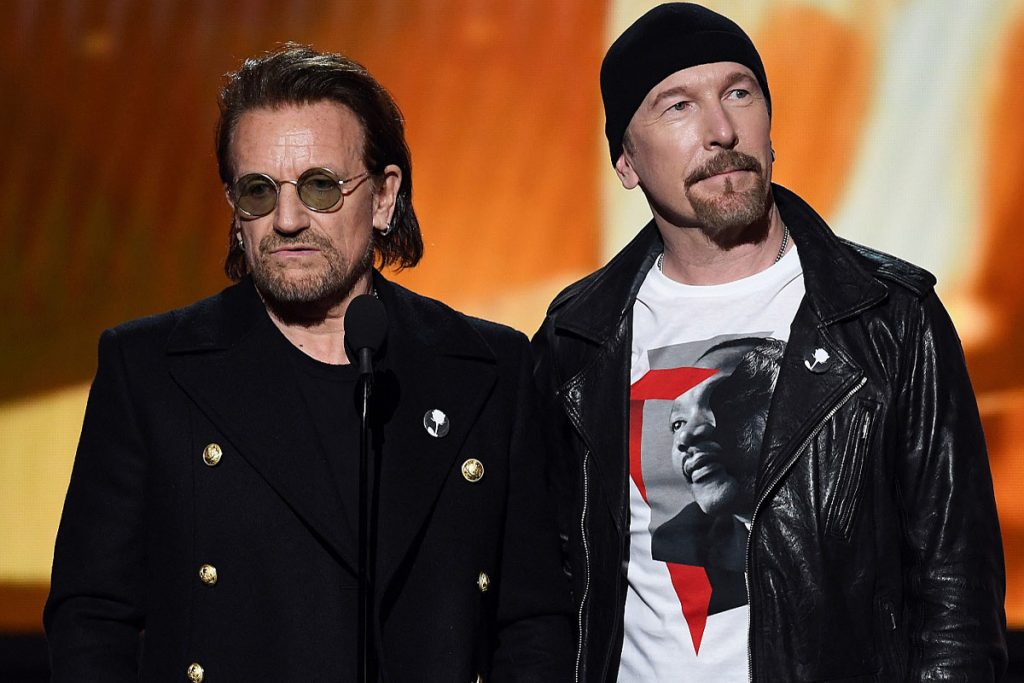
On a lively afternoon in London, everyday city noise gave way to something extraordinary. Streetgoers stopped in their tracks as two instantly recognizable figures stepped up beside a group of local buskers. To the astonishment of the crowd, they looked—and sounded—exactly like Bono and The Edge.

Within moments, the makeshift ensemble was filling the air with U2 classics. The mix of raw street performance and the duo’s unmistakable style created a scene that felt both intimate and electric. Pedestrians crowded closer, phones raised, eager to capture what felt like a once-in-a-lifetime moment.

Whispers spread quickly: Could this really be Bono and The Edge, casually jamming on a London sidewalk? The harmonies were too sharp, the guitar riffs too precise to dismiss. Some swore it had to be them, while others insisted it must be world-class impersonators.

Real or not, the magic was undeniable. The performance carried the heart and energy of U2’s music, proving that great songs don’t need arenas or stadium lights to inspire connection.

By the time the video hit the internet, it had already gone viral—sparking debates, spreading joy, and leaving fans across the globe dreaming of more unannounced appearances like this one.

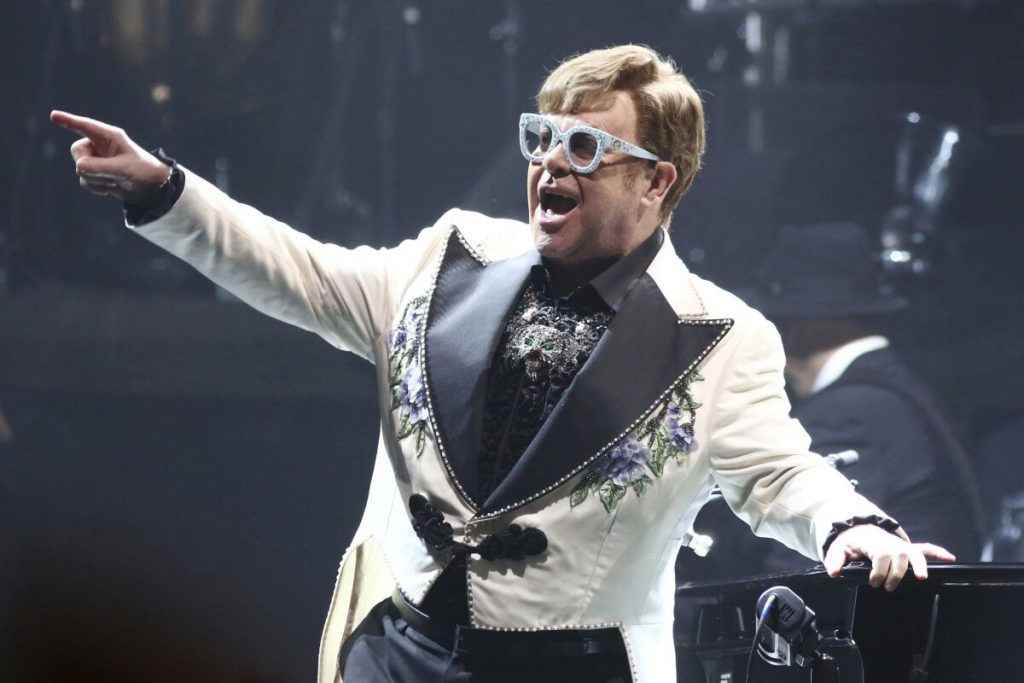
What was supposed to be just another dazzling evening on Elton John’s Farewell Yellow Brick Road tour — the 95th stop on a global journey that began back in September 2018 — quickly became the kind of night fans would talk about forever.

The crowd in Hove, UK, had already been swept up in the familiar rhythm of Elton’s timeless hits, belting out every chorus with him. Then, in a moment no one saw coming, the energy shifted. Walking onto the stage was Taron Egerton — the actor who had so brilliantly embodied Elton’s life in Rocketman.

Unlike the sequined, larger-than-life version audiences had seen on screen, Egerton appeared as himself, humble yet visibly thrilled. Elton glanced up from the piano with a grin that hinted: you’re about to witness something extraordinary.

Together, they launched into “Your Song,” and magic unfolded. This wasn’t just another duet; it was the first time on the entire farewell tour Elton had chosen to share his stage with a guest. Egerton sang with the weight of someone who had lived Elton’s story, while Elton’s voice, softer and more tender than usual, seemed to echo back to his younger self.

Couples leaned closer, hands intertwined, and many in the crowd couldn’t hold back tears. For those few minutes, music, memory, and cinema merged into something unforgettable.

As the last note lingered in the summer air, it was clear: this wasn’t just a concert moment — it was history, a rare collision of art reflecting life, and life embracing the reflection in return.

Back in 2017, fans in Florida were treated to a surprise when two icons—Sir Rod Stewart and Cyndi Lauper—joined forces for a dazzling live rendition of “This Old Heart of Mine.” The moment was all the more special because Lauper herself handpicked the track, which originally appeared on Stewart’s 1975 album Atlantic Crossing.

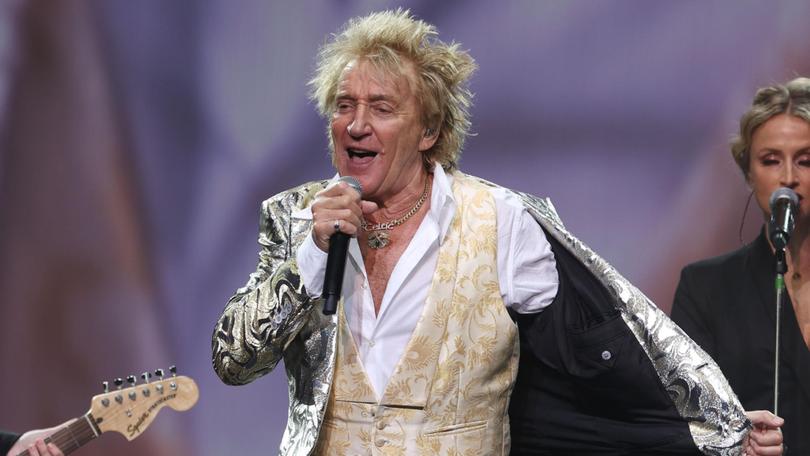
The stage lit up with personality and flair: Rod in his trademark silver jacket radiating showbiz charm, and Cyndi rocking a bold rose-red outfit, topped off with a sparkling black hat and her signature pink hair. Age was no barrier—at 72 and 64, their voices carried the same vitality that first made them legends, and their playful dance moves had the crowd cheering.

For Stewart, a London-born powerhouse who became one of rock’s most recognizable voices with classics like Maggie May, Reason to Believe, and albums such as Every Picture Tells a Story, it was another reminder of his staying power. Lauper, meanwhile, brought her own unique energy, the same spirit that launched her into stardom in the 1980s with hits like Girls Just Want to Have Fun and Time After Time. Beyond her pop career, she later broke new ground as the Tony Award–winning composer of Kinky Boots.

Before the duet kicked off, Lauper shared a personal story about her early days performing Rod’s songs in a cover band—making this collaboration feel like her career had come full circle. Their chemistry wasn’t new, either. The two have been friends since the ’80s, often sharing stages at events and touring together multiple times.

Though millions have since watched their 2017 performance online, the song itself has a history of reinvention. This Old Heart of Mine first belonged to The Isley Brothers in 1966 before Stewart reimagined it in 1975, and later again in 1989 as a duet with Ronald Isley. But in Florida that night, with Rod and Cyndi’s star power colliding, it felt brand new once more—a celebration of friendship, music, and timeless artistry.

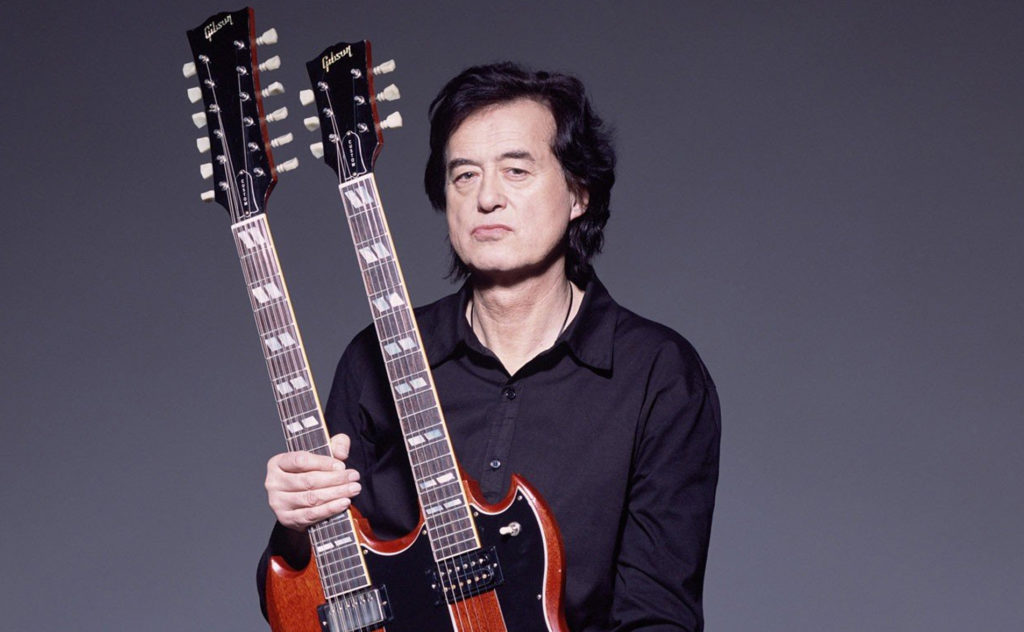
Jimmy Page isn’t just a guitar hero — he’s a near-mythical figure in the story of rock. His eerie riffs, towering soundscapes, and fearless experimentation with the electric guitar forever altered what the instrument could be. So, when Page singles out another guitarist for praise — not with faint compliments, but with unshakable respect — it carries the weight of gospel for music fans.

Well before Led Zeppelin turned him into a global icon, Page was already a name that mattered in London’s buzzing ’60s music circuit. Ranked among elite players like Eric Clapton, Jeff Beck, and Big Jim Sullivan, he was one of the most sought-after session guitarists of the era. His fingerprints were everywhere — from The Who and The Kinks to Marianne Faithfull’s haunting ballad As Tears Go By.

That studio work eventually funneled Page into The Yardbirds in 1966, where he briefly joined forces with Jeff Beck. Together they pushed the band into stranger, heavier sonic territory, with songs like the 1968 single Happenings Ten Years Time Ago offering a preview of the thunderous sound that would later shake the world with Led Zeppelin.

By the time Led Zeppelin IV dropped in the early ’70s, Page had cemented his place as perhaps the most influential rock guitarist of his generation. Yet, in the midst of his own acclaim, he was quietly in awe of someone else — Ritchie Blackmore of Deep Purple.

Blackmore’s path wasn’t so different. He too cut his teeth in London’s bustling session scene, occasionally rubbing shoulders with Page and Beck. But once Deep Purple came roaring to life in 1968, Blackmore carved out a sound of his own — fierce, classically tinged, and packed with fire. His rapid, baroque-style runs and improvisational edge would help define the early language of heavy metal.

Even Blackmore admitted Zeppelin’s success lit a fire under him. Reflecting on the band’s rise, he told Classic Rock: “I was impressed with what Zeppelin did. I wanted to do that kind of stuff. We did it with In Rock, and it took off.”

But the real surprise isn’t Blackmore tipping his hat to Zeppelin — it’s Page flipping the script. For all his own brilliance, Page openly conceded there was one battlefield where Blackmore reigned supreme.

“When it comes to a solo, I cannot touch him,” Page once confessed. Years later, speaking at Oxford University in 2016, he doubled down: “I couldn’t touch that guy in the live concert arena, improvisation stakes.”

For a legend of Page’s stature to say that is nothing short of extraordinary. Recognition from fans and critics is one thing — but when one of rock’s greatest architects calls you untouchable, that’s immortality.

When Yo-Yo Ma brings his Bach Project anywhere, it’s an event. But when he carried it to Tanglewood on August 11, it felt more like a chapter of history being written than just another concert. For an entire evening, the legendary cellist devoted himself to Bach’s six cello suites — not simply playing the notes, but breathing life and soul into every phrase. In a place already rich with musical legacy, this performance stood as a landmark moment.

The audience rose in thunderous applause, not only to honor Yo-Yo Ma’s artistry but also to acknowledge Tanglewood’s tradition of nurturing music that resonates beyond a single night. Yet the magic didn’t stop there.

Out walked James Taylor — the beloved troubadour and longtime friend of the festival. With effortless grace, Taylor joined Yo-Yo Ma on stage, calling the moment a “convergence of passions.” It wasn’t just a guest appearance. It was a meeting of two giants, blending cello and guitar, classical depth and folk warmth. The chemistry was undeniable, as though they were simply continuing a lifelong conversation, one chord at a time.

This wasn’t the usual “special guest” cameo designed to surprise a crowd. This was James Taylor stepping into his natural element, sharing songs with a kindred spirit. Together, they turned an extraordinary evening into something unforgettable — the kind of performance that could never be bottled in a studio, only lived in that instant.

For those fortunate enough to be in the Berkshires that night, it wasn’t just a concert. It was a living testament to friendship, legacy, and the boundless power of music. Yo-Yo Ma and James Taylor didn’t just perform; they created a memory that will echo in Tanglewood’s halls for generations to come.

When Paul McCartney takes the stage, it’s never just a concert — it’s a gathering of memories, music, and history. Few moments capture this more powerfully than when he sings George Harrison’s masterpiece “Something.” Written during the Abbey Road sessions in 1969, Harrison’s ballad has long been cherished as one of the most heartfelt love songs ever recorded. Yet when McCartney performs it today, it carries layers of meaning that reach far beyond romance — it becomes a remembrance, a farewell, and a celebration of friendship.

For years, George Harrison had quietly contributed gems to The Beatles’ catalog, often overlooked under the towering shadows of Lennon and McCartney. “Something” changed that. It was the song that proved Harrison belonged in the same league, a composition so universally moving that even Frank Sinatra once called it “the greatest love song of the last fifty years” (though he mistakenly credited Lennon–McCartney).

McCartney recognized its brilliance from the start. His melodic bass lines on the original recording wrapped delicately around Harrison’s voice, helping to elevate the track into one of the most enduring Beatles songs — one that has since been covered by hundreds of artists worldwide.

When George passed away in 2001, Paul began weaving “Something” into his live shows as a way of keeping his friend’s legacy alive. His approach was striking in its simplicity: alone on stage with just a ukulele — George’s favorite instrument. Before playing, he would often tell the crowd about evenings spent strumming with Harrison, recalling how much joy the instrument brought him.

Then, with quiet reverence, McCartney would begin:

“Something in the way she moves…”

The effect was profound. At first, it was only Paul’s voice and the light strum of the ukulele, fragile yet powerful. Midway through, the full band would join in, lifting the tribute into a sweeping, emotional crescendo. It wasn’t just a performance — it felt like a conversation across time, a message sent from one old friend to another.

Two Perspectives on the Same Song

Harrison sang “Something” as a man in love, young and full of wonder. McCartney delivers it as a survivor, carrying the weight of memory and loss. His weathered yet still luminous voice brings new shades to the song — not just about romance, but about the bonds that remain long after someone is gone. Where George’s version was smooth and hopeful, Paul’s is tender, almost prayer-like, as though each lyric is a goodbye whispered with gratitude.

Why It Moves Audiences

Fans often describe McCartney’s “Something” as the emotional centerpiece of his concerts. Many are brought to tears when the arrangement shifts from solitary ukulele to full-band grandeur. In that transition, it feels as if the audience breathes together — a moment of collective remembrance, not just of George, but of all the loved ones people carry with them.

Online, listeners frequently share how Paul’s performance reminds them of personal loss, enduring friendships, and the way music can preserve what time takes away. It resonates because it speaks to something universal: love that never fully leaves us.

A Legacy Carried Forward

By performing “Something”, McCartney isn’t simply honoring a late bandmate — he is keeping Harrison’s voice alive for new generations. Despite being one of history’s greatest songwriters himself, Paul never hesitated to shine a light on George’s genius, ensuring his contributions are remembered and celebrated.

Today, “Something” continues to rank among the greatest love songs ever written, and McCartney’s renditions have become part of that legacy. For those who never witnessed The Beatles together, these performances are as close as one can get to touching that magic again.

Each time Paul plays “Something”, it is both a farewell and a reunion. A farewell to George, whose presence is still deeply missed, and a reunion with the audience, who together share in the timeless spirit of The Beatles.

When two of the greatest icons in music history share the same stage, the result is nothing short of legendary. Elton John and Billy Joel have long been celebrated not only as solo powerhouses but also as collaborators whose chemistry electrifies audiences across the world. One unforgettable highlight from their touring partnership came when Elton John’s masterpiece “Goodbye Yellow Brick Road” took center stage with Billy Joel by his side.

Released in 1973, “Goodbye Yellow Brick Road” is one of Elton John’s most cherished songs, a bittersweet ballad wrapped in the lush storytelling of Bernie Taupin’s lyrics. It has always symbolized the longing for simplicity and the rejection of a glamorous but empty world. Over the decades, the song has become an anthem of reflection, and hearing Elton perform it live still carries an almost spiritual weight.

During their celebrated Face to Face tours, Elton and Billy often surprised fans by joining in on each other’s classics. Seeing Billy Joel sit at the piano, harmonizing with Elton John on “Goodbye Yellow Brick Road”, gave fans a performance that was both nostalgic and deeply moving. Their pianos faced each other like old friends in conversation, and the crowd became part of something magical—a moment where two musical worlds blended into one.

What makes this collaboration so powerful is the authenticity. Elton John’s soaring vocals and piano flourishes, paired with Billy Joel’s soulful, grounded delivery, created a balance that was pure artistry. For fans, it wasn’t just a concert—it was history unfolding before their eyes, a reminder of how music bridges generations, genres, and even personal journeys.

The union of Elton John and Billy Joel on “Goodbye Yellow Brick Road” is more than a performance—it’s a symbol of respect, friendship, and the enduring power of timeless music. Their duet reminds us why songs like this continue to live on: because they speak to something universal in all of us, something that only true legends can capture.