Category

Rock

Category

Some songs seem destined to be reimagined, carrying new colors every time a different artist breathes life into them. Bruce Springsteen’s Tougher Than the Rest, first released in 1987 on his album Tunnel of Love, is one of those songs. At its core, it’s a rugged ballad about love, resilience, and finding strength in vulnerability. When Emmylou Harris chose to cover it, she transformed the track into something breathtakingly intimate—a softer but no less powerful confession of devotion.

Emmylou Harris has long been known for her ability to take a song and give it new dimensions. Her voice, marked by a blend of clarity, tenderness, and lived-in wisdom, makes even the simplest lines resonate deeply. In Tougher Than the Rest, she strips away the grit of Springsteen’s original and replaces it with quiet determination and grace. The result is a performance that feels less like a declaration and more like a promise whispered in the dark.

The magic of her rendition lies in the subtle shift of perspective. Springsteen’s version carries the weight of a working man’s resolve—a gruff statement of loyalty. Harris, however, delivers it with an emotional openness that reframes the song entirely. Suddenly, it’s not about toughness as defiance, but toughness as endurance: the strength it takes to love someone through trials, scars, and uncertainty.

It’s no coincidence that Harris gravitated toward a song like this. Much of her career has been shaped by storytelling that balances fragility and perseverance. From heartbreaking ballads to spiritual hymns, she has always gravitated toward material that speaks to survival and redemption. Tougher Than the Rest fits seamlessly into that legacy.

Her performance also highlights the universality of Springsteen’s songwriting. Though written in his unmistakable style, Tougher Than the Rest becomes just as powerful in Harris’s hands—proof that great songs transcend genre, gender, and generation. Where Springsteen brought grit, Harris brings grace. Where he sang of defiance, she sings of quiet faith. Together, they prove the song is big enough to hold both truths.

Listening to Emmylou Harris sing Tougher Than the Rest is like sitting with someone who has walked through storms and still believes in love’s endurance. It is tender without being fragile, strong without being harsh. And in her voice, the song becomes not just about resilience in relationships, but about the resilience of the human spirit itself.

Her rendition reminds us that love is not always about grand gestures or fiery passion—it is often about showing up, staying present, and holding on, even when life makes it difficult. That kind of love, as Harris so beautifully shows us, truly is tougher than the rest

Some songs feel timeless not only because of their melody but because of the truths they carry. Dire Straits’ Brothers in Arms, written by Mark Knopfler in 1985 against the backdrop of the Falklands War, is one of those songs. It is a lament, a hymn, and a quiet protest all at once. And when Joan Baez lends her voice to it, the song is transformed into something even more haunting, more universal, and profoundly human.

Joan Baez has always been more than a singer. She is an activist, a poet, and a moral compass who used music as a tool to spark change and give voice to those who could not speak for themselves. From the civil rights marches of the 1960s to anti-war protests that spanned decades, Baez never separated her art from her conscience. Her voice—pure, crystalline, and unshakably honest—has always carried the weight of conviction. That is why her interpretation of Brothers in Arms feels less like a cover and more like a testimony.

The original version of the song by Dire Straits was already steeped in sorrow, a reflection on the futility of war and the unbreakable bonds forged between soldiers. But when Baez sings it, the words shift perspective. Instead of hearing it only through the eyes of a soldier, we hear it through the heart of humanity itself—through the voice of someone who has spent her entire life urging the world to turn away from violence. Her gentle phrasing and delicate control make every line feel like a prayer whispered for the fallen, for the grieving, and for the living who must learn from the past.

What makes this rendition even more powerful is Baez’s own history. She was a prominent figure in the anti-Vietnam War movement, performing at rallies and putting her career on the line for the sake of peace. She sang for Martin Luther King Jr. and stood with protesters on the frontlines of some of America’s most turbulent decades. When she sings Brothers in Arms, the listener can feel the lived experience behind her words. It is not performance—it is remembrance.

The song itself paints a picture of soldiers bound not by politics or governments but by the simple truth of survival and sacrifice. “We’re fools to make war on our brothers in arms,” Knopfler wrote, and Baez delivers that line with quiet devastation. In her voice, it becomes not only a statement of fact but a challenge to all who listen: How many times must humanity repeat the same mistakes? How many lives must be lost before peace is truly valued?

To hear Joan Baez perform Brothers in Arms is to sit in stillness. The world around you seems to pause. Her voice draws you inward, asking you to reflect not only on war and conflict but also on the fragility of life itself. It is music as meditation, music as mourning, and music as a plea for change.

In the end, her rendition reminds us why Joan Baez remains one of the most important voices of our time. She doesn’t just sing songs—she transforms them into vessels of empathy and truth. And with Brothers in Arms, she leaves us with something both beautiful and painful: a reminder of the cost of war and a hope, however fragile, that we may one day choose a different path.

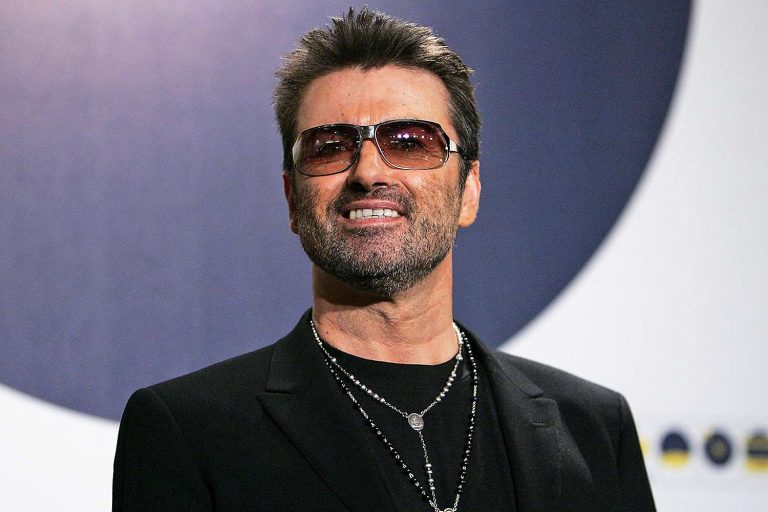
When George Michael stepped onto the Wembley stage in 1992 for the Freddie Mercury Tribute Concert, the world held its breath. Dressed in a striking red blazer and sunglasses, he looked every bit the star ready to honor another. In front of 72,000 fans and millions more watching around the globe, George delivered a moment that has since gone down as one of the finest live tributes in rock history.

Performing Queen’s 1976 anthem Somebody To Love, George channeled raw emotion and unmatched vocal power. His soaring voice cut through the night air, electrifying the crowd, who clapped and sang along as if Freddie himself had led them. Though Mercury’s presence is irreplaceable, George captured something magical—so much so that fans still insist his version remains the closest anyone has ever come to honoring Freddie’s spirit onstage.

Later in the show, George returned for a very different number, Queen’s gentle folk-inspired ’39. Sharing the spotlight with Brian May, Roger Taylor, and John Deacon, he showed another side of his artistry—confident, warm, and utterly at ease, turning the massive stadium into what felt like an intimate performance.

Both Mercury and Michael are now gone, taken far too soon—Freddie at 45, George at 53. Yet this concert remains a timeless reminder of their brilliance. What began as a night to celebrate Freddie’s legacy also became one of George’s shining moments, a performance filled with heart, soul, and the rare magic that only true legends can create.

Smoke on the Water by Deep Purple is one of the most famous rock songs ever written. With its unforgettable guitar riff, it’s the song almost every beginner guitarist learns first. But what makes it even more special is how it has brought some of the biggest names in rock together on stage.

The story behind Smoke on the Water is as dramatic as the song itself. In December 1971, Deep Purple was in Montreux, Switzerland, to record their album Machine Head. The band had planned to use the Montreux Casino’s concert hall as their studio. On the night before recording, they attended a Frank Zappa concert in the same venue.

During the show, someone in the audience fired a flare gun into the ceiling, setting the building on fire. The flames spread quickly, and the casino burned to the ground. As the band watched smoke drift across Lake Geneva from their hotel window, bassist Roger Glover came up with the phrase “Smoke on the Water.” That moment inspired the title and lyrics for what would become one of the most enduring songs in rock.

What makes Smoke on the Water so special is its simplicity and power. The riff is easy to play, yet unforgettable. It has inspired generations of young guitarists, often being the very first song they learn. At the same time, it remains thrilling when performed by world-class musicians in packed stadiums.

Even after more than 50 years, the song hasn’t lost its magic. It bridges generations—fans who were there in the 70s, younger listeners discovering it today, and musicians who see it as a tribute to the roots of rock.

Smoke on the Water is not just a Deep Purple classic—it is a living, breathing piece of rock history. Whenever it’s performed with Queen, Pink Floyd, Rush, Black Sabbath, and other legends, it becomes a celebration of everything that makes rock powerful: energy, unity, and timeless sound.

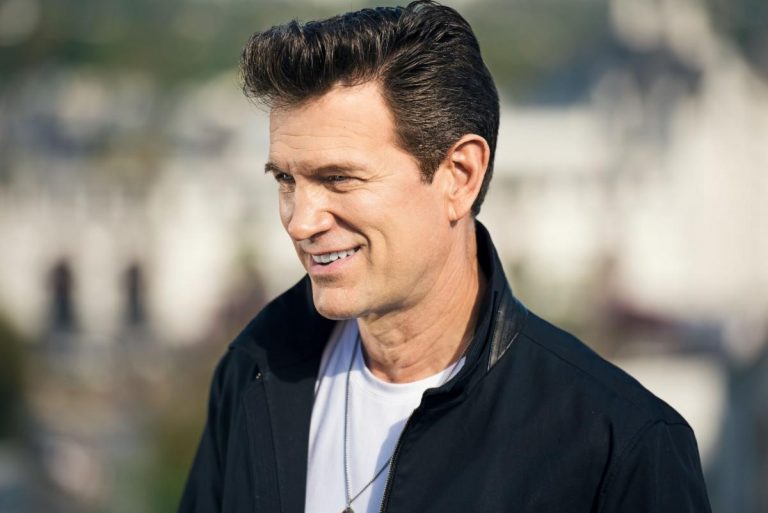
On October 10th, 2019, the Hollywood Bowl witnessed a moment of pure magic when Lana Del Rey invited Chris Isaak on stage for a hauntingly beautiful duet of his timeless classic, Wicked Game. The collaboration was unexpected, yet it felt completely natural—two voices, generations apart, blending into one unforgettable performance.

Originally released in 1989, Wicked Game became Chris Isaak’s signature song, cementing its place in music history with its dreamy guitar riffs and aching lyrics of forbidden love. The track has been covered by countless artists over the years, but Isaak’s version remains unmatched in its raw emotion.

For Lana Del Rey, whose own music often feels like a soundtrack to an old Hollywood film, Wicked Game is the perfect fit. Known for her nostalgic and cinematic style, she has always embraced songs that linger with melancholy and longing. Her voice added a sultry softness to Isaak’s deep, velvety tone, creating a version of the song that felt fresh while staying true to its roots.

The Hollywood Bowl, one of the most iconic venues in the world, amplified the intimacy of the performance. Surrounded by a starry Los Angeles night, fans were treated to a moment that blurred the line between past and present—a legendary artist revisiting his masterpiece, and a modern icon breathing new life into it.

More than just a duet, the performance highlighted the timeless nature of Wicked Game. Love, longing, and heartbreak are universal themes that transcend decades, and when Isaak and Del Rey shared the stage, it was as though the song had been waiting for this exact collaboration.

Their voices intertwined like a conversation between two souls who understand the beauty and the pain of love’s vulnerability. For fans, it wasn’t just a concert—it was a memory etched in music history.

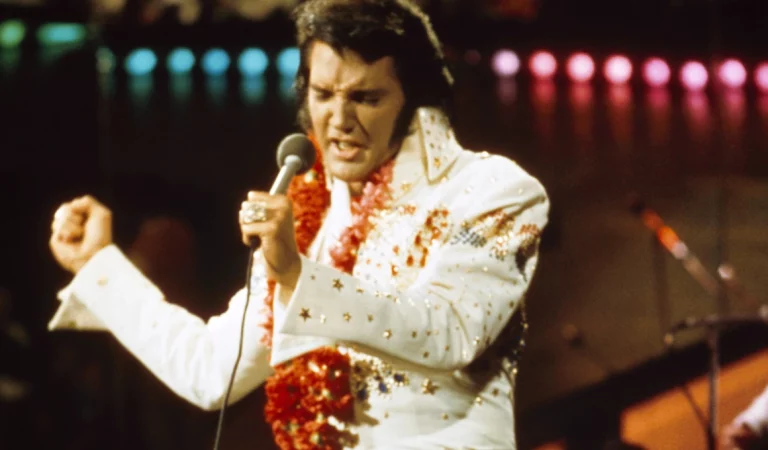
By the mid-1970s, the musical landscape had shifted dramatically. The raw energy of early rock ’n’ roll had given way to disco’s shimmering pulse and punk’s snarling rebellion. And at the center of this changing world stood Elvis Presley—not the leather-clad rebel who once shook the world, but a man who carried an almost tragic majesty. It was during this reflective, weary stage of his life that he recorded “Hurt”—a song that would become more than just another entry in his catalog. It was a haunting cry from deep within, a glimpse of vulnerability few artists ever dare to reveal. Released in March 1976 from the album From Elvis Presley Boulevard, Memphis, Tennessee, the track reached only No. 28 on the Billboard Hot 100, but its true home was on the country charts, where it climbed to No. 6.

The song itself had a history before Elvis touched it. Written by Jimmie Crane and Al Jacobs, it was first made famous by Roy Hamilton in 1954 as a soaring, operatic ballad. Yet when Elvis sang it, “Hurt” was reborn. By then, his life had become a storm—battles with declining health, inner turmoil, and the heavy crown of being “The King.” The words—“I’m hurt, much more than you’ll ever know”—were no longer just lyrics. They felt like confessions, torn straight from his soul. In Elvis’s hands, the song wasn’t merely performed; it was lived.

The sessions that produced “Hurt” were unlike traditional studio recordings. RCA engineers rolled a mobile setup into Graceland’s famed Jungle Room because Elvis, increasingly withdrawn, refused to work anywhere else. Within those familiar walls, surrounded by the trappings of his private world, he delivered one of his most devastating vocal performances. Each phrase carries exhaustion and defiance, as though he were clawing his way through the weight of his own existence. The thunderous roar he unleashed after the song’s climax became legendary, a visceral sound that stunned both the studio and later, live audiences. On stage, he would sometimes collapse to his knees at the end, a man broken yet unbowed, offering himself completely to the music.

For those lucky enough to see him in those final years, the performance of “Hurt” was unforgettable. Elvis looked fragile, worn down by illness and the demands of fame, yet the song ignited something within him. For a few minutes, he seemed to burn again with the intensity of the man who had once redefined music itself. But this wasn’t the fire of youth—it was the fire of pain, of confession, of release. It wasn’t about lost love alone; it was about the crushing loneliness of being trapped in legend, the toll of living in the spotlight, and the humanity behind the myth.

Today, more than forty years later, “Hurt” stands as one of Elvis Presley’s most powerful statements. Not simply a cover, not simply a hit, but a raw and aching testament to the man beneath the crown. It remains proof that sometimes, in our most fragile moments, we reveal our greatest truths.

In the wake of tragedy, music often becomes the voice of healing. Few moments capture that truth more powerfully than when Aerosmith joined forces with the Southern California Children’s Chorus to perform “Dream On” as a tribute to those affected by the Boston Marathon bombing.

Steven Tyler’s voice—raw, weathered, and timeless—met the purity of young voices, creating a contrast that was both haunting and uplifting. The children’s chorus carried an innocence that reminded listeners of resilience and renewal, while Aerosmith’s rock legacy added weight and depth to the moment. Together, they transformed one of the band’s most iconic songs into something far greater than a performance—it became a hymn of hope.

The lyrics of “Dream On” have always spoken about holding on, pushing through, and believing in tomorrow. In this tribute, those words took on new meaning. Every note rang with remembrance for lives lost, strength for survivors, and unity for a city still finding its way forward.

For Boston, the performance was not about celebrity or spectacle. It was about solidarity. It showed how music, when stripped to its heart, can carry a message that words alone cannot. The blending of Aerosmith’s rock anthem with the tender voices of children symbolized a bridge between grief and healing, darkness and light.

Years later, the memory of that tribute still resonates. It is a reminder that even in the face of senseless tragedy, art can rise to meet pain, giving people something to hold onto—something to believe in.

Aerosmith didn’t just sing “Dream On” that day. They gave Boston, and the world, a reason to keep dreaming.

In the stillness of August 8, while Nashville rested under the weight of night, Vince Gill’s voice cut through the silence with a trembling urgency. “Dolly, we have to do something,” he said over the phone, his grief pressing down on every word. “Reba’s hurting in a way I’ve never seen before.”

On the other end, Dolly Parton paused, her own heart still fragile from losing her husband. Her voice, when it finally came, was soft but resolute. “I know that pain, Vince. I can’t let her carry this alone.”

Within the hour, Vince was standing at Dolly’s doorstep with nothing but his guitar in hand. They sat together at her kitchen table, the quiet hum of an old refrigerator filling the gaps between them as they began sketching lyrics on scraps of paper. The untouched coffee pot in the corner grew cold, but neither noticed. What poured from their pens wasn’t just music—it was a promise of comfort for a dear friend.

By dawn, as the sky shifted from indigo to pale gold, they had finished what felt less like a song and more like a prayer. Dolly looked toward the window, her voice steady with conviction. “We don’t need a studio for this. We just need heart.”

A few hours later, barefoot on Dolly’s front porch, they began. Vince perched on the steps with his guitar, Dolly beside him, the wooden railing behind them holding the weight of countless shared memories. No cameras, no microphones—just the rhythm of cicadas, birdsong, and the creak of weathered boards beneath their feet.

The song they sang, now called You’re Not Walking Alone, carried the quiet strength of love that lingers after loss. Dolly’s voice trembled on the second chorus, Vince’s guitar steadying the melody as though holding her up. When the last note faded into the summer air, neither spoke. They didn’t need to.

The raw recording was sent straight to Reba. Alone in her farmhouse, she pressed play. For a few fleeting minutes, the weight of her grief lifted. She listened again. And again. Her message back was simple, but filled with meaning: “I feel him with me now.”

In a world where country music often shines its brightest under spotlights and spectacle, Dolly Parton and Vince Gill had chosen something quieter, more sacred. Not polished for charts or wrapped in studio perfection—just two voices, a guitar, and the unshakable bond of friendship.

And for Reba McEntire, who had just faced the unthinkable, it was exactly the song she needed.

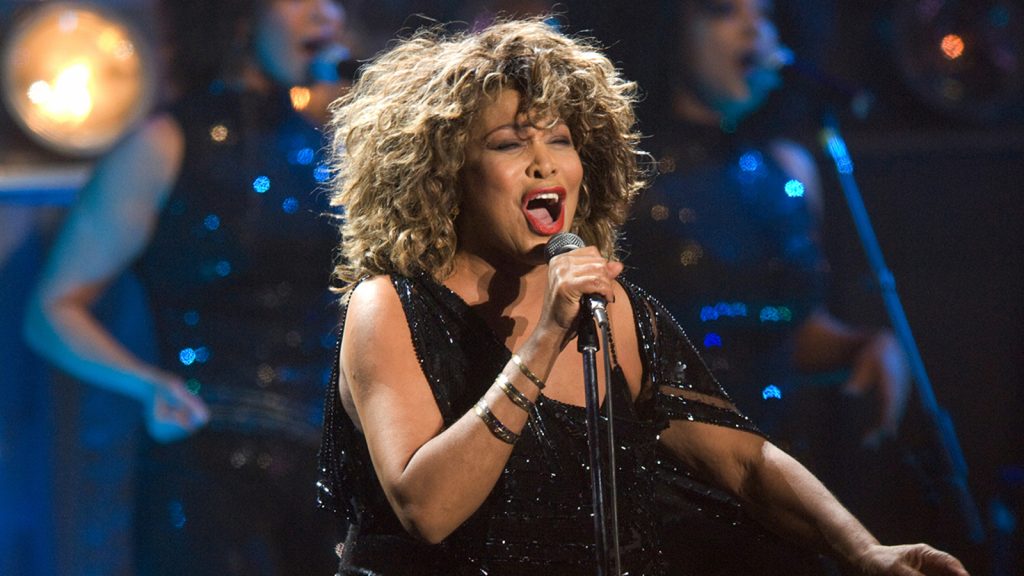
There’s something absolutely electric captured in that image—a moment when two icons, Tina Turner and David Bowie, combined their voices and energies in a performance that still resonates decades later. Today, let’s go deep into that unforgettable Live performance of “Tonight” during Tina Turner’s Private Dancer Tour.

On March 23, 1985, at Birmingham’s National Exhibition Centre, Tina Turner invited David Bowie on stage during her Private Dancer Tour. What followed was not just a duet—but a fusion of rock royalty and musical magnetism. Bowie, in his white tuxedo, and Turner, in commanding leather or shimmering attire (depending on the version), created a moment brimming with electric chemistry and artistic warmth.

The March 23 performance was filmed and included in the Tina Live: Private Dancer Tour video—and later, as part of the 1988 live album Tina Live in Europe.

Released as a single in late 1988, the live version soared to #1 in the Netherlands, climbed to #3 in Belgium, and entered Switzerland’s Top 20, marking its international success.

Journalist Jason Draper reflected on Bowie’s stage presence: “every inch the elegant suitor to Turner’s leather-clad rock siren,” noting the playful whisper that made Tina burst into laughter—a tender moment that spoke volumes.

Carlos Alomar, who worked with both artists, recounted Bowie wanted everything to feel comfortable and welcoming for Tina during the recordings—revealing the deep respect between them.

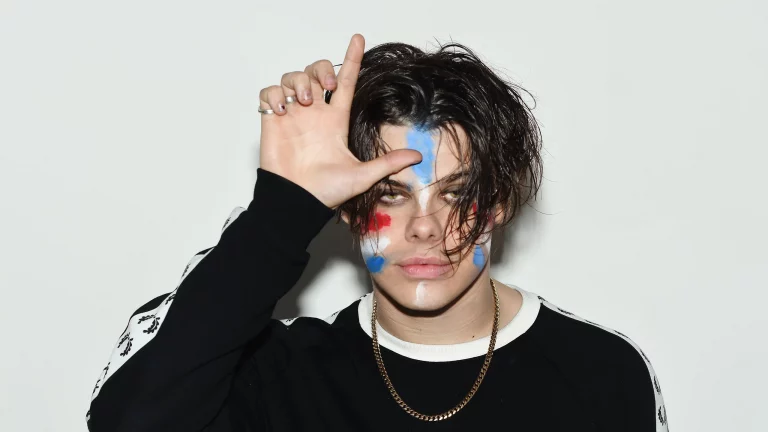
In a recent conversation with NME, Dominic Harrison — better known to fans as Yungblud — opened up about his latest project: creating a space in London that goes beyond the traditional idea of a shop.

The space, named Beautifully Romanticised Accidentally Traumatized (a title he trademarked years before Charli XCX’s Brat era, as he cheekily points out), will act as a hybrid hub where fans can buy clothes, grab a coffee, catch a live band, or simply hang out.

“I don’t even want to call it a shop,” Harrison explained. “It’s more like a fan club. A place where you belong. You can come in, pick up some merch if you feel like it, or just have a beer after work. It’s about connection.”

For Harrison, choosing Denmark Street as the location was essential. Known as Britain’s Tin Pan Alley, the street is steeped in music history and has been the battleground for preserving London’s creative soul against gentrification.

“The community fought so hard to keep music alive here,” he said. “Five years ago, we nearly lost it. When I first started, my manager and I had this tiny shoebox office above Hank’s Guitar Store. I remember saying, ‘Wouldn’t it be wild if one day we had a whole building here?’ That’s been in my head since I was 17.”

It’s a dream rooted not just in personal ambition but also in legacy. “Denmark Street is sacred,” Harrison continued. “This is where Elton John met Bernie Taupin, where the Sex Pistols lived and created chaos, where The Beatles and The Stones all had ties. To me, it’s about bringing a new generation into that history.”

Harrison also spoke about one of his greatest influences, Ozzy Osbourne, reflecting on how much performing “Changes” with him at the Back To The Beginning show meant.

“Ozzy was always my north star,” he said. “Him and Bowie shaped me. I was loud, over the top, and not always understood. Where others saw that as a weakness, Ozzy made me believe it could be my strength. Later, when I got to know him and Sharon personally, I saw that they always carved their own path. That’s what inspired me most — rejecting the idea of ‘this is how it’s done.’ Because once upon a time, ‘how it’s done’ was just someone’s crazy idea that eventually went stale.”

Now at 28, Harrison says he’s learned to tune out the noise. “I don’t waste energy on the naysayers anymore. When you’re starting out, it can mess with your head. But now? I laugh at it. It just fuels me. I’ve outgrown all that.