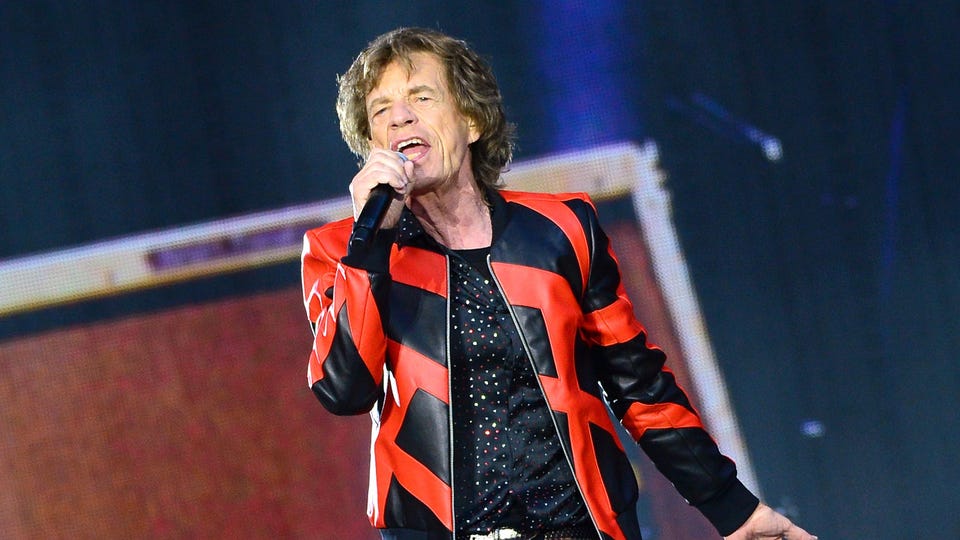
Mick Jagger recently turned heads when he stepped out with his younger girlfriend, Melanie Hamrick, at an exclusive pre-Oscars dinner party. The 81-year-old rock icon and the 37-year-old former ballerina attended Chanel and Charles Finch’s star-studded annual gathering at the Beverly Hills Hotel’s Polo Lounge in Los Angeles on Saturday.
For the occasion, Jagger sported a shimmering pink jacket layered over a gray t-shirt, paired with teal trousers, exuding his signature bold style. Hamrick, on the other hand, looked elegant in a strapless black midi dress, complementing the ensemble with black heels and a silver Chanel belt for a touch of sophistication.
The couple, who have been together since 2014, appeared affectionate throughout the night, sipping drinks and mingling with Hollywood A-listers. The Rolling Stones frontman was also seen deep in conversation with actors Adrien Brody and Colman Domingo, according to Page Six.
Jagger and Hamrick’s connection dates back over a decade when they first crossed paths in Tokyo while The Rolling Stones and the American Ballet Theatre were both touring. However, their romance didn’t blossom until later that year when Jagger extended an invitation for Hamrick to attend one of his concerts in Zurich.
Legendary musician Neil Young has revealed plans to kick off the European leg of his Love Earth tour with a special free concert in Ukraine.
Announced via his official website, Young confirmed that he and his band, The Chrome Hearts, will perform a show “for everyone,” with exact dates and venue details expected soon.
The Love Earth tour, supporting Young’s upcoming album Talkin’ to the Trees, will commence this summer. Beginning in Rättvik, Sweden, the tour will take Young and his band across Europe and North America before concluding in Los Angeles on September 15th.
“Join us as we celebrate the Summer of Democracy,” Young wrote. “Old songs, new songs, deep jams! We’ll be together again. The Chrome Hearts and I are ready for you!”
Young has been outspoken about the political situation in Ukraine, previously condemning Russian President Vladimir Putin as a leader with a “twisted vision” trying to “rewrite history for his own gain.”
His concert announcement follows a recent meeting between U.S. President Donald Trump and Ukrainian President Volodymyr Zelenskyy. Just days earlier, Young published a blog post titled Leader of the Free World No More, in which he criticized the U.S.’s diminished global standing.
“The U.S. has lost its role as a leader,” Young wrote. “But true Patriots will always rise. The world will see who we really are.”
Beyond his tour, Young is also set to headline BST Hyde Park in London, marking his first return to the festival since 2019, when he co-headlined with Bob Dylan. He will also make an appearance at Glastonbury after previously withdrawing over corporate disputes.
Additionally, Young has announced Coastal, a documentary chronicling his 2023 solo tour. Accompanying the film will be Coastal: The Soundtrack, a live album featuring stripped-down renditions of his classics.
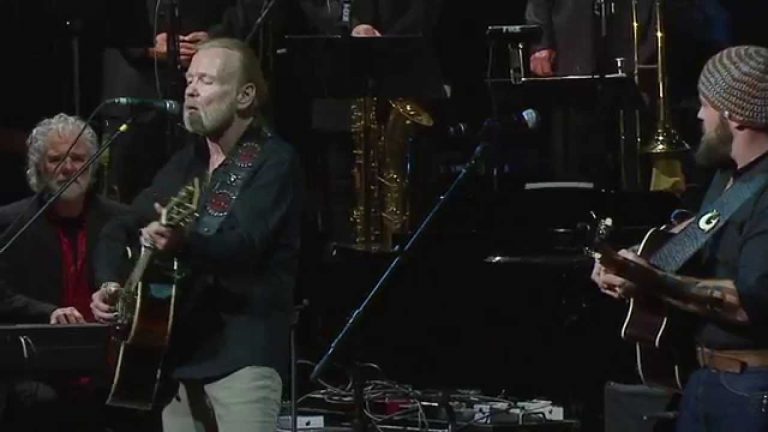
Some moments in music go beyond being performances—they become iconic, etching themselves into the collective memory of fans and musicians alike. One such moment came when Vince Gill, Gregg Allman, and Zac Brown united to perform Midnight Rider during All My Friends: Celebrating The Songs and Voice of Gregg Allman. This star-filled tribute not only honored Allman’s incredible legacy but also highlighted the enduring influence of Southern rock on music as a whole.
Midnight Rider, written by Allman and first popularized by the Allman Brothers Band, has become one of the most recognizable songs in rock history. When performed by Gill, Brown, and Allman’s own presence, the song takes on new layers of emotion and depth. It’s a seamless blend of history, artistry, and raw feeling—truly reflecting Allman’s indelible mark on the world of rock music.
Vince Gill, renowned for his smooth country voice and masterful guitar playing, brought warmth and richness to the song. His soaring vocals respected Allman’s original tone while giving it a fresh, personal twist. The synergy between Gill’s voice and the musicians around him was a perfect example of musical collaboration at its finest.
Zac Brown, known for his gritty and passionate style, added his own Southern rock flair to the performance. His distinct voice, full of heart and soul, fit perfectly with the song’s bittersweet yet hopeful mood. His guitar work wove effortlessly through the performance, enhancing the tribute in ways only he could.
Yet, even in his physical absence, Gregg Allman’s presence was felt throughout the performance. As the final notes of Midnight Rider hung in the air, his influence echoed in every note played and sung. It was a fitting tribute to a legend, a reminder that his impact on music transcends time.
The Midnight Rider performance at All My Friends was more than just a tribute—it was a celebration of Southern rock’s essence, of Gregg Allman’s legacy, and the deep bond between artist and audience. It proved that music, at its core, is not merely entertainment, but a living testament to the power of shared stories and the lasting impact of true musical greatness.
When Lynyrd Skynyrd took the stage in Atlantic City for a powerful rendition of Sweet Home Alabama, it wasn’t just a performance—it was a celebration of Southern rock at its finest. The band, with decades of musical legacy, brought their signature intensity and soul to the stage, transforming the iconic anthem into an electrifying event. The energy was palpable, with fiery guitar solos, thunderous drums, and a crowd that matched the band’s passion note for note. It felt less like a concert and more like a living, breathing testament to why Sweet Home Alabama has endured as a rock ‘n’ roll anthem.
As soon as the first few chords rang out, the room came alive with anticipation. The crowd erupted, singing along with every word, their enthusiasm underscoring the timeless connection between the band and their fans. Ronnie Van Zant’s voice carried through the venue with the same raw power that has defined the song for decades, while Gary Rossington and Rickey Medlocke’s guitar work created an intricate, seamless blend of energy and emotion.
It wasn’t just the performance that left an impact; it was the shared experience between Lynyrd Skynyrd and the audience. The connection was undeniable, with fans feeling every note as if it was their own. The band’s legendary chemistry was on full display, proving that despite the years, their fiery spirit and musical brilliance remain intact. The performance wasn’t merely a song—it was a moment in rock history, a reminder of the power of Southern rock, and the lasting legacy of Lynyrd Skynyrd.
Ralph Stanley’s voice, rugged and steeped in the spirit of the Appalachian mountains, brings a sense of timeless authenticity, like hearing a story passed down through generations. Ricky Skaggs adds a powerful touch, his high notes soaring with emotion, lifting the song to new heights where technique and heart blend seamlessly.
But it’s Patty Loveless who truly resonates—her voice a perfect mix of sweetness and sorrow, evoking nostalgia with every word. Each note she sings carries the weight of a memory, pulling the listener deep into the emotion of the song.
Together, these three voices—each unique yet perfectly complementing one another—create a harmony that feels effortless and pure. The song unfolds like a story, not just telling of love lost, but stirring deep, personal memories in the hearts of all who hear it. This isn’t just music; it’s a slice of the American soul, a reflection of bluegrass at its finest—timeless, powerful, and deeply moving.
Eric Clapton and Steve Winwood step into the spotlight, their presence alone enough to command the room. As the opening notes of Can’t Find My Way Home drift through the air, a hush falls over the audience. There’s no need for grand gestures or elaborate production—just two legendary musicians letting their artistry do the talking.
Winwood’s voice, rich with experience and emotion, carries the song’s haunting melody effortlessly, each lyric steeped in longing. Clapton, ever the master of subtlety, responds with his guitar, weaving notes that whisper and cry in perfect harmony. Every bend, every chord, every pause feels intentional, like a conversation between old friends who speak through music rather than words.
This isn’t just a performance—it’s a moment suspended in time, a reminder of an era when music was raw, honest, and deeply human. In a world of excess, Clapton and Winwood prove that true artistry needs no embellishment.
Adam Levine—Maroon 5’s slick frontman—surprised everyone at Howard Stern’s 60th Birthday Bash in 2014 with a stunning cover of Prince’s “Purple Rain.” Backed by Train at NYC’s Hammerstein Ballroom, Levine didn’t just sing; he shredded the iconic guitar solo, proving he’s more than a pop voice.
Levine called it his career’s most “out-of-body” moment, a nerve-wracking tribute to a hero that paid off. Released fully online after Prince’s 2016 passing, it’s a heartwarming glimpse of a star stepping beyond his lane, risking it all to honor a legend. From terrified backstage sketches to a roaring crowd of icons like Jon Bon Jovi, Levine’s “Purple Rain” is a short, sweet story of guts and glory—proof that even pop idols can rock your soul.
R.E.M. fans in Athens, Georgia, were in for an unforgettable night when all four original band members—Michael Stipe, Bill Berry, Peter Buck, and Mike Mills—made an unannounced appearance at the 40 Watt Club on Thursday, February 27.
The surprise reunion stunned the crowd as the band launched into their 1984 track, Pretty Persuasion. Their performance was part of an R.E.M. tribute show organized by actor Michael Shannon and musician Jason Narducy, who are currently touring in honor of the 40th anniversary of Fables of the Reconstruction, R.E.M.’s 1985 album.
Beyond Pretty Persuasion, Berry took the stage on drums for Wendell Gee, while Mills joined Shannon and Narducy for covers of Wire’s Strange, Pylon’s Crazy, and the deep-cut R.E.M. track 1,000,000. Meanwhile, Mills and Buck teamed up for a few additional songs, including Second Guessing from Reckoning, as well as Velvet Underground classics Femme Fatale and There She Goes Again.
Following the impromptu set, R.E.M. shared a nostalgic moment on Instagram, quoting longtime art director Chris Bilheimer, who captured the night in a photograph: “It’s always fun when you get together with your old coworkers.” The band added, “INDEED!!”
Despite Michael Stipe’s longtime insistence that R.E.M. is officially retired, this marks the second time in less than a year that the band has reunited onstage since disbanding in 2011. It’s also only the second time Bill Berry has performed with his former bandmates since his departure in 1997.
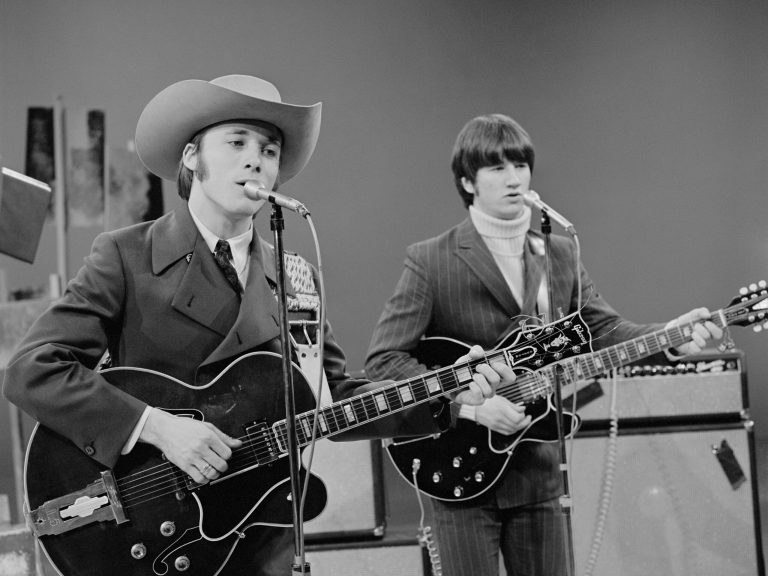
Released in 1967, “For What It’s Worth” quickly became a defining anthem of the era, crafted by the legendary American-Canadian band Buffalo Springfield. Originally a single, it was later featured on their self-titled debut album, ensuring its place in the rock music hall of fame. The song stands out not only for its catchy melody but also for its deep connection to the socio-political unrest of the 1960s counterculture.
Musically, “For What It’s Worth” carries the signature folk-rock sound that Buffalo Springfield became known for. At its core, Stephen Stills delivers a memorable guitar riff that grabs the listener’s attention immediately. Neil Young’s emotive lead guitar work enhances the arrangement, which is a blend of crisp guitar tones, steady drums, and harmonized vocals that evoke a sense of unity and urgency.
However, the true strength of the song lies in its lyrics. More than just a catchy tune, “For What It’s Worth” serves as a sharp commentary on the societal turbulence of the time, touching on themes of protest, confusion, and disillusionment. The opening lines—“There’s something happening here / What it is ain’t exactly clear”—captured the confusion and unrest of a generation caught between the Vietnam War, the civil rights movement, and a society undergoing rapid change.
Emerging during a time of profound social upheaval, “For What It’s Worth” became a rallying cry for those demanding change. Its message of questioning authority and striving for justice resonated deeply with activists of the era, solidifying its place as a protest anthem. Despite the years that have passed, the song’s relevance continues, sparking thought and inspiration among new generations of listeners.
For those who witnessed the cultural shifts of the 1960s, the song remains a powerful reminder of a time of passionate activism and social change. For younger audiences, it’s a symbol of hope and a testament to music’s enduring ability to inspire transformation. “For What It’s Worth” has earned its place as a timeless song, remaining a symbol of resistance and resilience throughout the decades.
“For What It’s Worth” is a classic rock song by the American-Canadian rock band Buffalo Springfield. It was released in 1967 as a single and later included on their self-titled debut album. The song is celebrated for its timeless message, catchy melody, and its status as an anthem of the 1960s counterculture. Musically, “For What It’s Worth” is characterized by its folk-rock sound and a memorable guitar riff played by Stephen Stills. The song’s arrangement features clean guitar tones, steady percussion, and harmonized vocals that blend seamlessly with Neil Young’s distinctive lead guitar work.
WATCH VIDEO: https://tinyurl.com/3ych5rpm
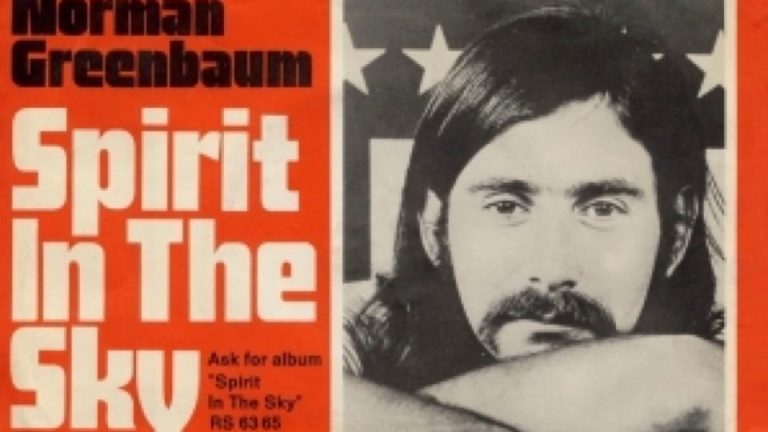
“Spirit in the Sky” grabs your attention from the very first note, with its unmistakable fuzz-toned guitar, soon joined by energetic drums, bass, handclaps, and gospel-like backing vocals. Written and performed by Norman Greenbaum, the track surged onto the charts, staying for 14 weeks and eventually reaching number three in the US. But what made this quirky tune such an unexpected success?
Greenbaum, a Malden, Massachusetts native, grew up playing in bands during high school and college. After studying music at Boston University, he dropped out and moved west, where he joined the psychedelic folk band Dr. West’s Medicine Show and Junk Band. The group had a minor hit in 1966 with “The Eggplant That Ate Chicago.” After the band split, Greenbaum moved on to a few other short-lived groups before beginning his solo career. Interestingly, “Spirit in the Sky” wasn’t even the first single from his 1969 album of the same name. Reprise Records initially pushed other tracks, but none made much of an impact on the charts or radio.
When “Spirit in the Sky” was finally released, it quickly became a hit, climbing both US and UK charts in late 1969 and early 1970. Greenbaum, who is Jewish, has mentioned that he wanted to write a gospel song, believing there was a strong market for it. The signature guitar sound was crafted using a Fender Telecaster with a built-in fuzz box. The Stovall Sisters, a gospel trio from Oakland, provided the backing vocals, giving the track its unique sound. A blend of rock and religion, the song became a massive hit, inspiring numerous covers, including one by a young Elton John who recorded versions for budget-priced compilations.
While “Spirit in the Sky” stole the spotlight, the album also featured other psychedelic pop tracks like “Marcy” and the offbeat “Canned Ham.” Greenbaum released a couple more albums, including 1972’s Petaluma, named after a California dairy farm he owned. That album, featuring guitar work from Ry Cooder, was his last original release. He retired from music in the 1970s but occasionally performed live and still reflects on his career in interviews.
The story of “Spirit in the Sky” didn’t end with Greenbaum, though. In 1986, British group Doctor and the Medics covered the song for their album Laughing at the Pieces, scoring a number-one hit in the UK and gaining traction on MTV in the US. While the band had other charting singles, their version of “Spirit in the Sky” remains their most successful.
The song made a third UK chart appearance in 2003 when it was re-released as a charity single for Comic Relief, sung by Gareth Gates. “Spirit in the Sky” continues to resonate, appearing in commercials, TV shows like House and Supernatural, and movies including Wayne’s World 2, Contact, Ocean’s 11, and the Guardians of the Galaxy trailer. Its legacy endures, a timeless spirit that lives on.
The Famous song, “Spirit in the Sky” was written by Norman Greenbaum in just 15 minutes, and he has been living solely on the royalties for the last 50 years.