Category

Rock

Category

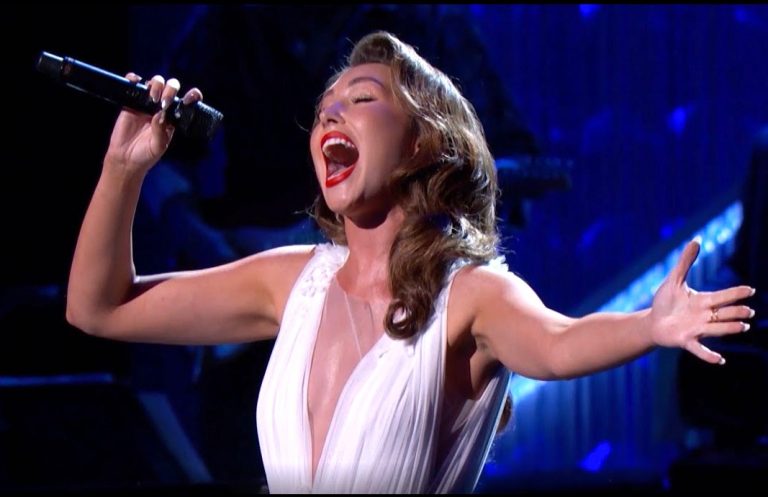
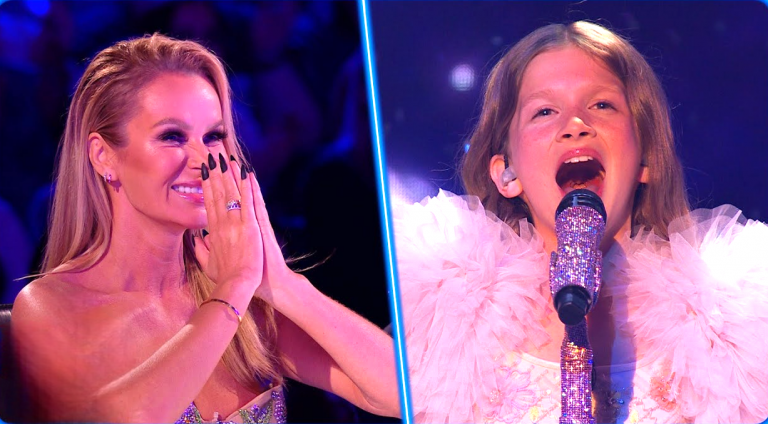
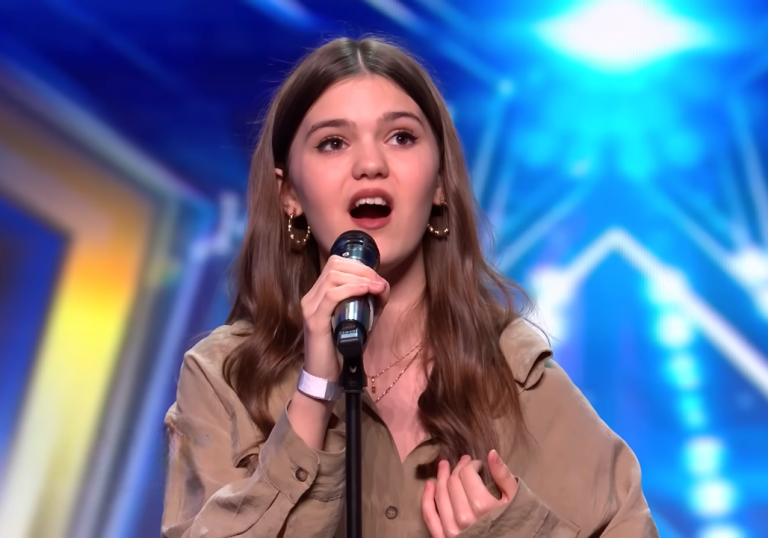
At just 14 years old, Maya Giotea delivered one of the most unforgettable auditions on Britain’s Got Talent 2025. Walking onto the stage with calm confidence, she chose to perform a powerful song by Beyoncé—an artist known for her strong vocals and big stage presence. From the very first note, it was clear Maya was ready for the challenge.

Her voice was strong, emotional, and incredibly controlled for someone so young. Maya didn’t just sing the song—she felt it. She hit the high notes with ease and filled the theater with emotion, leaving both the audience and judges completely amazed. The performance showed maturity far beyond her age.

14-Year-Old Maya Giotea Wins the Golden Buzzer with a Stunning Beyoncé Performance | BGT 2025

As the final note echoed through the room, the crowd erupted in applause. Then came the magical moment everyone dreams of—the Golden Buzzer was pressed. Gold confetti rained down as Maya stood on stage in shock and tears, realizing her life-changing moment had arrived.

Maya Giotea’s Beyoncé performance was more than just an audition—it was a star-making moment. Her Golden Buzzer win proved that talent has no age limit, and her journey on BGT 2025 is only just beginning.


After winning hearts with her Golden Buzzer audition, 14-year-old Maya Giotea returned to the Britain’s Got Talent 2025 stage for the Semi-Final and proved she was no one-hit wonder. This time, she chose a powerful hit by RAYE, a song known for its deep emotion and demanding vocals.

From the moment the music started, Maya showed a new level of confidence and artistry. Her performance felt cinematic, almost like watching a scene from an award-winning film. Every lyric was delivered with emotion, and her facial expressions and vocal control made the song feel personal and real. Many viewers described it as an “Oscar-winning” performance because of how dramatic and moving it was.

Maya’s voice soared through the toughest parts of the song with ease, showing incredible growth since her audition. She didn’t rely on flashy effects—instead, she let her voice and storytelling do all the work. The audience was completely silent, hanging on to every note.

As the final note faded, the theater exploded with applause. The judges praised her maturity, emotional depth, and ability to connect with the song despite her young age. Maya Giotea’s Semi-Final performance confirmed what many already believed: she is a true star in the making, and one of the strongest contenders of BGT 2025.

One of the most touching moments of America’s Got Talent 2023 came when the Mzansi Youth Choir stepped onto the stage with a very special purpose. Before singing, they shared that their performance was dedicated to a late friend of Simon Cowell, setting an emotional tone that instantly captured everyone’s attention.

As the choir began to sing, their voices filled the theater with warmth, unity, and deep feeling. Every note carried meaning, and their powerful harmonies created a moment of pure connection. It wasn’t just a performance—it felt like a heartfelt message of love, remembrance, and hope.

What happened next surprised many. Simon Cowell, known for his tough judging style, was visibly moved. The emotion of the song clearly touched him, and the audience could feel the impact as well. The performance turned into one of those rare AGT moments where music speaks louder than words.

The Mzansi Youth Choir reminded everyone that music can heal, honor, and bring people together. Their tribute on the AGT stage was unforgettable, proving once again that sometimes the most powerful performances come straight from the heart.


Before she passed away, Nightbirde—whose real name was Jane Marczewski—left an unforgettable mark on the world with her powerful audition on America’s Got Talent. When she walked onto the stage, she bravely shared her battle with cancer, explaining that she had been given only a small chance of survival. Despite this heartbreaking reality, she stood strong, smiling, and ready to sing.

Nightbirde performed her original song “It’s OK,” a simple yet deeply emotional piece inspired by her own pain, hope, and strength. Her voice was gentle but powerful, and every lyric felt honest and real. The song wasn’t about giving up—it was about accepting life’s hardest moments while still choosing hope. The audience was silent, listening to every word.

The judges were visibly moved, especially Simon Cowell, who stopped her performance and pressed the Golden Buzzer. As golden confetti fell from the ceiling, Nightbirde broke down in tears, creating one of the most emotional moments in AGT history. Her audition quickly went viral, touching millions of people around the world who saw her as a symbol of courage and resilience.

Even after her passing, Nightbirde’s message continues to live on. Her audition reminded the world that it’s okay to be broken, it’s okay to struggle, and it’s okay to keep believing. Through her music and her spirit, Nightbirde didn’t just perform—she inspired a global audience and left a legacy that will never be forgotten.

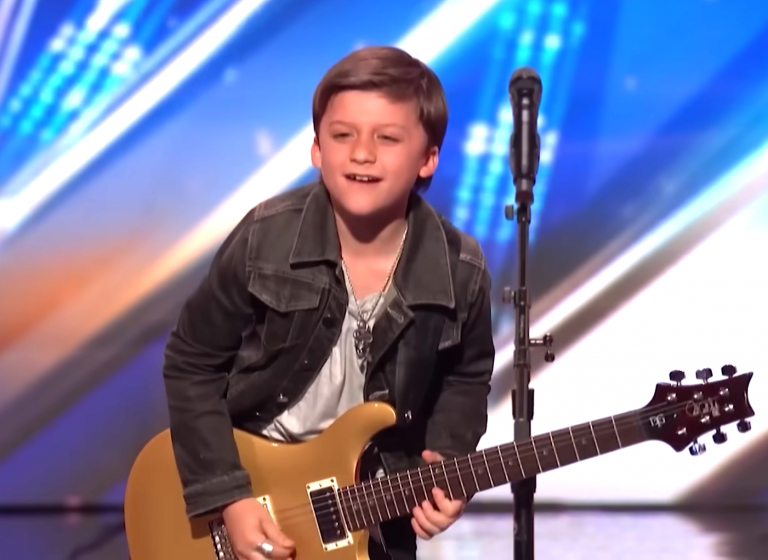
At just 17 years old, Mia Morris delivered one of the most refreshing auditions on America’s Got Talent 2022. Walking onto the stage alone, she proved she didn’t need a full band behind her to make a powerful impact. With confidence and creativity, Mia performed her own original song while playing multiple instruments, turning the stage into her personal musical playground.

What made her audition special was how naturally she blended everything together. She sang with emotion, played instruments live, and controlled the rhythm all by herself. It felt less like an audition and more like watching a young artist fully in her element. Her one-woman-band style showed not only talent, but also maturity beyond her years.

The judges and audience were clearly impressed. Mia’s originality, musical skill, and fearless performance set her apart from typical auditions. She didn’t just sing a song — she told a story and showed who she is as an artist.

Mia Morris’ AGT audition was a reminder that age doesn’t limit creativity. With her unique sound and bold approach, she left a lasting impression and proved that the future of music is in very capable hands.

At the 40th annual Rock & Roll Hall of Fame Induction Ceremony in Los Angeles on November 8, 2025, music history was celebrated with passion and reverence — and none more so than the late Joe Cocker, whose soulful voice and transformative covers earned him a long-overdue place in the Rock Hall. Cocker, who passed away in 2014, was inducted posthumously in a star-studded tribute that closed the evening with a rousing performance of his signature song: “With a Little Help From My Friends.”

Why “With a Little Help From My Friends” Matters

Though originally written and recorded by The Beatles in 1967, Cocker’s 1968 interpretation of “With a Little Help From My Friends” became iconic for its gritty, soulful energy and dramatic arrangement. That version not only helped launch his career — it also became beloved by generations of fans and is widely considered the definitive rock-soul take on a classic tune.

In fact, Cocker’s connection to this song runs deep: it became his first major breakthrough and was a highlight of his set at Woodstock in 1969, where his wild performance helped cement his reputation as one of rock’s most visceral live performers.

Making the Song His Own

The Rock Hall tribute underscored the unique place Cocker holds in rock history: not just as a singer, but as an interpreter of songs. As Bryan Adams noted during the ceremony, Cocker had a rare ability to take songs originally recorded by others — such as The Beatles’ classic — and transform them into something deeply personal and powerful.

Artists and fans alike have long admired Cocker’s version of “With a Little Help From My Friends,” with many arguing that his version stands shoulder-to-shoulder with the original — a testament to his influence on rock and soul music alike.

In December 2025, acclaimed singer-songwriter St. Vincent (Annie Clark) kicked off a new musical segment on The Late Show with Stephen Colbert called “Under the Covers.” The premise is simple: invite artists to perform beloved songs by musicians who have influenced them. For the very first installment, Colbert brought out St. Vincent to perform a rendition of David Bowie’s iconic 1975 hit “Young Americans.”

“Young Americans” is one of David Bowie’s most celebrated songs — a sharp pivot from his glam-rock roots into soul and funk territory, coining the term “plastic soul.” The original track, from Bowie’s Young Americans album, blended social commentary with a groove-laden arrangement that marked a stylistic transformation in his career.

St. Vincent chose the song not only for its musical depth, but also because she first performed it live at the Love Rocks NYC charity concert in 2023, where her band delivered the song with a full horn section and backing vocals reminiscent of the original vibe.

The Performance on Colbert

Her Late Show performance stayed close to Bowie’s structure — preserving the song’s groove and instrumental character — but also reflected her artistic identity. One subtle tweak was updating the lyric “Do you remember President Nixon?” to “President Biden,” grounding the performance in a contemporary political moment while tipping her hat to Bowie’s original social critique.

Critics and fans alike praised the performance for its energy and respect for the source material. Many described it as a fitting tribute to Bowie’s legacy and a strong kickoff for the Under the Covers segment, with some online commentary highlighting how goosebumps and emotional resonance emerged from Clark’s delivery.

St. Vincent & Bowie: Influence and Acknowledgment

St. Vincent has long cited David Bowie as an influence, and her choice to perform “Young Americans” underscores that artistic lineage. Bowie’s chameleonic persona — constantly reinventing his sound across genres — is something Clark has often embraced in her own genre-bending career.

This isn’t the first time she’s paid homage: her live cover at Love Rocks NYC featured saxophones, backing singers, and Bowie-esque stage moves that delighted audiences and drew direct parallels between her performance style and Bowie’s showmanship.

Originally released during a turbulent period in American culture, Bowie’s “Young Americans” mixes social commentary with soulful melodies and a groove influenced by Philadelphia soul and R&B. The song lyrically references political and social shifts in the U.S., often seen as a reflection — and subtle critique — of the country’s identity in the mid-1970s.

Bowie’s move into soul music was initially controversial among purists but ultimately helped widen his musical palette and influence. The song remains one of his most influential tracks, inspiring artists across genres.

Forget everything you think you know about guitar solos. Last night at London’s legendary Brixton Academy, a new kind of rock storm was brewing. On stage with Machine Gun Kelly, guitarist Sophie Lloyd didn’t just play Metallica’s iconic “Enter Sandman”—she reclaimed it, delivering a performance that left the metal community buzzing and a new generation of fans in awe.

The moment the first, ominous notes of Kirk Hammett’s legendary riff echoed through the venue, the crowd knew something special was happening. But this wasn’t a mere copy. Dressed in her signature rock-star style, Lloyd attacked the song with a contagious energy. Her playing was powerful, precise, and full of raw feeling—honoring the original’s muscle while injecting it with her own modern flair.

This wasn’t her first time owning a global stage, as fans vividly remember her viral, show-stopping “UNREAL GUITAR SOLO” at the Rugby World Cup 2025 Final, where she fused shredding virtuosity with anthemic power for millions.

That same arena-ready command was on full display at Brixton, proving her viral moments are just a prelude to her live prowess. In that moment, the online virtuoso solidified she’s the real deal, honoring metal’s legacy while boldly claiming her future as a guitar hero.

The roar of approval wasn’t just for a song—it was for a star who has officially arrived, seamlessly leaping from sports arenas to rock temples.

When Jeff Beck and Beth Hart performed “I’d Rather Go Blind” live in 2017, the result was pure musical magic. The song, a classic soul blues track originally made famous by Etta James, became something deeply personal and emotional in their hands. From the first note, the performance pulls listeners into a raw and honest moment on stage.

Beth Hart’s voice is the heart of the performance. She sings with pain, strength, and vulnerability, making every word feel real. Her powerful vocals rise and fall with emotion, as if she is living the song in that very moment. Standing beside her, Jeff Beck doesn’t try to overpower the song. Instead, his guitar gently speaks back to her voice, adding feeling rather than flash.

Jeff Beck’s guitar work is simple but incredibly expressive. Each note feels carefully chosen, almost like a conversation with Beth Hart’s vocals. He uses space and tone to let the emotion breathe, proving once again why he is considered one of the greatest guitarists of all time.

The 2017 live performance is special because it feels honest and unpolished in the best way. There is no need for big effects or tricks—just two incredible artists connecting through music. Together, Jeff Beck and Beth Hart turn “I’d Rather Go Blind” into a moving experience that stays with you long after the song ends.


Beth Hart and Joe Bonamassa’s live performance of “I’d Rather Go Blind” in Amsterdam is one of the most unforgettable modern blues moments. Recorded during their tour together, the performance shows the deep musical chemistry between the two artists and their shared love for classic soul and blues music. The Amsterdam audience witnessed something truly special—raw emotion, honesty, and world-class musicianship all in one song.

Beth Hart delivers the song with intense feeling and vulnerability. Her voice moves from soft and fragile to powerful and heartbreaking, capturing the pain and longing at the core of the lyrics. Every word feels personal, as if she is telling her own story. Her emotional connection to the song makes the performance deeply moving and impossible to ignore.

Joe Bonamassa perfectly complements Beth’s vocals with his expressive guitar playing. Instead of flashy solos, he focuses on tone, timing, and emotion. His guitar responds to Beth’s voice almost like a second singer, adding depth and soul to the performance. The way he lets notes linger shows his respect for the song’s emotional weight.

The live Amsterdam version stands out because of its atmosphere. The crowd is quiet and fully engaged, allowing the emotion to fill the room. With just voice, guitar, and feeling, Beth Hart and Joe Bonamassa transform “I’d Rather Go Blind” into a powerful blues experience that proves why their collaboration is so highly praised by fans around the world.

When Blackberry Smoke performed “Free Bird / Tuesday’s Gone” as a tribute to Gary Rossington, fans of Southern rock felt a powerful wave of emotion. Rossington, a founding member of Lynyrd Skynyrd, helped shape some of the most unforgettable songs in rock history. His music influenced generations, and this tribute was a heartfelt way to remember his legacy.

In this performance, Blackberry Smoke blends two of Lynyrd Skynyrd’s most beloved songs — Free Bird and Tuesday’s Gone. Free Bird is known for its soaring guitar solos and emotional lyrics about freedom and farewell. Tuesday’s Gone carries a more reflective, soulful vibe. Together, the songs create a moving tribute that celebrates both Rossington’s musical spirit and the impact he had on rock music.

Blackberry Smoke’s performance stays true to the spirit of the originals while adding their own style. Their strong harmonies, skilled guitar work, and passionate delivery make the tribute feel personal and sincere. Audience members, whether longtime fans of Lynyrd Skynyrd or new listeners, are drawn into the performance — singing, cheering, and honoring the memory of Rossington.

This tribute shows how music connects people across time. By performing Free Bird / Tuesday’s Gone, Blackberry Smoke didn’t just play great songs — they reminded everyone why Southern rock remains alive in the hearts of fans around the world.

Peter Frampton’s live performance of “Baby, I Love Your Way” at The Royal Albert Hall in 2022 was a magical moment for fans of classic rock and soulful love songs. Originally released in 1975, this song became one of Frampton’s most famous hits. Its smooth melody and heartfelt lyrics capture the feeling of deep affection and devotion.

At The Royal Albert Hall, one of the world’s most historic music venues, Frampton and his band delivered a warm and energetic version of the song. Frampton’s voice was rich and expressive, filled with emotion that matched every word of the lyrics. The crowd responded with smiles, sing-alongs, and applause, showing just how much this song still means to people decades after its first release.

The live performance stood out not just for the music, but for the connection between Frampton and the audience. In 2022, he proved that his talent and passion for performing are as strong as ever. “Baby, I Love Your Way” in this setting felt both timeless and personal — a beautiful reminder of love’s power and music’s ability to bring people together.


Peter Frampton’s “Baby, I Love Your Way” has been a fan favorite for decades, and two unforgettable live performances show why this song still connects with audiences around the world.

At The Royal Albert Hall in 2022, Frampton delivered a warm and heartfelt version of the song, filling the historic stage with emotion and energy. His voice, rich with experience, carried every word of the lyrics while the audience sang along with joy and admiration. The performance felt timeless — a perfect celebration of love and connection that made the night special for both Frampton and his fans.

But long before that, on July 2, 1977, Frampton brought the same song to life at the Oakland Coliseum Stadium in California. This version, often shared as the official live recording from the tour, captured the height of Frampton’s popularity in the 1970s. The large crowd showed their excitement with cheers and applause, and Frampton’s guitar work — especially his expressive phrasing and melodic solos — added a powerful rock energy to the romantic lyrics. This 1977 performance became iconic because it combined raw live passion with Frampton’s musical genius during his peak years.

Originally released in 1975, “Baby, I Love Your Way” quickly became one of Peter Frampton’s most beloved songs. Its gentle feel, romantic words, and unforgettable melody made it a classic — and live performances like those at the Royal Albert Hall and Oakland Coliseum prove its lasting influence. Whether decades apart or in historic venues, Frampton’s performances remind us that great music can make every audience feel connected and uplifted.

Paul Simon’s live performance of “The Boxer” in Paris is a beautiful reminder of why the song remains one of his most loved classics. Originally released in 1969 with Simon & Garfunkel, “The Boxer” tells the story of a lonely young man struggling to find his place in the world. When Paul Simon performs it live in Paris, the song feels even more personal and emotional.

On stage, Simon delivers the lyrics with calm confidence and deep feeling. His voice may be softer than in his younger years, but it carries wisdom and honesty that make the story stronger. The gentle acoustic arrangement, combined with the powerful drum accents that define the song, creates a magical atmosphere. The Paris audience listens closely, fully drawn into every word.

This live performance shows how “The Boxer” has aged gracefully. Decades after it was first written, the song still speaks to anyone who has faced hardship, doubt, or disappointment. Paul Simon’s performance in Paris proves that great music never fades—it only grows more meaningful with time.


“Bridge Over Troubled Water” is one of the most iconic songs by Paul Simon and Art Garfunkel, and the HD performance (6/6) beautifully captures its emotional power. Written by Paul Simon and released in 1970, the song became a symbol of comfort, friendship, and hope during a time of social change.

In this performance, Art Garfunkel’s soaring lead vocals take center stage, perfectly expressing the song’s message of support and reassurance. Paul Simon’s songwriting shines through the simple yet powerful lyrics, while the gentle piano arrangement builds into a moving and dramatic finale. The harmony between the two artists feels effortless, showing why their partnership was so special.

“Bridge Over Troubled Water” went on to win multiple Grammy Awards, including Song of the Year and Record of the Year, and remains one of the best-loved songs in music history. This HD performance reminds listeners why Simon & Garfunkel are considered one of the greatest duos of all time, and why this song continues to bring comfort to people around the world.