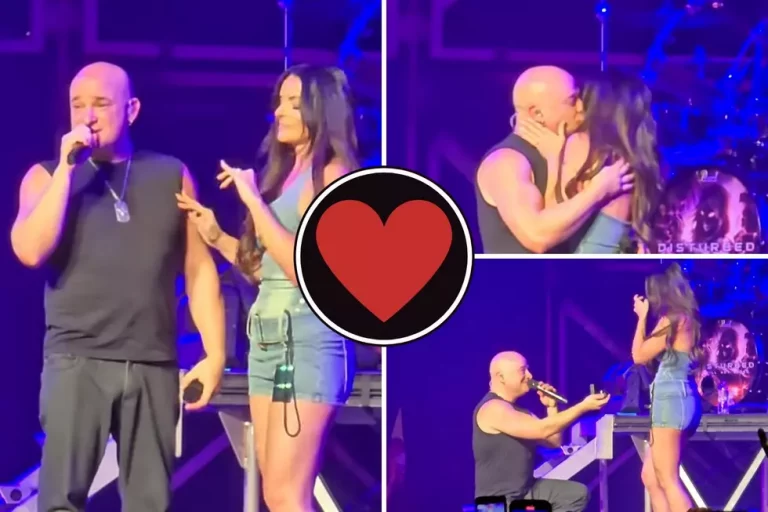
During Disturbed’s concert at the Golden 1 Center in Sacramento, California, on May 9, 2025, frontman David Draiman surprised fans and his girlfriend, Miami-based model Sarah Uli, with a heartfelt onstage proposal. The event was part of the band’s tour celebrating the 25th anniversary of their debut album, The Sickness.
Mid-performance, Draiman paused the show to invite Uli onstage. Addressing her as “the light in the darkness,” he expressed his deep affection before getting down on one knee and proposing. An emotional Uli accepted, and the couple shared the joyous moment with the cheering crowd. They later announced their engagement on Instagram, with Draiman posting, “We’re engaged!!! ❤️❤️❤️” and Uli sharing, “The happiest moment ever with the love of my life 💕 💍” .
Draiman and Uli began dating in early 2024 and have frequently shared tributes to each other on social media. This engagement marks a new chapter for Draiman, who was previously married to model-actress Lena Yada, with whom he shares an 11-year-old son, Samuel.
The proposal was met with enthusiastic support from fans and fellow musicians, including Disturbed bassist John Moyer.
During his recent performance in Manchester, England, legendary musician Bruce Springsteen paused the music to deliver a powerful political message. While energizing a packed crowd on his British tour, Springsteen turned the spotlight toward rising tensions back home in the United States, criticizing the current administration under President.
Footage of Springsteen’s remarks quickly went viral on social media, prompting a sharp response from Trump. In reaction, the American Federation of Musicians issued a statement in support of Springsteen—along with fellow artist Taylor Swift—backing their right to speak out.
Legendary musician Bruce Springsteen kicks off his highly-anticipated “Land of Hope & Dreams” with a fiery takedown of Trump as “corrupt, incompetent, and treasonous.”
The American Federation Of Musicians Stand Up For Bruce Springsteen And Taylor Swift
After Bruce Springsteen criticized the U.S. administration during a UK concert, Donald Trump fired back on social media, calling him “overrated” and “a pushy, obnoxious jerk,” also taking aim at his support for Joe Biden. Trump has previously targeted Taylor Swift as well, once posting, “Since I said ‘I HATE TAYLOR SWIFT,’ she’s no longer ‘HOT.’”
In response, the American Federation of Musicians issued a strong defense. President Tino Gagliardi stated, “We will not stay silent as two of our members are attacked by the President. Springsteen and Swift are not only gifted artists but global role models.” He affirmed the union’s support for their right to speak freely.
Despite the criticism, Swift and Springsteen remain two of the best-selling artists in history, with over 400 million albums sold between them.
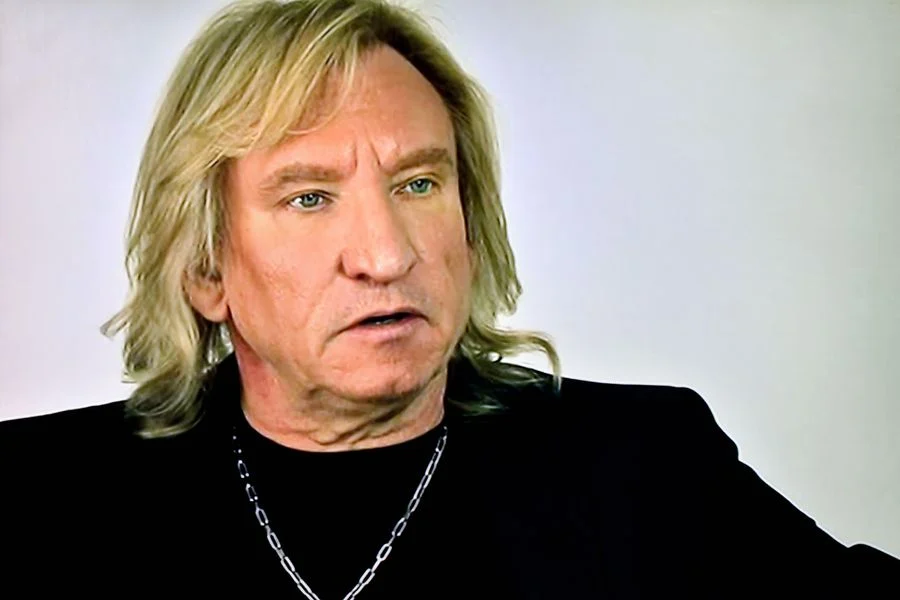
On November 13, 2022, a remarkable moment unfolded at the Nationwide Arena in Columbus, Ohio. During the sixth annual VetsAid concert, an event known for uniting music legends to support American veterans, the spotlight unexpectedly shifted to the youngest performer of the night. Six-year-old Roy Orbison III, grandson of the iconic Roy Orbison, took the stage with a guitar in hand and made an unforgettable debut alongside rock heavyweights Joe Walsh and Dave Grohl.
The night was already brimming with talent and purpose. VetsAid, launched by Joe Walsh in 2017, raises funds for organizations that serve veterans and their families. While the event has consistently drawn high-profile artists, this year’s finale struck a particularly emotional chord, ushering in a new generation of musicians.
In a showstopping close to the evening, Orbison III joined his godfather Joe Walsh for a performance of the classic “Rocky Mountain Way.” Backed by Dave Grohl on drums, Nathan East on bass, and vocals from The Breeders, the young guitarist held his own with poise and rhythm far beyond his years. What could have been a novelty appearance turned into a genuine musical moment—earnest, electric, and full of promise.
This wasn’t the boy’s first time strumming that familiar riff. A video from when he was just three years old showed him jamming on the same tune with Walsh in a casual home setting. That early glimpse of talent clearly wasn’t a fluke. His confident presence at VetsAid was proof that musical legacy runs deep in the Orbison family.
Following the event, footage of the performance quickly gained traction online, drawing thousands of views and enthusiastic comments. Many fans saw the moment as a heartfelt “passing of the torch,” applauding the support and mentorship offered by veteran artists to the rising star.
More than just a viral sensation, Roy Orbison III’s debut was a reminder of rock’s enduring heartbeat—one powered by legacy, community, and the pure joy of music. In just a few minutes on stage, he honored his family’s heritage while signaling a bold new beginning.
Steve Perry, the iconic voice once at the helm of Journey, has experienced a creative renaissance—not just through his solo ventures, but also through compelling partnerships with fellow legends. One such unexpected yet poignant collaboration reimagines his 1983 classic “Faithfully” alongside country music titan Willie Nelson. Originally featured on Journey’s Frontiers album, “Faithfully” is known for its heartfelt lyrics and soaring vocals. Now, with Nelson in the mix, the song takes on a new dimension—retaining its emotional core while offering a refreshing, genre-blending twist.
This duet brings together two distinct musical worlds in perfect harmony. Willie Nelson, with his unmistakable voice and signature relaxed delivery, lends a rustic intimacy to the track. Perry, famed for his dynamic vocal power and emotional nuance, contrasts and complements Nelson’s style beautifully. Their interplay transforms “Faithfully” into a warm, soul-stirring piece that transcends its rock origins without abandoning them. It’s more than just a reinterpretation—it’s a shared tribute to loyalty, endurance, and the universal language of music.
For Perry, this collaboration marks yet another chapter in his journey of artistic evolution. Long past the days of arena rock dominance, he continues to push boundaries and explore new sonic landscapes. Teaming up with Nelson is more than a stylistic experiment—it’s a testament to Perry’s versatility and his openness to crossing musical borders. At the same time, the duet introduces “Faithfully” to new listeners, particularly within the country realm, inviting fresh appreciation from audiences who may not be steeped in classic rock.
What this pairing also highlights is the enduring strength of timeless songs—and how they can be continually reimagined. “Faithfully” remains relevant not just because of its original impact, but because artists like Perry and Nelson breathe new life into it, showing that classics can evolve and resonate with every generation. Their version doesn’t just revisit a beloved ballad—it expands its story.
Ultimately, this collaboration exemplifies a growing movement in music where seasoned artists blend genres and generations to craft something both nostalgic and new. Steve Perry proves he’s far from finished shaping the soundscape of popular music, and with Willie Nelson by his side, “Faithfully” becomes more than a song—it becomes a cross-genre celebration of resilience, reverence, and reinvention.
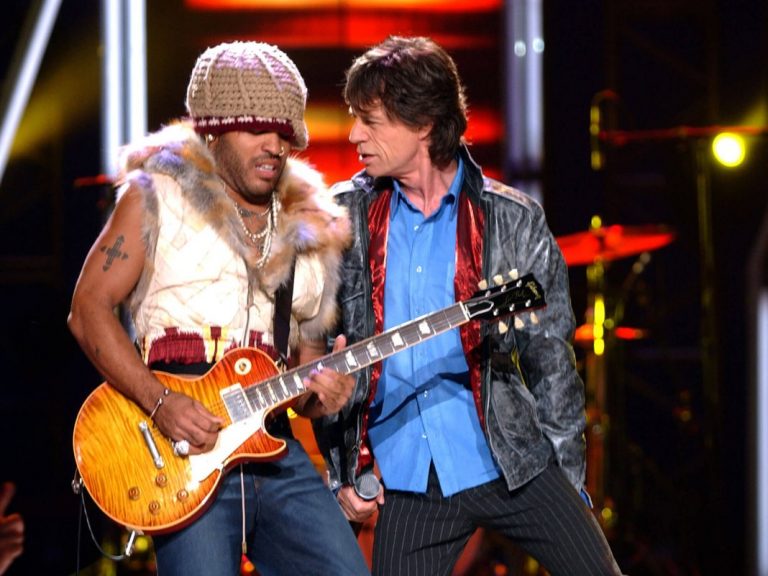
Back in 2001, rock fans witnessed an electrifying fusion of legends when Mick Jagger joined forces with Lenny Kravitz on the fiery anthem “God Gave Me Everything.” Pulled from Jagger’s fourth solo album, Goddess in the Doorway, the track delivered a bold mix of old-school rock ‘n’ roll attitude and Kravitz’s modern, genre-blending edge.
What set this collaboration apart wasn’t just the sound—it was the raw, unfiltered intensity behind it. A passionate fan of Jagger, Kravitz didn’t just help pen and produce the song; he also handled much of the instrumentation himself, injecting it with gritty guitar lines and a relentless rhythm. The result was a high-voltage track that felt like a sonic time warp—classic rock grit crash-landing into the 21st century.
Lyrically, “God Gave Me Everything” channels a kind of ecstatic gratitude—a spiritual ode to love, inspiration, and the fire of creation. Critics praised its energy and punch, with Rolling Stone noting its throwback to the gritty, punk-tinged vibes of the Stones’ early days. Though it didn’t dominate the charts, peaking at #24 on Billboard’s Mainstream Rock Tracks, its impact was undeniable.
The track reached new heights during live performances. In one standout moment captured in a high-definition concert video—titled “Mick Jagger And Lenny Kravitz. (Quality HD. Exclusive Live Video!!!)…God Gave Me Everything !!!”—the synergy between the two icons was electric. Jagger’s trademark swagger met Kravitz’s cool intensity, creating a magnetic stage presence that had the crowd roaring.
Directed by acclaimed filmmaker Mark Romanek, the official music video embraced the track’s rebellious spirit. With quick cuts, gritty visuals, and urban energy, it served as a visual extension of the song’s no-holds-barred rock ethos.
Even now, “God Gave Me Everything” remains a testament to the power of collaboration between two musical giants. It’s not just a song—it’s a jolt of rock revival, proof that when icons unite, they don’t just make noise—they make history.
Before Bob Dylan cemented his place as a legend of modern music, he weathered a few turbulent chapters. One particularly challenging period came in the mid-1980s, when Dylan found himself increasingly out of step with the changing landscape of rock music. His once-commanding presence in the charts had faded, and the fervor that had defined his earlier decades seemed to wane.
No longer the dominant force he had been in the ’60s and ’70s, Dylan was facing a stark reality: the torch had passed to a new generation of rock icons — among them, Tom Petty. The transition wasn’t easy for the once-unshakable troubadour, but a lifeline came in the form of a tour and a timely friendship.
In 1986, Tom Petty and the Heartbreakers launched the True Confessions tour, where Dylan, along with Stevie Nicks, joined as a featured guest. While Petty and his band were arguably the main attraction, they made room for two musical powerhouses, offering audiences a dream lineup night after night.
For Dylan, the tour represented more than just another gig — it was a chance to reconnect with the stage and rediscover his voice. He later wrote in Chronicles (2004), “Tom was at the top of his game and I was at the bottom of mine,” acknowledging the imbalance but also his gratitude for being brought into the fold.
Petty, however, remembered the experience differently. In Conversations With Tom Petty by Paul Zollo (2005), he noted, “There was never a night when the audiences weren’t incredibly ecstatic about the whole thing.” One such euphoric moment came at the end of each show, when Petty would join Dylan for a rendition of the timeless hit “Knockin’ on Heaven’s Door.”
Originally released in 1973 as part of the Pat Garrett and Billy the Kid soundtrack, the song quickly became an international success. Yet, perhaps its most moving incarnation came during this tour, when Dylan and Petty shared the stage — their voices and guitars entwined in a performance that underscored both camaraderie and mutual admiration.
Captured in the Hard to Handle concert film, the duet reveals not just musical brilliance, but a moment of genuine connection. Petty, visibly supportive, steps in not just as a bandleader but as a believer in Dylan’s enduring talent. In many ways, that partnership helped reignite Dylan’s spark, setting him on the path that would eventually lead to the Nobel Prize in Literature.
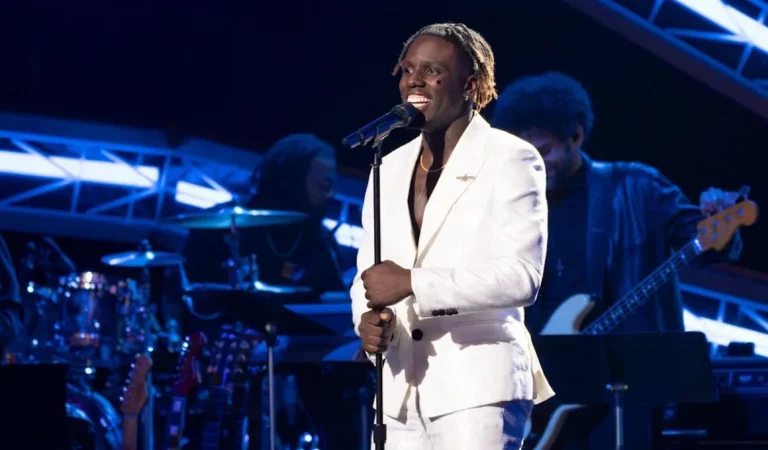
As American Idol Season 23 heads into its much-anticipated finale on Sunday, May 18, the competition is down to three standout finalists: Jamal Roberts, John Foster, and Breanna Nix. With just one more chance to win over America, the pressure is higher than ever—and the judges aren’t holding back with their thoughts.
Judge Luke Bryan didn’t mince words when asked who’s been leading the pack.
“My gut has told me Jamal’s been the front-runner all year,” Bryan shared in a post-show interview with PEOPLE.
The 48-year-old country star, known for his heartfelt and instinctive judging, praised 27-year-old Mississippi soul singer Jamal Roberts for his consistent standout performances. But he was quick to remind everyone: it’s still anyone’s game.
“You’ve got to stay focused. The music business never lets up,” Bryan warned.
A Final Three With Momentum
While Jamal might have the edge, Bryan also acknowledged the rising momentum of the other two finalists.
Breanna Nix, 25, has steadily climbed her way into the finale with quiet confidence and vocal strength.
“Every time Breanna gets through, we’re like, ‘There she goes again—making it happen,’” Bryan said.
And then there’s 18-year-old John Foster, whose emotional performances have made him a fan favorite, especially after his moving rendition of “Rainbow Connection.”
“John is gaining momentum,” Bryan added, hinting that the Louisiana teen could pull off a surprise win.
Lionel Richie: “It’s About Connection”
Judge Lionel Richie, ever the voice of wisdom, gave a dose of reality, pointing out that in the end, it’s not just about hitting the high notes.
“It’s an even playing field—but it comes down to popularity,” Richie said. “How many fans do they have that connect with them as people?”
With the finalists still singing covers, Richie stressed that emotional connection and relatability are what matter most right now—not just vocal technique.
“America is falling in love with the artist, not just the voice,” he added.
Carrie Underwood’s Advice: “This Is Star Boot Camp”
Season 4 champ Carrie Underwood knows the Idol journey better than anyone—and she didn’t sugarcoat how tough it’s been for this season’s Top 3.
“This season’s been more condensed. When I was on the show, we had a lot more time,” she explained. “So they’ve been sprinting from day one.”
Now, as the finalists return to their hometowns for emotional visits and final performances, Underwood offered a glimpse into what lies ahead.
“This is a taste of what a real artist’s life feels like. We call it ‘star boot camp’ for a reason—you learn fast, and you learn under pressure.”
With the finale just around the corner, one thing’s clear: each of these finalists brings something special to the table. Whether it’s Jamal’s soulful power, Breanna’s quiet strength, or John’s heartfelt authenticity, America has a tough choice to make.
And as Lionel said—it’s not just about who sings best. It’s about who the country’s ready to root for, long after the final note fades.
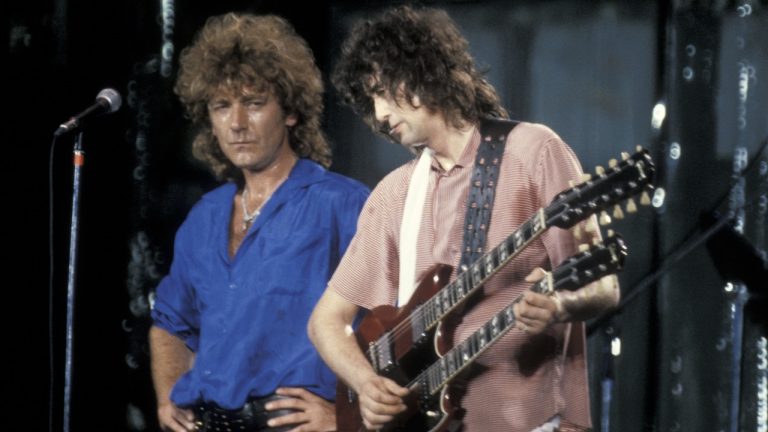
The 1985 Live Aid concert at JFK Stadium in Philadelphia was a defining moment in music history, not only for its humanitarian mission but also for the electrifying reunion of Led Zeppelin—a moment fans had long awaited. Among the highlights was their performance of “Stairway to Heaven,” a song deeply embedded in the annals of rock.
The prospect of Led Zeppelin reuniting on such a global stage created a wave of excitement across the music world. Fans were eager to see the legendary band share the stage once more, hopeful for a revival of the magic that once defined their live shows. But when the moment arrived, reactions were mixed.
Their set, anchored by the iconic “Stairway to Heaven,” brought together Robert Plant’s unmistakable voice, Jimmy Page’s intricate guitar work, and John Paul Jones’s multi-instrumental brilliance. Filling in on drums was Jason Bonham, the son of the late John Bonham, whose absence was felt throughout the performance.
While the show offered glimpses of the band’s enduring power, it also underscored the difficulty of recapturing the unrepeatable spark of their earlier days. The chemistry that once made them legendary seemed strained, and some critics pointed to technical issues and limited rehearsal time as factors that affected the cohesion of the performance.
Despite its imperfections, the Live Aid appearance remains a significant chapter in Led Zeppelin’s legacy. It reminded the world of the band’s massive cultural footprint and brought their music to a new generation. “Stairway to Heaven,” even when performed under less-than-ideal circumstances, still resonated deeply with fans—proof of its timeless power.
In retrospect, the 1985 performance may not rank among the band’s finest, but it endures as a symbolic moment—an imperfect yet powerful reminder of Led Zeppelin’s monumental influence on rock music and their continued relevance in the hearts of fans worldwide.
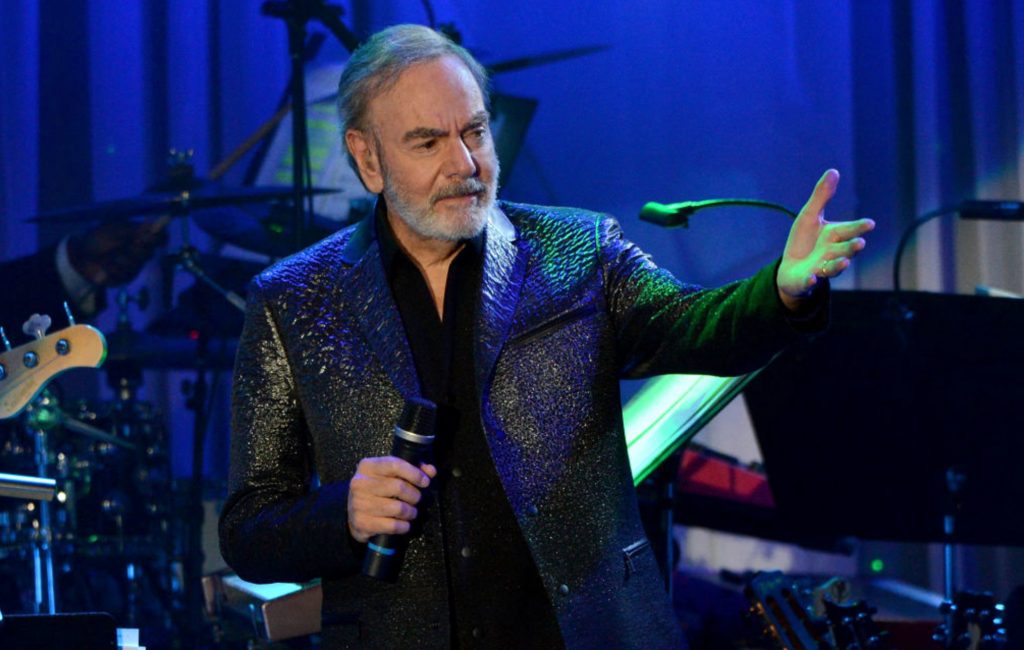
Neil Diamond’s influence on the music industry is both profound and enduring. His timeless songs continue to resonate with audiences worldwide, striking emotional chords and inspiring generations of listeners. His recognition at the Kennedy Center Honors stands as a tribute to his extraordinary career and the lasting legacy he’s carved in the cultural fabric of American music.
Far more than a routine celebration, the Kennedy Center Honors represent one of the highest accolades in the arts—reserved for those whose creative work has deeply enriched American culture. Neil Diamond’s inclusion in this elite circle reflects the magnitude of his contributions and the respect he commands in the music world. His presence at the ceremony was a powerful reminder of the breadth of his impact.
Among the evening’s most memorable moments was Lionel Richie’s heartfelt tribute to Diamond. A music icon himself, Richie chose to honor Diamond with a soul-stirring rendition of “I Am… I Said”—a song that holds deep personal meaning for its creator. Richie’s performance wasn’t just a tribute—it was a poignant expression of admiration from one legend to another.
Dressed sharply in a black suit, Richie poured emotion into every note, transforming the song into a deeply personal homage. A particularly moving touch was his lyrical nod to his hometown, inserting “Tuskegee” in place of a city in the original lyrics—a gesture that added a layer of sincerity and intimacy to the performance. The impact was immediate and powerful, visibly touching Diamond.
The raw emotional energy of that moment reverberated far beyond the auditorium, igniting a flurry of praise across social media. Fans were deeply moved by Richie’s performance and its significance.
One viewer on YouTube remarked, “Lionel Richie is a gift—not just to music, but to humanity. His tribute to Neil was heartfelt and beautifully delivered. Watching Meryl Streep observe Neil’s reaction was unforgettable.”
Another fan added, “Both of these men are treasures in their own right. Whoever selected Lionel Richie for this tribute made an inspired choice. His voice was perfect for the song, but Neil’s emotional response said even more than the audience’s applause.”
We’re reaching into the archives of Far Out Magazine to revisit a touching and memorable moment in music history—one that brought together three legendary figures of the past to celebrate their legacy and honor a missing friend. This heartfelt reunion saw Paul McCartney, George Harrison, and Ringo Starr—the surviving members of The Beatles—come together for an intimate performance of songs from their formative years.
The gathering took place at George Harrison’s lavish estate, Friar Park, where the trio had assembled to film additional content for The Beatles Anthology, a widely acclaimed documentary series chronicling the band’s evolution from Liverpool’s Cavern Club to global superstardom.
Rather than stick strictly to filming duties, the three musicians chose to pay homage to their late bandmate, John Lennon, through a spontaneous medley of early Beatles tunes. It wasn’t a grand production—just two acoustic guitars and Ringo on brushes, as he later recalled.
In this rare footage, fans can watch Paul, George, and Ringo casually perform fragments of early tracks like “Raunchy,” “Thinking of Linking,” and “Blue Moon of Kentucky.” For die-hard Beatles enthusiasts, “Raunchy” holds particular significance as a tune that helped spark George Harrison’s journey with the band.