Category

Rock

Category

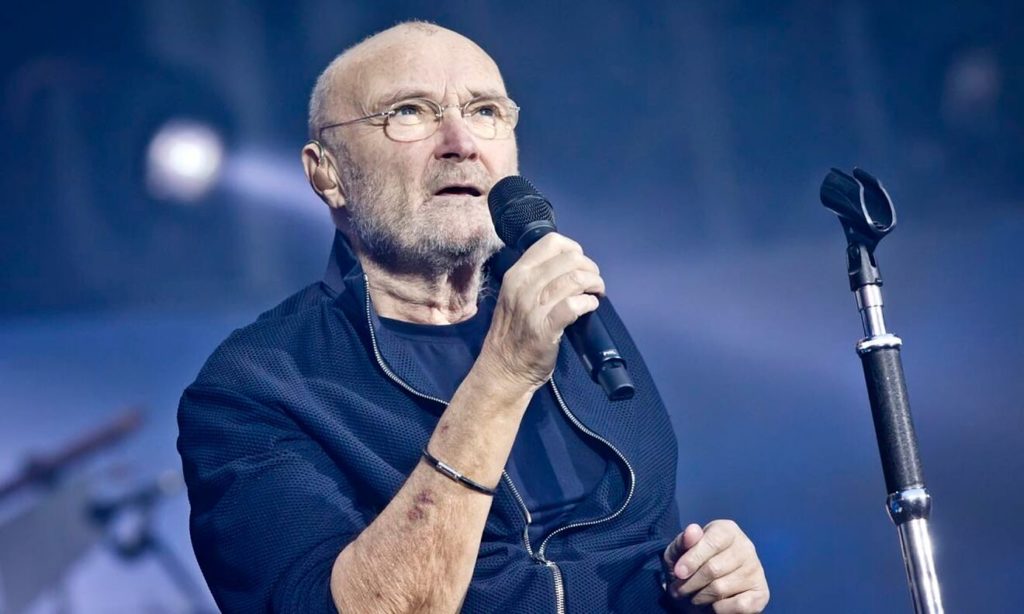
By the mid-1980s, Phil Collins was unstoppable—topping charts, selling out arenas, and juggling careers as a solo artist and Genesis frontman. But even at the height of fame and precision, no one is immune to the occasional slip-up. And sometimes, those little missteps become the most memorable, human moments in a performance.

On July 13, 1985, Collins took the stage at Live Aid, the massive dual-continent benefit concert for Ethiopian famine relief. With no backing band and only a piano in front of him, he stepped into the spotlight at London’s Wembley Stadium to perform “Against All Odds.” Just a minute into the ballad, he hit the wrong key—clearly, noticeably. But instead of freezing or faltering, Collins simply smiled, shook his head, and carried on. It’s a moment that lives on online, not as a failure, but as a lesson in grace under pressure.

To fully appreciate the performance, it helps to understand what Collins was taking on that day. He didn’t just play a set in London. He then flew—first by helicopter, then Concorde jet—to Philadelphia to perform again. Along the way, he drummed for Sting, Eric Clapton, and a Led Zeppelin reunion. (That last one is infamous for reasons unrelated to Collins—another story entirely.) With performances on both sides of the Atlantic, broadcast to over a billion people, Collins embodied the spirit of Live Aid: relentless effort in service of something bigger than ego.

Privately, he worried that the back-to-back performances might seem like a publicity stunt. In his memoir Not Dead Yet, he jokingly titled the chapter “The Show-Off Must Go On.” But his attitude onstage told a different story. He looked less like a self-promoter and more like a joyful musician putting everything he had into the cause.

That flubbed note during “Against All Odds”? It didn’t derail the performance. In fact, it added to its charm. After the show, Collins joked in an interview, “A couple of little goofs on the piano, but that makes it all the more human, doesn’t it? That’s what I keep telling myself anyway.” He would later perform the song again in Philadelphia—flawlessly that time—but it’s the London version that people still talk about.

Watch the video today, and you’ll find hundreds of YouTube comments that praise the moment not for its perfection, but for its honesty:

“Phil makes a mistake at 1:06, shakes his head and smiles and carries on. A true legend. That’s how greatness is achieved.”

“‘To play a wrong note is insignificant. To play without passion is inexcusable.’ – Beethoven”

“Sometimes there can be beauty in imperfection. But only a world-class performer can make a mistake one of the most beautiful things I’ve ever seen.”
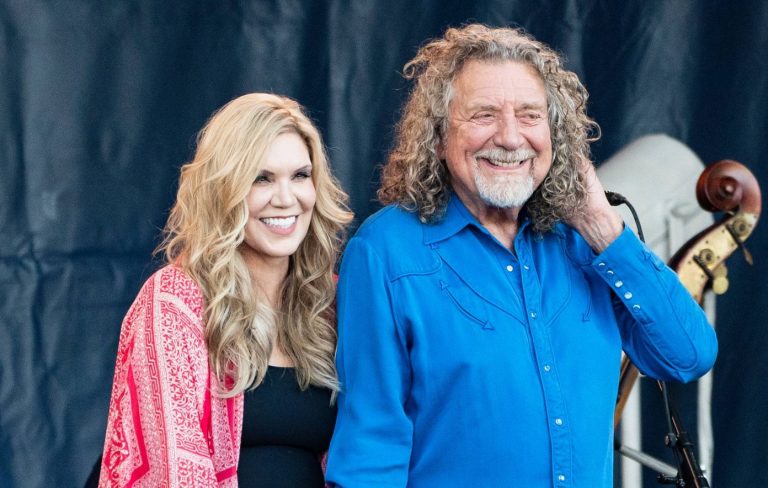
On February 8, 2009, the 51st Annual Grammy Awards delivered a performance few could have predicted but many will never forget. Rock icon Robert Plant, best known as the powerhouse voice of Led Zeppelin, teamed up with bluegrass and country music sensation Alison Krauss for a spellbinding set that defied genre boundaries. Their medley of “Rich Woman” and “Gone, Gone, Gone (Done Moved On)” was more than a performance—it was a masterclass in musical chemistry.

With Plant’s gravelly, emotive voice intertwining seamlessly with Krauss’s ethereal harmonies, the duo captivated the audience from the first note. “Rich Woman” opened the set, drenched in bluesy mood and smoky allure, before giving way to the driving rhythm of “Gone, Gone, Gone,” which brought a surge of energy to the stage. Backed by a tight, rootsy ensemble and Krauss’s graceful fiddle work, the pair made a compelling case for the beauty of musical cross-pollination.

This wasn’t a spontaneous pairing, though. Their 2007 joint album, Raising Sand, produced by the visionary T Bone Burnett, had already made waves with its genre-blending elegance. The record melded folk, Americana, country, and blues in a way that felt both timeless and surprising. “Rich Woman,” originally written by Dorothy LaBostrie and McKinley Millet, set the tone for the album, while their reimagining of the Everly Brothers’ “Gone, Gone, Gone” became a fan favorite.

Their appearance at the Grammys was not only a performance highlight but a crowning achievement. Raising Sand swept the evening with five Grammy wins, including Album of the Year and Record of the Year for “Please Read the Letter.” For Plant, a veteran of rock’s golden era, it was a career-defining moment—his first Grammy wins. Krauss later reflected on the joy and spontaneity of their recording sessions, while Plant humorously admitted to being overwhelmed by the recognition.

The magic of Plant and Krauss lies in their unlikely union—a fusion of worlds that, together, created something extraordinary. Their Grammy moment remains a shining example of how artistic boundaries can be transcended when passion, respect, and open-minded collaboration take center stage.

The collaboration between Bruce Springsteen and John Mellencamp is far from new. Back in December 2019, the two legends shared the stage during Sting’s biannual Rainforest Benefit, delivering memorable performances of “Pink Houses” and “Glory Days.” Their musical partnership continued in 2022, when Springsteen lent his voice to Mellencamp’s album Strictly a One-Eyed Jack.

Speaking to Billboard in early 2022, Mellencamp praised Springsteen’s rare blend of confidence and humility. “Bruce has this incredible mix of persistence and modesty,” he said. “He knows how to express his ideas clearly without overpowering anyone. He’s been leading his band longer than I have mine. I don’t need to guide him — he comes in with suggestions like, ‘What if I try this?’ And my response is always, ‘You’re Bruce Springsteen — go for it.’”

Both artists have packed calendars this year. Springsteen is set to relaunch his global tour on March 19 in Phoenix, Arizona, with performances lined up across North America and Europe.

Meanwhile, Mellencamp continues his solo tour into late July, after which he’s scheduled to hit the road with Willie Nelson and Bob Dylan for the 2024 edition of the Outlaw Festival.

At 84 years old, Sir Tom Jones may be slowing down physically, but his voice remains as powerful as ever. During a recent performance at the YouTube Theater in California, the legendary singer took to the stage with the help of a cane and performed seated for most of the night — but still delivered a show that left fans cheering.

Tom has been open about his ongoing hip problems, describing them as the result of “wear and tear.” He previously had surgery on his left hip, and now his right is giving him trouble. Despite doctor’s advice to undergo surgery, Tom decided to complete his U.S. tour first, saying, “I’ve got a show to do!”

To manage the pain, he now keeps a stool on stage. “I’m fine for the first few songs,” he explained, “then it starts to hurt, so I sit down — and people still love it.”

The Welsh icon is currently making his way through a string of U.S. tour dates, with stops in Santa Barbara, Las Vegas, and San Francisco. Fans continue to pack venues, proving that even seated, Tom Jones still knows how to steal the show.

Earlier this year, he had to cancel a concert in Budapest due to viral laryngitis, but he made it clear that he hadn’t collapsed, as rumors suggested. Instead, he followed medical advice and rescheduled the performance.

Despite the setbacks, Sir Tom remains unstoppable — showing that age and injury may slow him down, but they won’t take him off the stage.

On a quiet night in Las Vegas in 2019, under the soft glow of stage lights, Eric Clapton sat down with his acoustic guitar and played one of the most heartfelt performances of his career — a deeply moving live version of “Tears in Heaven.” No theatrics, no spectacle — just Clapton, his music, and a crowd holding its breath.

Written in the aftermath of a tragic loss — the death of his 4-year-old son, Conor, in 1991 — “Tears in Heaven” became Clapton’s way of turning grief into something lasting. First released in 1992 and co-written with Will Jennings, the song quickly resonated around the world, winning three Grammys and etching itself into music history as a deeply personal ballad of love and loss.

By 2019, Clapton had slowed down his touring due to age and health, making each live show even more meaningful. That night in Las Vegas, as the first gentle chords rang out, the audience was silent. The performance wasn’t just technically flawless — it was raw, stripped down, and achingly honest. Clapton’s weathered voice carried decades of sorrow and strength, and each lyric landed with quiet power.

There was no need for a big production. The emotion in the room came from the song itself — from a man sharing a piece of his life through music. Even after so many years, it was clear: “Tears in Heaven” still carried the same weight for Clapton, and for everyone listening.

For longtime fans, the moment felt like reconnecting with a piece of musical history. For new listeners, it was an introduction to the kind of storytelling only a few artists can offer. This 2019 performance wasn’t just another live rendition — it was a moment of stillness, reflection, and timeless emotion.

If you haven’t watched it yet, the performance is available on YouTube — a beautiful reminder of the healing power of music, and the strength it takes to turn pain into something unforgettable.

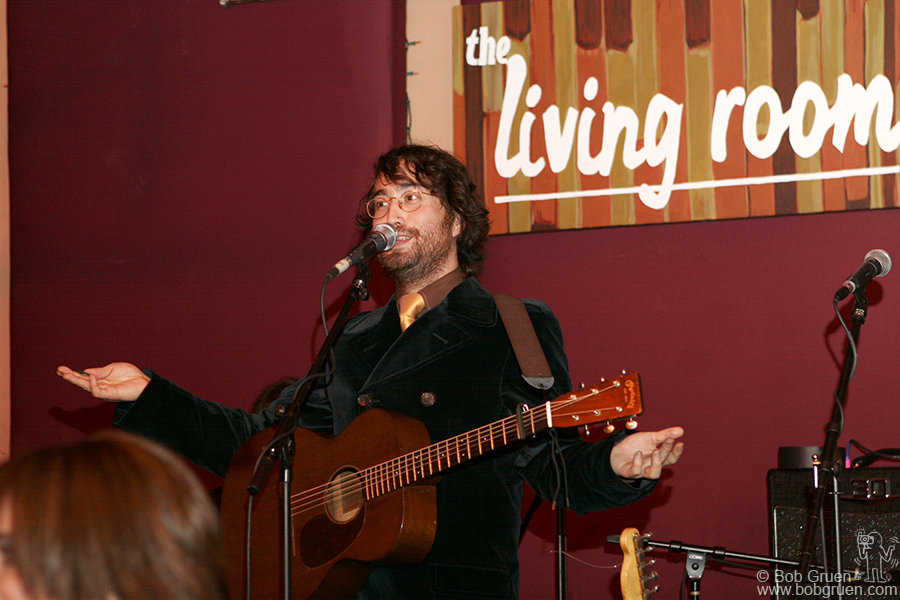
In the autumn of 2006, amid the moody elegance of Paris, Sean Lennon stepped onto the stage at Festival Les InRocKs and delivered a performance that would quietly etch itself into the memories of everyone in the room. Performing “Spectacle”, a standout track from his sophomore album Friendly Fire, Lennon wasn’t just showcasing his music — he was opening a window into his soul.

Festival Les InRocKs, known for curating artists with depth and edge, proved to be the ideal stage for Lennon’s blend of indie introspection and emotional nuance. With minimal fanfare and maximum sincerity, Lennon captured the room not with theatrics, but with honesty. His voice, vulnerable yet steady, glided through the lyrics with quiet conviction. Backed by an understated arrangement of acoustic and electric textures, the performance became less about presentation and more about presence.

Sean Lennon 2006 | Bob Gruen

“Spectacle” itself is a song steeped in reflection — exploring emotional fracture, the disintegration of trust, and the weight of personal heartache. Written during a turbulent chapter in Lennon’s life, the track plays like a confession, and in this live setting, its impact was magnified. Every word felt deliberate. Every note hung in the air a little longer, as if asking to be felt rather than simply heard.

Though comparisons to his father, John Lennon, are inevitable, this moment felt like a declaration of independence. Sean Lennon wasn’t imitating legacy — he was living his own truth, letting his music speak on its own terms. Friendly Fire marked a creative evolution for him, and this performance of “Spectacle” at InRocKs underscored that growth: here was an artist stepping out of the long shadow of history to find his own light.

Lennon’s musical craftsmanship was also on full display. The layered instrumentation — much of it performed by Lennon himself in the studio — translated beautifully to the stage. Collaborators like Yuka Honda and Jon Brion helped shape the album’s intricate sound, but in this live moment, stripped of studio polish, the raw core of the song emerged. It was music at its most human.

The video of the performance, still circulating on YouTube, captures something rare: a moment of unfiltered emotion presented without artifice. There’s an intimacy to it — as if the viewer is sitting just a few feet away, witnessing an artist wrestle with something deeply personal in real time. It’s not just a performance — it’s a moment of catharsis.

For longtime fans, the InRocKs performance became a defining moment in Lennon’s career. For those discovering his work for the first time, it served as a perfect entry point into an artist who writes from a place of truth and emotional complexity. The performance continues to resonate years later, not because of spectacle, but because of sincerity.

Sean Lennon’s live delivery of “Spectacle” in 2006 wasn’t just a concert highlight — it was a career milestone. It marked a turning point where he confidently stepped into his own artistic identity, separate from the weighty expectations of lineage. It was proof that his voice, though quieter than the roar of rock stardom, could be just as powerful.

In a world where performance is often about polish and perfection, Lennon reminded us that sometimes the most powerful thing an artist can do is simply be honest. And in that moment in Paris, he did exactly that.

At this point in his legendary career, Bruce Springsteen doesn’t just perform — he connects. On a recent stop during his tour, “The Boss” reminded everyone why his concerts feel more like shared experiences than just shows. In the middle of his set, Springsteen surprised the crowd by inviting a young boy — no more than six years old — up onto the stage.

The audience erupted. It wasn’t just the novelty of the moment; it was the sincerity. With that signature Springsteen grin, he handed the boy the microphone and encouraged him to sing a few lines. What followed was pure joy — laughter, cheers, and a wave of emotion as thousands witnessed something real and unscripted.

Springsteen has always had a knack for making even the largest arenas feel intimate, and this spontaneous moment captured that magic perfectly. These aren’t just concerts — they’re memories in the making, where fans feel seen, valued, and part of the story.

For the young boy, this wasn’t just a night out — it was the kind of experience that becomes a lifelong memory. And for everyone in the audience, it was a powerful reminder of what sets Springsteen apart: his deep, genuine bond with the people who fill his venues night after night.

Whether he’s sharing personal stories, crowd-surfing into the pit, or pulling fans into the spotlight, Bruce Springsteen turns every performance into something singular. Fans lucky enough to be part of moments like this often keep their photos and stories close — not just as souvenirs, but as proof that they once stood in the presence of rock royalty who made them feel like part of the band.

Music fans live for these moments — when legends from different corners of the industry step onto the same stage and create something you didn’t know you needed until it happened.

That’s exactly what unfolded when Carlos Santana and Rod Stewart joined forces for the very first time in a performance that was as unexpected as it was electrifying.

From the first note, it was clear this wasn’t just another collaboration. Santana, with his signature Latin-blues guitar tones, carved melodic lines through the air like poetry. Rod Stewart, ever the rock icon, brought his raspy, unmistakable voice — equal parts grit and soul — to the front of the stage. It was a collision of styles, yes, but also a perfect harmony of energy, presence, and raw musical chemistry.

The song? A soulful, reimagined take on a classic — the kind of performance that walks the tightrope between nostalgia and reinvention. Santana’s guitar sang with emotional depth, weaving around Stewart’s vocals like a conversation between old friends who just met.

But the true magic was in the unspoken dialogue — the grins exchanged between verses, the spontaneous improvisation, the way each artist left space for the other to shine. It didn’t feel rehearsed. It felt like discovery.

Fans who witnessed it live knew they were watching something rare: two giants, decades into their careers, still chasing the thrill of making music that matters. And for those catching it on video after the fact? It still hits — hard. It reminds us that great music isn’t bound by genre, era, or ego. It’s about connection.

Whether you grew up spinning Santana vinyl or belting out Rod Stewart hits in the car, this performance is a celebration of what happens when two distinct voices come together and simply play.

This was their first time sharing the stage. Let’s hope it won’t be their last.

On a still night in Sweden back in 1986, the stage lights dimmed low as B.B. King stepped into the spotlight. What followed wasn’t just a concert moment — it was a piece of musical history. With his trusted guitar, Lucille, cradled in his arms, King delivered a soul-stirring performance of “Nobody Loves Me But My Mother” that remains etched in the hearts of those who heard it.

Each note he coaxed from Lucille wasn’t just played — it was felt. The bends were sorrowful whispers, the slides deep sighs, and every silence in between carried more weight than words ever could. There was no need for showmanship. What unfolded was pure blues: stripped bare, emotionally honest, and deeply human.

King didn’t need speed or spectacle. He let the music breathe, drawing out its pain and its beauty with masterful restraint. This wasn’t performance — it was confession. The kind that leaves you still and silent when it ends.

To this day, critics and fans alike hold that solo among his greatest live moments — a lesson in how less can mean infinitely more. Watching it now, decades later, still feels like entering sacred space. The power of it lingers, untouched by time.

And perhaps, in some quiet corner of that room, the blues never really left.

Just when you think you’ve heard every masterful take on classic guitar duets, along comes a moment that redefines the experience. In November 2007, the iconic Ronnie Scott’s Jazz Club in London became the setting for an unforgettable night of musical alchemy, as two titans of rock—Jeff Beck and Eric Clapton—shared the stage for a legendary collaboration.

Jeff Beck and Eric Clapton – Exhaust Note – London, England – November 29/30, 2007 – Mid Valley

This rare performance was part of Jeff Beck’s acclaimed Performing This Week… Live at Ronnie Scott’s series, which later saw a celebrated release on both CD and DVD. Joined by a powerhouse lineup—bassist Tal Wilkenfeld, drummer Vinnie Colaiuta, and keyboardist Jason Rebello—Beck delivered a series of electrifying shows, but one particular night stood out for a reason that fans would never forget.

Among the many highlights, the performance of “Little Brown Bird” became the jewel of the evening. Though featured on the 2008 live release, it was during this live collaboration that the track truly took flight, with Clapton stepping in to add his signature touch. The result was a spine-tingling blend of styles—Beck’s bold, expressive phrasing meeting Clapton’s smooth, soulful tone in perfect harmony.

What made this performance so extraordinary wasn’t just the sheer talent on display—it was the chemistry. Watching the two legends exchange licks, you could sense the deep musical understanding and respect between them. Beck’s fearless experimentation met its match in Clapton’s seasoned precision, creating a dialogue that went beyond technique—it was pure, emotional expression.

There was also a sense of gravity to the moment. This wasn’t just two guitarists playing together; it was a poignant exchange between longtime peers whose careers had shaped generations. Their interplay told a story of shared roots, mutual admiration, and decades of influence—spoken entirely through strings and soul.

Eric Clapton releases cover of “Moon River” featuring the late Jeff Beck on stellar form in one of his final recordings | MusicRadar

For longtime followers and new fans alike, this performance remains a treasured glimpse into what makes live music so moving. The spontaneity, the connection, the once-in-a-lifetime synergy—it was all there. The atmosphere at Ronnie Scott’s that night was electric, and thanks to modern recordings, the magic lives on.

If you didn’t catch it the first time, now’s your chance to experience it. Head over to YouTube and watch the full HD performance of “Little Brown Bird” featuring Jeff Beck and Eric Clapton. Let their masterful guitar work carry you into a moment in music history that truly defies time.