Category

Rock

Category

If your musical tastes span from grunge to classic rock, you were in for a treat at Pearl Jam’s recent show at Nashville’s Bridgestone Arena. On Thursday night, fans were stunned and thrilled when legendary guitarist Peter Frampton joined the band on stage for a surprise performance. Together, they delivered a moving rendition of Pearl Jam’s iconic ballad “Black,” from their 1991 debut album Ten.

For longtime Frampton fans, the moment was more than just a collaboration—it was deeply emotional. The renowned guitarist, known for hits like “Do You Feel Like We Do,” has been battling a progressive muscle disorder in recent years. Despite needing a cane to walk on stage, Frampton showed no signs of slowing down when it came to his guitar playing. His soulful touch and signature tone were met with roaring applause, reminding everyone that his talent remains as powerful as ever.

The performance of “Black” was extended and intimate, with Pearl Jam guitarist Mike McCready seated closely beside Frampton, creating a powerful musical dialogue between two generations of guitar greats. A fan-captured video of the moment has since surfaced, capturing the crowd’s awe and the palpable camaraderie on stage.

Eddie Vedder took a moment to give Frampton the introduction he deserves—one filled with reverence and heartfelt admiration.

“This is a man we idolized even before we discovered The Ramones,” Vedder told the audience. “He was right up there with our early guitar heroes—Jimmy Page, Pete Townshend. He’s one of the reasons we fell in love with live albums. And part of why we started releasing bootlegs was because of the impact he had on us. Beyond being an incredible musician, he’s just a wonderful human being. He’s become a close friend of the band, he’s recorded with Mike and Matt [Cameron], and now we get to share the stage with him tonight.”

The moment was a celebration of legacy, friendship, and the enduring spirit of rock and roll. Frampton’s presence on stage didn’t just electrify the crowd—it served as a reminder of how deeply intertwined musical generations can be.

Pearl Jam’s 2025 is already in full swing. Their U.S. tour kicked off in Florida earlier this year, and fans can look forward to their appearance at Eddie Vedder’s Ohana Festival in September. Meanwhile, Peter Frampton is preparing to hit the road again with a new string of tour dates, including stops in Las Vegas, Phoenix, and other major cities.

Two rock legends, one unforgettable night—proof that great music transcends time and continues to bring people together in the most powerful ways.
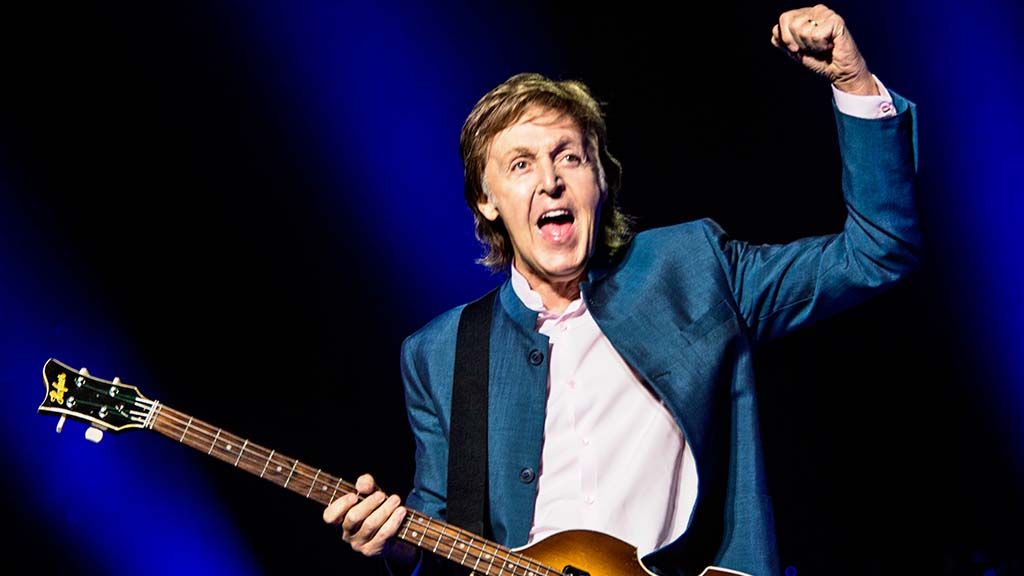
On a quiet summer day—August 30, 1974—Paul McCartney took a break from the studio and wandered into the garden behind Abbey Road Studios. With only an acoustic guitar in hand and a single microphone, he sat down for an impromptu performance that would come to be known as The Backyard. Captured during a lull in the One Hand Clapping sessions, this stripped-down set offered something rare: McCartney at his most relaxed and unfiltered, revisiting the roots of rock and roll.

This informal performance, now referred to by fans as The Backyard Tapes, stands out not just for its musical content but for the raw, unpolished setting in which it was recorded. Positioned behind the echo chambers at Abbey Road, McCartney delivered a roughly 25-minute acoustic set, parts of which were filmed with two cameras. Unfortunately, only a brief portion—less than four minutes—has surfaced, with reports suggesting that just nine minutes of footage were actually recorded before the crew ran out of videotape.

Over time, audio recordings from this session have circulated among collectors and fans. Recently, a cleaned-up version has emerged, restoring some of the performance’s original warmth. By reducing the tape hiss and applying equalization and imaging enhancements, the restoration highlights McCartney’s nuanced delivery, breathing new life into these timeless tracks.

The setlist blends rockabilly classics with personal deep cuts, including songs like “Twenty Flight Rock,” “Peggy Sue,” and “Blackbird.” One standout is “Blackpool”, a playful original tune that McCartney once described as one of several off-the-cuff songs he used to sing but never formally recorded. He considered it a “mess-around song,” yet its presence in this session offers insight into his creative spontaneity.

Though The Backyard was recorded during a pause in the production of One Hand Clapping—a documentary-style project that aimed to showcase McCartney and Wings in the studio—it stands apart as a unique artifact. Where One Hand Clapping was carefully staged, The Backyard feels off-the-cuff and heartfelt, like a private concert held under the open sky.

What makes The Backyard so special isn’t just the music—it’s the setting, the looseness, and the sense of McCartney simply playing for the joy of it. There’s a nostalgic charm in hearing him revisit the songs that inspired his early career, performed without fanfare or elaborate production. The simplicity—a man, a guitar, a garden—makes it all the more powerful.

More than just a bootleg curiosity, The Backyard captures the spirit of an artist reconnecting with his roots. It’s a love letter to the music that shaped him, delivered with warmth, humility, and unmistakable McCartney charm.


“Beautiful Night” stands as more than just another track in Paul McCartney’s extensive solo repertoire—it’s a song that resonates deeply with longtime Beatles enthusiasts and lovers of timeless melodies alike. Featured on his 1997 album Flaming Pie, the song blends heartfelt nostalgia with McCartney’s unmistakable melodic charm, serving as both a tribute to his past and a testament to his creative endurance as a solo artist.

The song’s inception can be traced back to the mid-1980s, a period when McCartney was immersed in personal reflection and creative exploration. Although the initial version of the track was penned during that time, it would take more than a decade for it to evolve into the version that appeared on Flaming Pie. This long gestation gave the song a sense of maturity and emotional depth, making it feel both timeless and deeply personal.

When Flaming Pie was released, it marked a pivotal moment in McCartney’s post-Beatles career—a return to form, guided by clarity and artistic rejuvenation. The album was crafted during a time of rediscovery, shaped in part by McCartney’s involvement in The Beatles Anthology project. “Beautiful Night” naturally aligned with the album’s themes of warmth, memory, and reflection. With Jeff Lynne co-producing much of the record, McCartney found the perfect creative partner to help bring the song to its full potential.

One of the track’s most touching elements is the presence of Ringo Starr, who reunited with McCartney to lay down the drums. Their collaboration, decades after the Beatles’ split, added an extra layer of emotional significance to the song. Ringo’s subtle yet impactful drumming contributed to the song’s atmosphere of intimacy and unity, making the track feel like a bridge between past and present.

The “Making Of” video that accompanied the album offers a rare behind-the-scenes look at McCartney’s meticulous creative process. Viewers witness the intricate layering of orchestration, the careful arrangement of strings and brass, and the dedication poured into every note. This behind-the-curtain view showcases McCartney not only as a musician, but as a master craftsman of sound—committed to realizing a precise vision.

At its core, “Beautiful Night” is a romantic reverie—a song that captures the wonder of a quiet moment under a starry sky. McCartney’s lyrics are filled with evocative imagery, reflecting themes of love, peace, and fleeting beauty. The orchestral swell that accompanies the verses enhances the sense of cinematic grandeur, while the melody remains intimate and emotionally accessible.

The production plays a vital role in conveying the song’s emotional weight. McCartney’s use of lush instrumentation—from gentle acoustic guitars to sweeping strings—creates a soundscape that is both rich and immersive. The final mix feels like a tapestry of past and present influences, striking a perfect balance between elegance and sincerity.

Legacy and Reception

When it debuted, “Beautiful Night” was embraced by critics and fans alike, praised for its lyrical sophistication and emotional resonance. It quickly became one of the most celebrated tracks on Flaming Pie, a song that encapsulated McCartney’s evolution while staying true to the qualities that made his music so beloved in the first place.

Listeners saw it as a heartfelt continuation of the emotional storytelling McCartney had championed during his Beatles years—updated with the introspection and maturity that only time can bring. The combination of orchestral depth and McCartney’s soulful vocals gave the song a unique power, turning it into a standout moment in his solo career.

“Beautiful Night” has since become a cherished part of McCartney’s live performances, continuing to captivate audiences with its message of enduring love and timeless beauty. It represents a convergence of memory and present-day artistry, a musical moment where McCartney’s journey comes full circle.

More Than Just a Song

Ultimately, “Beautiful Night” is more than just a closing track on an album—it’s a heartfelt expression of Paul McCartney’s creative spirit. It speaks to the themes that have defined much of his work: love, hope, memory, and the quiet magic of ordinary moments. It also honors his roots while embracing growth, with collaborations like the one with Ringo Starr underscoring the lasting connections forged through music.

For McCartney, the song is a culmination of years of artistic growth and a reaffirmation of his place in the world of music. Its enduring popularity reflects the universality of its message and the emotional honesty at its core. “Beautiful Night” reminds us why McCartney’s music continues to matter—not just because of who he was, but because of the heartfelt stories he still knows how to tell.

In every sense, “Beautiful Night” remains a shining example of Paul McCartney’s genius—both a personal statement and a shared experience that resonates deeply with listeners, no matter the generation.

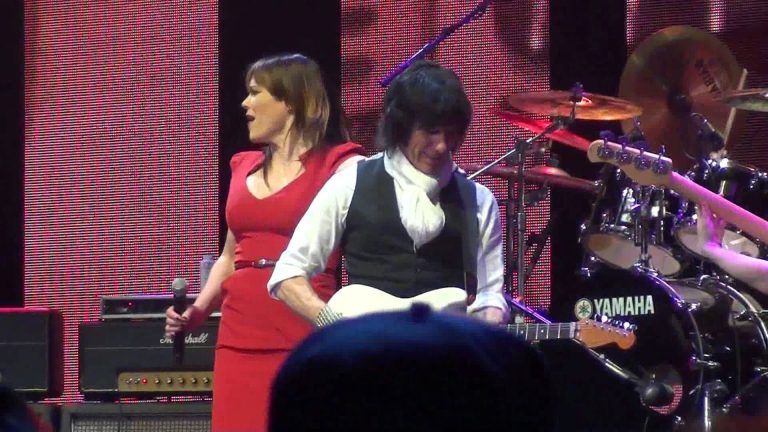
Few live performances truly shake the walls and stir the soul, but the electrifying union of guitar legend Jeff Beck and powerhouse vocalist Beth Hart at the 2013 Crossroads Guitar Festival did just that. Their fiery take on “Goin’ Down” wasn’t merely a setlist highlight—it was a full-blown explosion of raw blues power and emotional intensity.

🎸 The Stage: Crossroads Guitar Festival at Madison Square Garden

On April 13, 2013, New York’s Madison Square Garden played host to one of the most star-studded nights in guitar history. Curated by Eric Clapton, the Crossroads Guitar Festival wasn’t just a concert—it was a cause. The event raised funds for the Crossroads Centre, Clapton’s treatment facility for substance recovery. The night featured giants like B.B. King, Buddy Guy, and John Mayer, but it was the electric pairing of Beck and Hart that delivered one of the evening’s most unforgettable moments.

🎤 The Song: “Goin’ Down” Reimagined

Originally penned by Don Nix and made famous by Freddie King, “Goin’ Down” is a blues anthem that demands guts and grit. Jeff Beck brought his signature wizardry to the stage, bending and shaping each note with effortless flair. Right beside him, Beth Hart unleashed a vocal performance packed with soul, power, and edge—channeling the spirit of the blues with every lyric.

The chemistry between Beck and Hart was undeniable. Backed by the brilliant Tal Wilkenfeld on bass, the trio delivered a tight, soulful groove that pushed the energy of the performance into overdrive. Wilkenfeld’s precise playing and deep rhythmic sense perfectly complemented the fireworks from Beck’s guitar and Hart’s vocals.

🔥 The Crowd: Moved to Their Feet

The audience at Madison Square Garden knew they were witnessing something special. As the final notes of “Goin’ Down” rang out, the crowd rose in a roaring ovation. The moment was pure electricity—proof that the blues, in the hands of true artists, still has the power to move mountains.

📺 Watch the Magic Again

For those who couldn’t be there in person—or just want to feel the spark again—the performance lives on online. The video captures every scream of Hart’s vocals, every sizzling lick from Beck’s Stratocaster, and the contagious energy that lit up the arena that night.

A Blues Revival for the Ages
Jeff Beck and Beth Hart’s 2013 rendition of “Goin’ Down” wasn’t just a tribute to blues history—it was a modern reawakening. It reminded audiences of the emotional depth and visceral power that live music can deliver when brilliant artists meet on a stage and let it all fly.

In the heart of New York City at the iconic Beacon Theatre, 1974 saw a defining moment in American music history. The Eagles, then emerging as country-rock trailblazers, were joined by two kindred spirits—vocal powerhouse Linda Ronstadt and introspective songwriter Jackson Browne—for a performance that perfectly encapsulated the spirit of 1970s Americana. Captured on the influential show Don Kirshner’s Rock Concert, this collaboration offered a rare and powerful glimpse into the synergy between some of the decade’s most influential voices.

“Take It Easy,” the Eagles’ breakout single co-written by Browne and Glenn Frey, had already become emblematic of the band’s laid-back, harmony-driven sound. During the televised set, Browne joined the Eagles on stage, bringing a rich layer of acoustic texture and vocal finesse. Ronstadt added her signature harmonies, elevating the arrangement with warmth and intensity. The blend of their talents was seamless—melding rock, folk, and country into a sound that felt both grounded and transcendent.

That year marked turning points for all three acts. The Eagles were introducing audiences to On the Border, an album that nudged their sound into harder rock territory while maintaining their roots. Ronstadt’s Heart Like a Wheel was making waves with the hit “You’re No Good,” propelling her into superstardom. Meanwhile, Jackson Browne’s introspective songwriting was gaining critical acclaim, cementing his place in the singer-songwriter canon.

Their shared appearance wasn’t just a musical performance—it was a snapshot of a creative community at its peak. The concert exemplified the collaborative ethos of the ’70s music scene, where genre lines blurred and artists frequently crossed paths, both in the studio and on stage.

Looking back, that 1974 performance has only grown more significant. It’s a reminder of an era where artistic collaboration was not only common but central to the music’s evolution. The careers of the Eagles, Ronstadt, and Browne continued to soar in the years that followed, but this moment stands out as a heartfelt convergence of rising legends.

Fans can still witness the magic of that night—recordings of the performance from Don Kirshner’s Rock Concert are available online, offering a window into a golden age of music where chemistry, camaraderie, and authenticity ruled the stage.

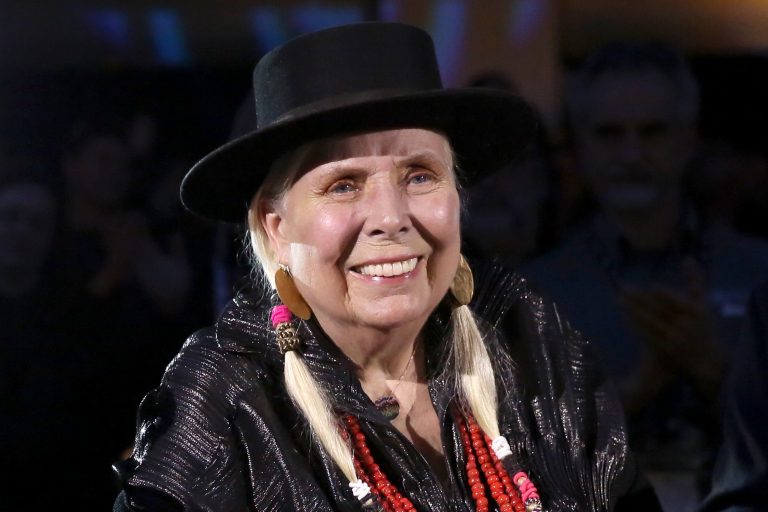
Music legends Cyndi Lauper, Annie Lennox, Angélique Kidjo, and Brandi Carlile came together for a memorable rendition of Joni Mitchell’s “Big Yellow Taxi,” delivering a vibrant, joy-filled performance that radiated energy and admiration. With Mitchell herself watching from the audience, the atmosphere was nothing short of electric. The most touching moment came when Carlile stepped offstage, mic in hand, and invited Mitchell to sing the final line—prompting an eruption of emotion from the crowd.

Annie Lennox opened the number with a powerful, soulful take on the first verse, setting a heartfelt tone. The seven-woman ensemble then harmonized on the chorus, before Lauper injected her signature flair into the sassy second verse. Carlile followed with a gentle, melodic stanza, paving the way for Kidjo to bring the house down with an explosive solo that clearly delighted Mitchell—her glowing smile said it all.

This celebration took place during the Library of Congress Gershwin Prize for Popular Song ceremony on March 1, 2023, at Constitution Hall in Washington, D.C., where Mitchell was honored for her groundbreaking contributions to music. The standout performance quickly became the highlight of the evening online, amassing over 1.4 million views and securing its spot as the most-watched clip from the tribute.

At 79, Mitchell also took to the stage herself, enchanting the audience with a moving performance of her classic song “Blue.” As she sang the first line with stunning grace, the audience erupted in cheers, visibly moving the iconic artist, who beamed with joy in response.

The entire event had an unmistakable magic to it—a gathering of remarkable women celebrating one of their own. Fans were especially moved by the “Big Yellow Taxi” performance, flooding the internet with praise. Comments like “Joni finishing the song was everything!” and “A beautiful celebration of a legend and powerhouse women artists” captured the collective sentiment.

Directed by Sandra Restrepo, the ceremony was recorded and released for fans worldwide to enjoy. Highlights from the show can be found on YouTube, while the full concert is available on streaming platforms. For those wanting to explore more of Mitchell’s legacy, her YouTube channel and Instagram are great places to start.

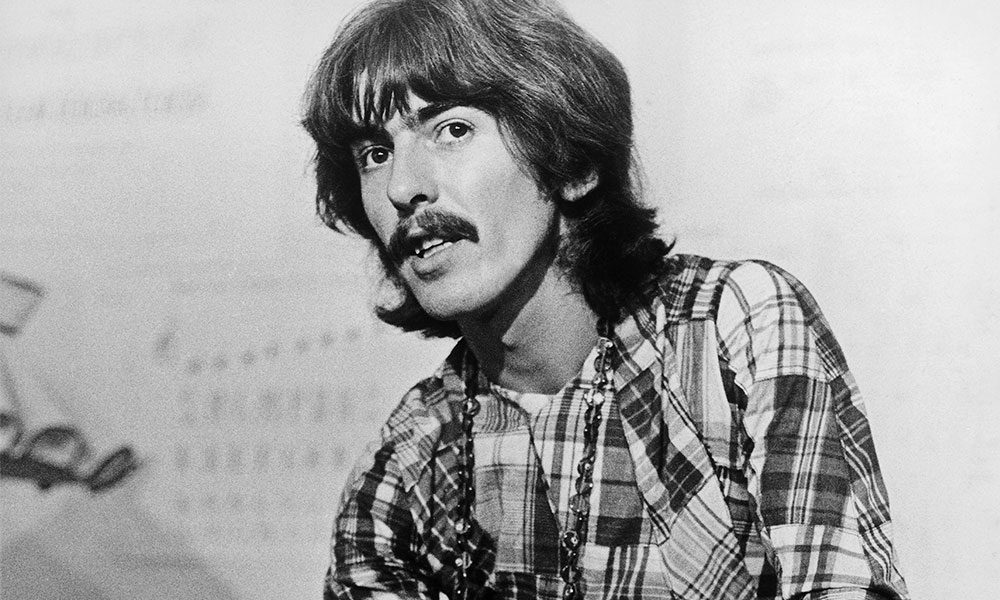
On July 24, 1997, George Harrison stepped into a small studio in New York City—not as a rock legend, but as a friend, a producer, and a humble musician. There were no flashing lights, no thunderous applause, no massive crowds. Instead, there was a serene atmosphere inside VH1’s studio, where Harrison accompanied his lifelong friend and Indian music pioneer Ravi Shankar to promote their collaborative project, Chants of India.

Harrison hadn’t come to perform his own work. He was there in support of Shankar, having produced the album and played on it. But when asked if he’d sing a song or two, George quietly agreed. What followed was a moment of quiet magic—one that would go down as his final public performance.

Sitting on a stool with just his acoustic guitar, Harrison played “All Things Must Pass,” the hauntingly beautiful title track from his 1970 solo debut. Stripped of production, the song felt even more intimate—its message of impermanence echoing louder than ever. His voice, tinged with age and soul, seemed to float between realms, offering both comfort and a subtle sense of closure.

Then came a surprise: “Any Road,” a playful, philosophical tune he’d started writing back in 1988. He had never performed it live before—and never would again. It became a hidden gem in his repertoire until it surfaced posthumously in 2003 on Brainwashed, the final album he left behind.

The performance was raw and disarmingly honest. Just George, his guitar, and a room filled with quiet admiration. When he finished, he smiled wryly and said, “I could go home and practice a bit and do it properly.” It was classic Harrison—unassuming, self-effacing, and utterly sincere.

The event, later aired as The George & Ravi Show and hosted by John Fugelsang, marked the last time Harrison would sing in public. Four years later, in November 2001, the world would say goodbye to the quiet Beatle after his long battle with cancer.

In just two songs, George Harrison distilled everything that defined him: spiritual wisdom, gentle humor, and a heartfelt authenticity that couldn’t be faked. No grand finale. No encores. Just a soft-spoken farewell that, like much of his work, lingers long after the music fades.

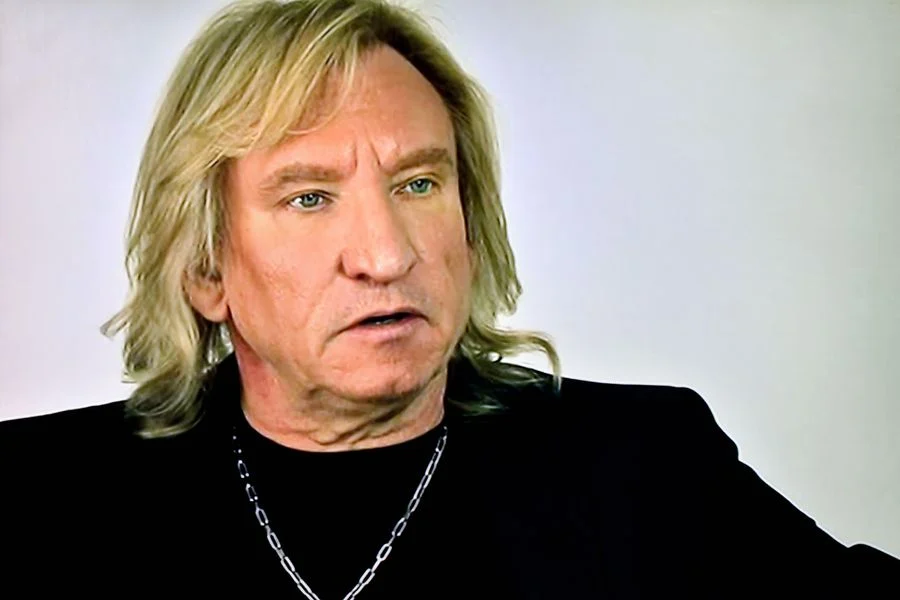
In 2011, a memorable episode of CMT Crossroads brought together two of rock’s most distinctive guitar masters: Joe Walsh of the Eagles and Billy Gibbons of ZZ Top. Their joint performance of “Life in the Fast Lane” wasn’t just a duet—it was a full-throttle, high-octane tribute to the enduring spirit of classic rock.

Walsh, known for his razor-sharp solos and anthemic songwriting, teamed up with Gibbons, whose signature blues-drenched guitar tone and gravelly vocals have defined ZZ Top’s sound for decades. While each musician carries a unique sonic fingerprint, their collaboration resulted in something unexpected: a reimagined version of “Life in the Fast Lane” that felt like an entirely new beast—raw, loud, and alive.

Originally released in 1976, the Eagles’ “Life in the Fast Lane” is a track already steeped in rock legend. But on this night, Walsh and Gibbons breathed fresh fire into it. With Gibbons’ gritty, Southern-rock swagger and Walsh’s unmistakable fretwork, the song took on a heavier, more primal edge. The performance wasn’t just about playing the notes—it was about channeling decades of rock legacy into one explosive moment.

What truly made the performance special was the seamless interplay between the two. Coming from different musical camps—Walsh with his melodic, California rock polish and Gibbons with his Texas-born blues punch—their synergy was instant and electric. They traded riffs with ease, never competing, always complementing. It was less of a duel and more of a dance—two veterans locked into the same rhythm, speaking the same musical language.

The stage energy was palpable. You could see the mutual admiration in the way they stepped back to let the other take the lead, only to come roaring back in with their own distinct flair. Improvisation was front and center, making each lick and solo feel spontaneous, born out of the moment rather than rehearsed. It was a living, breathing conversation between two icons who clearly understood the weight of the moment—and had fun with it.

This wasn’t just a concert performance. It was an event—a celebration of what happens when musical titans step out of their comfort zones and meet in the middle. In an era of curated, overproduced music, the authenticity of this jam session stood out like a lightning bolt in a clear sky. It was pure, unfiltered rock and roll.

“Life in the Fast Lane” is a song about intensity, momentum, and burning the candle at both ends. Walsh and Gibbons didn’t just perform it—they embodied it. Their version was louder, rougher, and drenched in attitude, showing just how timeless a well-written rock song can be when reinterpreted by the right hands.

For fans in the room and viewers at home, it was the kind of collaboration that doesn’t come around often. Fortunately, the full performance is preserved online for those who want to experience—or re-experience—the electricity. Watching it today, the energy is just as potent, a reminder that rock’s golden age still has its pulse thanks to artists like Walsh and Gibbons.

This unforgettable pairing proved that when legends unite, they don’t just revisit the past—they reinvent it.

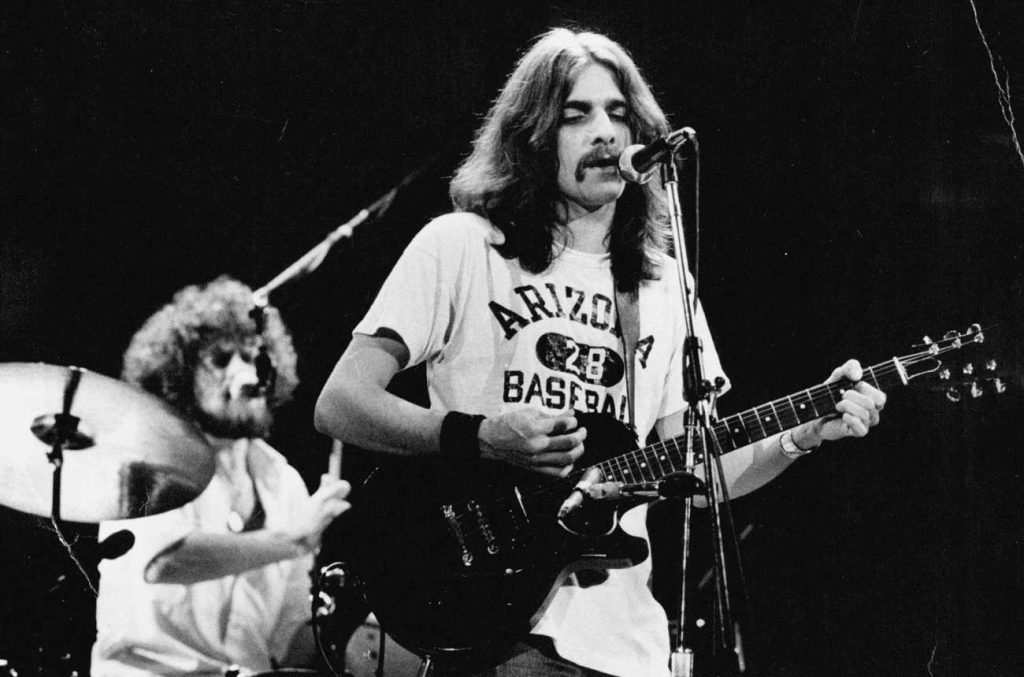
Joe Walsh delivered an unforgettable and emotional homage to his late Eagles bandmate Glenn Frey during a powerful performance at the Perfect Vodka Amphitheatre in West Palm Beach, Florida. The tribute was part of his co-headlining “One Hell of a Night” tour with Bad Company.

Before launching into the beloved Eagles ballad “Take It to the Limit,” Walsh paused to speak from the heart. “I’m dedicating this entire evening to my brother and fellow bandmate, Glenn Frey,” he told the audience. His words were met with resounding applause, setting the tone for a moving visual montage that featured an eagle gliding across the sky and a nostalgic image of the Eagles together—symbolizing the lasting brotherhood among the bandmates.

As Walsh played the opening chords of “Take It to the Limit,” the crowd responded with a wave of emotion, fully aware of the gravity of the moment. The performance served as both a tribute and a celebration—an acknowledgment of Frey’s profound impact on the Eagles’ sound and legacy.

The night continued with a selection of Eagles classics woven into the setlist in Frey’s memory. “Life in the Fast Lane” electrified the audience, while “Heartache Tonight” held a new emotional weight, having been added to honor Frey’s memory specifically for this show.

The encore featured a surprise collaboration as Walsh invited country superstar Keith Urban and The Voice finalist Laith Al-Saadi to join him on stage for a rousing rendition of “Rocky Mountain Way.” Their joint performance added an unexpected and exhilarating twist to an already poignant evening.

This concert held extra meaning as it was one of the first significant performances by an Eagles member following Glenn Frey’s passing on January 18, 2016. Though the show took place in Florida, the emotional undercurrent connected deeply with Frey’s roots in Detroit, making the tribute even more impactful for fans.

For those who couldn’t attend, a video of Walsh’s touching performance of “Take It to the Limit” is available on YouTube, preserving the spirit of that night. The performance stands as a testament to Glenn Frey’s enduring influence and the unbreakable bond shared by the Eagles.

On the final evening of her Speak Now World Tour’s U.S. run, Taylor Swift transformed Madison Square Garden into a temple of memory and meaning by welcoming an extraordinary guest to the stage: the artist she was named after — James Taylor.

Before the music began, Swift addressed the crowd with a heartfelt reflection. She spoke of her first encounter with James Taylor’s “Fire and Rain” back in fifth grade, when she performed it in chorus. “It’s one of the most beautiful songs I’ve ever heard,” she said, her voice edged with emotion.

Then, as the stage dimmed to a single spotlight, James Taylor emerged. The roar from the crowd was immediate — but what followed was a reverent stillness, the kind that only deep admiration can summon.

What came next was not just a performance, but a bridge across generations. With James on guitar and Taylor joining in harmony, their rendition of “Fire and Rain” felt like a conversation between eras — a fusion of enduring artistry and modern storytelling. For a fleeting moment, the decades dissolved, leaving only music, emotion, and mutual respect.

The magic continued as James remained on stage to accompany Swift on her song “Fifteen.” His tender guitar lines lent a quiet depth, transforming the youthful anthem into a reflective ode to growing up and looking back.

The evening held yet another surprise — Selena Gomez appeared for a spirited duet of “Who Says,” bringing warmth and sisterhood to the already emotionally charged night.

This wasn’t just a memorable collaboration — it marked the beginning of a creative bond that would reunite Swift and James Taylor again, notably at an intimate performance in Tanglewood, Massachusetts in 2012.

But for those lucky enough to witness that night at Madison Square Garden — and for the countless others who later experienced it online — the duet of “Fire and Rain” stands out as more than a performance. It was a generational embrace, a timeless exchange between a young artist and her namesake, etched forever in the hearts of those who watched.