Category

Rock

Category

The Eagles were unparalleled when it came to live performances, delivering countless unforgettable shows throughout their career. But one performance that truly stands apart took place at the Capital Centre in Landover, Maryland, on March 21, 1977. That night, the band delivered a jaw-dropping rendition of their iconic hit “Hotel California” — a performance that has since become legendary.

While grainy clips of the show have circulated online for years, fans were thrilled when the Eagles began releasing pristine, high-definition versions of several songs from that night on YouTube. It’s no secret that “Hotel California” ranks among the all-time great rock tracks, but hearing it performed live in ’77 highlights just how extraordinary the Eagles were onstage.

The chemistry between the band members is on full display in this performance. Don Henley, commanding the drums while delivering pitch-perfect lead vocals, anchors the performance with effortless control. All five members contribute harmonies, creating a live vocal blend that few bands — perhaps only The Beatles — could rival. It’s a masterclass in live musicianship.

The performance crescendos with the famous dual guitar solo from Don Felder and Joe Walsh, both of whom are in peak form. Onstage, Walsh playfully pushes Felder to new heights, creating a back-and-forth guitar duel that’s nothing short of electric. Another standout moment from the same show is “Take It to the Limit,” showcasing Randy Meisner’s soaring vocal range in a moving HD release on YouTube.

The 1977 performance of “Hotel California” has captivated fans across generations. Comments on the video reflect this enduring admiration, with one viewer writing, “Two wizards of lead guitars, and one drummer and singer make magic that can never age,” while another adds, “The year is 2024 and here we are still appreciating this timeless classic. Future generations, do not let this song die.”

The band’s 1977 lineup — Henley, Glenn Frey, Felder, Walsh, and Meisner — is often regarded as their finest. The Maryland recordings remain some of the most beloved Eagles live footage online, and the “Hotel California” performance from that night is a standout, amassing over 347 million views to become the band’s most-watched live video on YouTube.

While Ann and Nancy Wilson of Heart may walk separate paths today, one thing still binds them: a deep and abiding love for their Seattle roots—and for the late Chris Cornell, a cherished member of their musical family. The legendary Soundgarden frontman left an indelible mark on the rock world, but to the Wilson sisters, he was more than a fellow musician—he was family.

That bond was cemented in 2013 when Cornell gave a powerful and heartfelt speech inducting Heart into the Rock and Roll Hall of Fame. His words—genuine, impassioned, and reverent—moved Ann and Nancy to tears and brought the crowd to its feet. He spoke not just of their music, but of their perseverance and influence as women in a genre that wasn’t always welcoming.

When Cornell passed away at 52, the loss resonated deeply. Though the Wilson sisters released their tributes separately, the emotion behind them echoed the same profound grief and respect.

Ann Wilson reflected with grace:

“It’s important now to keep thoughts of Chris positive. He is on his way. We loved him well, now wish him well on his journey. He was and is a beautiful soul.”

Nancy Wilson shared her heartbreak:

“No one is ever prepared to hear about a death in the family. And today Chris Cornell, my brother from my Seattle music family, is gone. I thought his voice would forever grace the world of music. Devastating.”

Their words capture the loss not just of a talent, but of a kindred spirit. Cornell’s voice—gritty yet haunting, fierce yet fragile—defined an era and touched countless lives. His passing left a void in the Seattle scene, and in the hearts of those who stood beside him on stage and in life.

As the world continues to remember Chris Cornell’s legacy, Ann and Nancy Wilson stand as two of the many artists forever changed by his presence. Their sorrow is a reminder of the powerful connections forged through music—ones that transcend fame, endure through grief, and echo in every note that’s left behind.

On March 26, 2023, the crowd at Madison Square Garden got more than they bargained for during Billy Joel’s iconic residency. Just as Joel’s band began teasing the unmistakable intro to “La Grange,” none other than ZZ Top’s Billy Gibbons emerged, sending shockwaves of excitement through the arena. Fans roared as the Texas bluesman took the stage, casually stroking his famous beard and soaking in the moment like only a true rock legend could.

“Holy shit, it’s Billy Gibbons!” one fan shouted — a reaction that echoed the sheer awe rippling through the room. Joel, beaming with delight, welcomed his fellow “Billy” with a grin, setting the stage for a spontaneous and electric jam session.

Gibbons, ever the showman, offered a cheeky “From a Billy to a Billy,” called for a guitar, and dove headfirst into a blistering version of “La Grange.” Trading riffs with Joel’s guitarist Tommy Byrnes, backed by Joel’s piano wizardry and Mark Rivera’s searing sax, Gibbons brought grit, groove, and swagger to the classic ZZ Top hit. It wasn’t rehearsed — it was raw, real, and absolutely unforgettable.

And just when it seemed the night had peaked, the band segued into another ZZ Top anthem: “Tush.” A regular in Joel’s live rotation and usually sung by rhythm guitarist Mike DelGuidice, this rendition was supercharged by Gibbons’ presence. DelGuidice crushed the vocals, but it was Gibbons’ crunchy guitar tone and undeniable stage presence that gave the performance its edge.

As the final chord echoed and Gibbons made his exit, Joel summed it all up: “That was a fantasy come true.” What unfolded that night wasn’t just a special guest slot — it was a collision of rock royalty, a celebration of legacy, and a reminder that some moments on stage transcend setlists.

Gibbons, for his part, has been enjoying a high-profile season of guest spots. Just days before his MSG cameo, he joined Elvis Costello in Nashville for a benefit show supporting the Musician Treatment Foundation. Ripping through ZZ Top classics like “Sharp Dressed Man” and “Jesus Just Left Chicago,” Gibbons proved he’s still got the fire — and a heart for good causes.

As ZZ Top geared up for their spring tour, Gibbons’ spontaneous appearances felt like warmups with purpose — honoring the past, electrifying the present, and keeping the band’s spirit alive. Whether he’s standing beside Costello, Joel, or fellow legends, Gibbons brings a down-home cool and authenticity that connects with audiences across generations.

Meanwhile, Joel continues to elevate his already-legendary residency at MSG. With over 90 sold-out shows since 2014, his ability to keep things exciting — rotating setlists, surprise guests, and all — keeps fans returning again and again. And when he’s not rocking the Garden, Joel’s been hitting stadiums alongside Stevie Nicks on their joint tour, bringing his signature sound to massive crowds from coast to coast.

Whether in a packed arena or an open-air stadium, Billy Joel continues to prove that live music, when done right, still has the power to deliver genuine surprises — the kind that become part of rock ‘n’ roll lore. And with Billy Gibbons in the mix, March 26 wasn’t just another concert — it was history in the making.

Formed in the early 1980s by James Hetfield and Lars Ulrich, Metallica carved out their place in heavy metal history with an unmatched intensity and a string of iconic albums—none more influential than Master of Puppets. With over 125 million albums sold globally, their rise from garage-band grit to stadium-rocking legends has been nothing short of monumental. Yet, despite playing to millions across the world, Metallica has never forgotten the people and places that shaped them.

In a show of gratitude and purpose, the band recently headlined the Helping Hand benefit concert at the YouTube Theater in Inglewood, California. Hosted by their own charity, the All Within My Hands Foundation, the event exemplified their commitment to giving back. Dedicated to supporting communities that have stood by Metallica throughout their journey, the foundation continues to be a powerful force for good.

The benefit concert featured a rare and emotionally charged setlist that thrilled longtime fans. One of the standout moments was the performance of “Low Man’s Lyric,” a deep cut from their Reload album that hadn’t been played live in over two decades. The unexpected throwback sparked nostalgia across the crowd, with one fan remarking, “Core memory unlocked. Legit forgot about this one for 20+ years. Appropriate winter song.”

Another highlight came in the form of “Fuel,” their fiery 1997 single that once earned them a Grammy for Best Hard Rock Performance. The track roared through the venue with the same adrenaline it brought decades ago, reminding the audience of Metallica’s enduring power and technical brilliance.

While their music remains fierce, Hetfield’s personal journey brings an added layer of depth to their performances. In a candid conversation on The Metallica Report, he reflected on his ongoing struggle with anxiety. “The mind is the enemy most of the time,” Hetfield admitted, sharing his efforts to stay grounded and present. “What’s supposed to come through me is supposed to right at that time, and not will it to happen,” he said, revealing how he channels vulnerability into strength.

This fusion of raw honesty, philanthropic passion, and musical intensity is what continues to define Metallica—not just as a band, but as a force that evolves with purpose. Decades in, they’re not just reliving their legacy—they’re expanding it, one riff, one lyric, one act of service at a time.

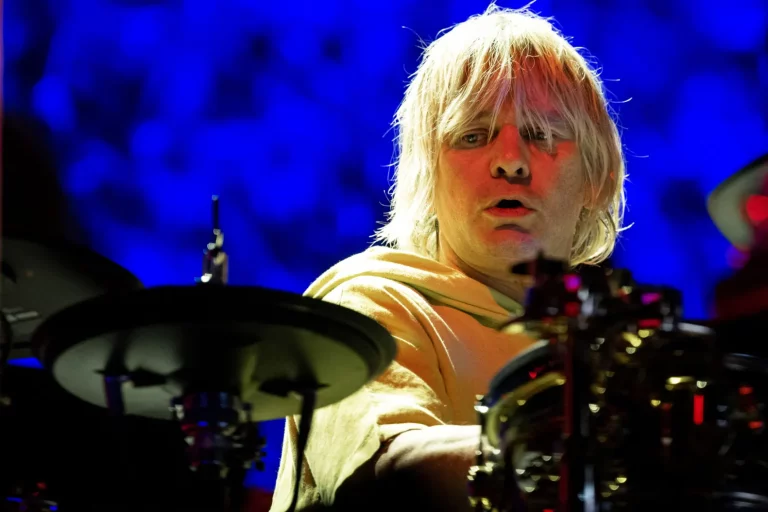
Following a short hiatus, Zak Starkey—son of Ringo Starr and godson of Keith Moon—has made a triumphant return to The Who’s lineup, stepping behind the drums with the kind of presence that instantly reignites the band’s legendary fire. From the first strike of his sticks, the atmosphere shifts—what follows is not just percussion, but legacy in motion.

Zak’s playing is more than technically brilliant; it’s visceral. He channels his roots with a style that fuses his father’s precision with Moon’s wild, chaotic brilliance. Each beat pulses with history, yet feels completely alive in the present. As Pete Townshend’s guitar blazes and Roger Daltrey unleashes his iconic vocals, Zak drives the engine with undeniable force—bold, fearless, and unmistakably his own.

It’s a seamless fusion of generations. The stage becomes a meeting point of rock’s greatest eras, with Starkey standing not behind, but alongside the legends who helped define the sound of rebellion. His chemistry with the band is instant and electric, breathing new energy into familiar anthems while carving a path into the future.

For the crowd, it’s more than nostalgia—it’s witnessing evolution in real time. Zak Starkey doesn’t just play the drums; he carries the spirit of rock’s lineage with every stroke, ensuring The Who doesn’t simply echo their past, but roar forward with renewed purpose.

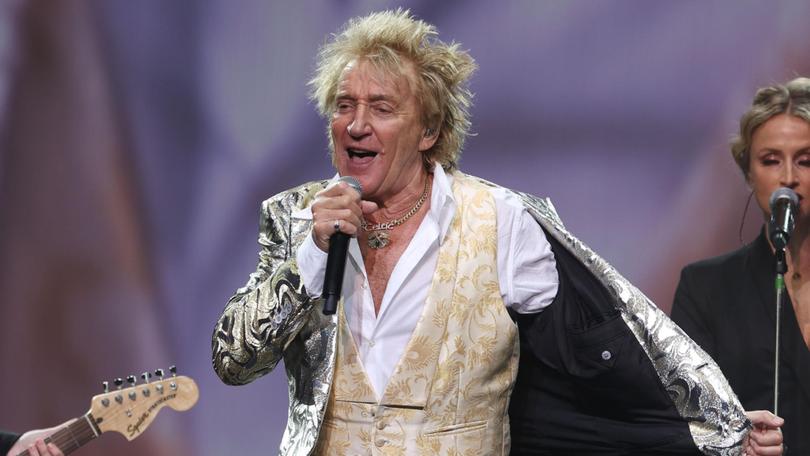
Beneath a sky lit with stage lights and the roar of thousands, a long-awaited reunion unfolded—Rod Stewart, Ronnie Wood, and Bill Wyman, together again, igniting the stage like no time had passed at all. As the first licks of “Stay With Me” echoed through the crowd, the atmosphere snapped into focus: a heady blend of nostalgia, rebellion, and reverence.

Rod Stewart, ever the showman in his flamboyant finery, prowled the stage with playful swagger, his voice still sharp with grit and soul, carrying the weight of decades and the spark of youth. Ronnie Wood, guitar slung low, conjured electricity from his strings, each note laced with a familiar bite, while Bill Wyman’s bassline grounded the chaos with a groove so tight, it felt like the heartbeat of the night.

But this wasn’t just a song—it was a spark of something timeless. The trio’s unshakable bond radiated with every shared glance and spontaneous riff. On stage, they weren’t revisiting the past—they were reliving it in full color, reshaping it for a new generation standing shoulder to shoulder with the old. The crowd, a chorus of voices, joined in, every lyric a bridge between eras.

More than a performance, it was a resurrection—a powerful reminder that the true soul of rock doesn’t age, it evolves. And for one unforgettable night, the legends didn’t just return—they reminded the world what it means to own a stage, a sound, and a legacy.

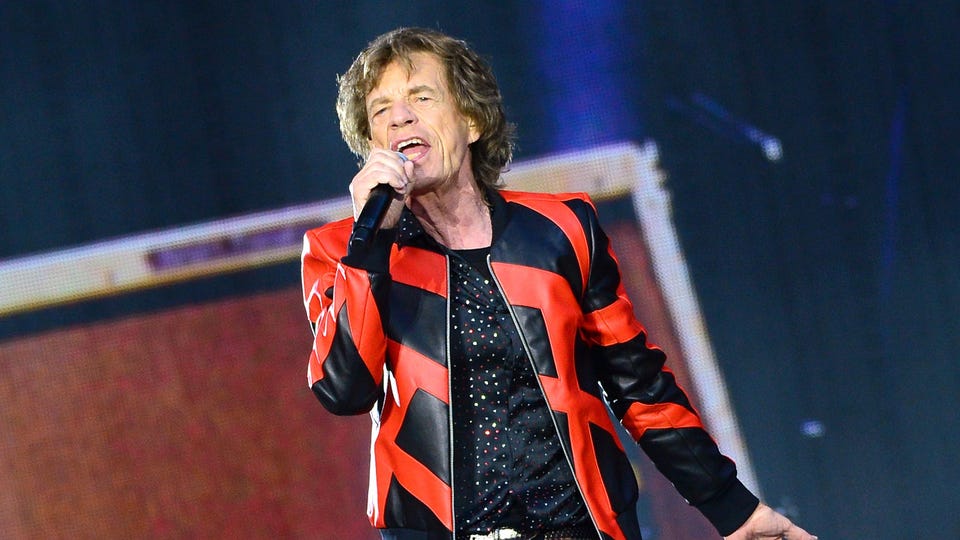
Enter an unexpected duo: rock legend Mick Jagger and pop powerhouse Christina Aguilera, who was then sharing the spotlight with Adam Levine as a judge on The Voice. Inspired by Jagger’s iconic swagger, the band crafted a dance-pop track that marked a sharp turn from their usual soul-infused sound. With Aguilera’s powerhouse vocals layered in, Moves Like Jagger was born—and it exploded.

The single went on to sell over eight million copies worldwide, becoming one of the most successful digital tracks ever. In the UK alone, it was the second best-selling single of the year. Even Jagger gave it his stamp of approval, calling the tribute “very flattering” and allowing Maroon 5 to use archival clips of him in the song’s music video.

“It brought us back to life,” Levine admits. “That song was a game-changer. Hands All Over was a difficult album to make, and when it didn’t perform, we were disheartened. But Moves Like Jagger reignited our passion and momentum.”

He credits Aguilera with helping unlock the song’s potential. “We were looking for a strong female voice, and Christina’s incredible,” he says. “We had this built-in chemistry from The Voice, so collaborating musically felt natural.”

This past weekend, the Eagles soared back into the spotlight, proving once again that no force—not even the loss of founding member Glenn Frey—could ground them for long. In a stunning return, the band took the stage with country-rock icon Vince Gill and Glenn’s son, Deacon Frey, stepping in to honor the legacy while propelling the band forward. And true to form, the Eagles didn’t just reunite—they made it unforgettable.

The crowd erupted as none other than Bob Seger made a surprise appearance, joining the band just in time to bring down the house with a searing performance of “Heartache Tonight.” Backed by the Eagles’ signature harmonies, Seger delivered the song with raw energy, swaying and strutting across the stage, visibly moved by the moment and the magic of performing alongside longtime friends.

Here’s a bit of rock history for the curious: “Heartache Tonight” was the result of a spontaneous jam session between Glenn Frey and J.D. Souther, who were listening to Sam Cooke records when they began piecing together the first verse. On a whim, they rang up Seger, played him what they had, and without missing a beat, he belted out the now-iconic chorus.

Seger not only co-wrote the 1979 hit but also lent his voice to the original recording. His decades-long friendship with Frey, stretching over half a century, made this reunion especially poignant. It was clear from the passion he poured into the performance that this one was for Glenn.

Moments like these remind us why we fell in love with rock and roll in the first place: the camaraderie, the spontaneity, and the timeless power of a great song delivered by legends who still know how to light up a stage.

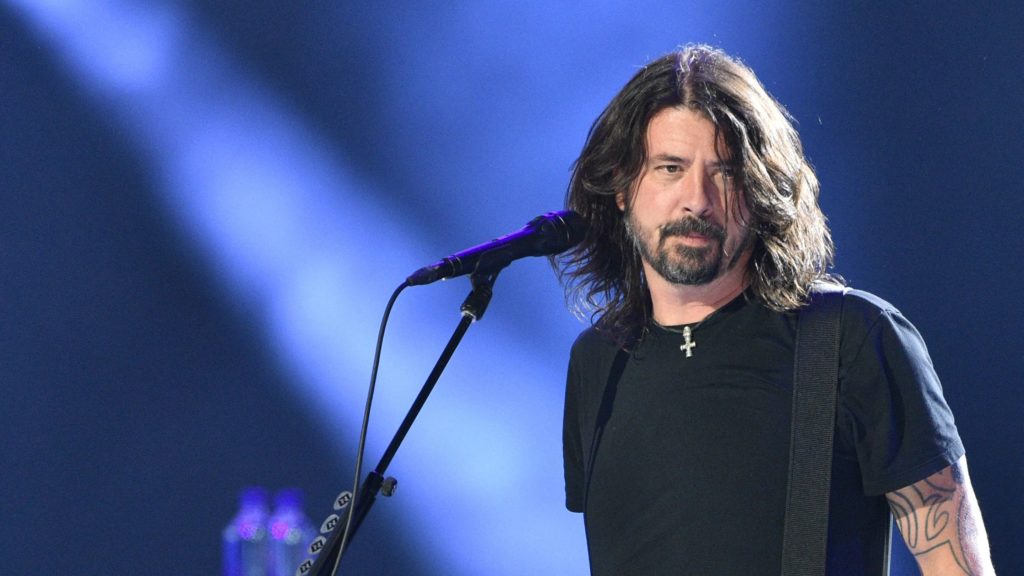
Dave Grohl joined the Los Angeles Philharmonic for a special collaboration, delivering renditions of two Foo Fighters classics—“The Sky Is a Neighborhood” and “Everlong.” Later that evening, the crowd was treated to another unexpected moment when actress and singer Cynthia Erivo took the stage to perform a powerful cover of Prince’s “Purple Rain.”

This event marked Grohl’s first live performance of Foo Fighters material since August 2024. Although he hadn’t played with the band in recent months, he did reunite with his former Nirvana bandmates for a one-off set at January’s FireAid concert—an appearance that followed public news of him fathering a child outside of marriage.

In a recent interview with the Los Angeles Times, Gustavo Dudamel, music and artistic director of the LA Phil, called the opportunity to play at Coachella “a dream realized.”

“We’ve always hoped someone would take that bold step and say, ‘Let’s make this happen,’” Dudamel said. “Our summers at the Hollywood Bowl collaborating with artists from all genres led us here. It feels like the perfect moment to bring classical music into a space where it’s not typically heard—and to celebrate everything we’ve built together over the years.”

After charming fans worldwide with their playful kitchen performances, Toyah Willcox and Robert Fripp took to the Cropredy Festival stage to remind everyone just how powerful they are as seasoned musicians. Stepping beyond their cheeky Sunday Lunch videos, the pair unleashed a show-stopping set that included a breathtaking version of Led Zeppelin’s epic “Kashmir” — and in the audience, none other than Robert Plant himself was there to witness the magic.

Their set was a dynamic blend of reinvented rock classics and Toyah’s own hits, including crowd favorites like “Thunder In The Mountains,” “It’s A Mystery,” and “I Want To Be Free.” But it was their fiery renditions of tracks like Black Sabbath’s “Paranoid” and Metallica’s “Enter Sandman” that set the stage ablaze, leading up to a towering performance of “Kashmir” from Physical Graffiti.

Before diving into the Zeppelin classic, Toyah teased the audience with heartfelt pride:

“We’re immensely proud of this next song,” she said. “It’s by someone we love to the moon and back. I won’t say more—but the Midlands has given the world some brilliant musicians.”

As the first notes of “Kashmir” thundered through the festival grounds, a surge of energy swept over the crowd. Backed by a full band, Toyah and Fripp delivered a rendition that was raw, commanding, and packed with a reverence for the source material — a far cry from their usual light-hearted covers, and a full-on display of their musical might.

When the final notes faded into the night, Toyah’s voice rang out, brimming with excitement:

“We are so proud to have Mr. Robert Plant watching from the audience tonight!”

The revelation sent a ripple of awe through the crowd. One attendee, YouTuber ganazby, later shared his surreal experience online:

“Robert Plant was standing right behind me, near the bar, nodding his approval. It was an incredible moment.”

In a festival filled with unforgettable performances, the magic of seeing two generations of rock brilliance collide — on stage and in the audience — made this night truly historic.