Category

Rock

Category

The idea of what someone’s final words might be often feels heavy — especially when it comes to legends like Tom Petty. While we may never know the last thing he said, Petty’s true farewell echoed through the music he loved, leaving a message that still reverberates with fans today.

On September 25, 2017, just days before his passing, Tom Petty took the stage one last time at the Hollywood Bowl in Los Angeles. The show marked the grand finale of the Heartbreakers’ 40th Anniversary Tour — a celebration of four decades of unforgettable rock.

As the night drew to a close, Petty and his band launched into “American Girl,” one of his most iconic anthems. The crowd roared the lyrics back at him, the atmosphere electric, the bond between artist and fans palpable. It was a triumphant moment — no one realized it would also be a final goodbye.

Petty had just completed three sold-out shows in Los Angeles, and to the audience, the legend seemed unstoppable. But life had other plans.

On the night of October 1, 2017, Petty was found unconscious at his home and rushed to the hospital. Despite medical efforts, he was taken off life support on October 2 after doctors found no brain activity. He was 66 years old.

An autopsy later revealed that a mix of medications — including powerful painkillers like fentanyl — had contributed to his accidental overdose. Petty had reportedly been dealing with unbearable pain from a fractured hip while still pushing forward to finish the tour.

Though his passing left an unfillable void, Tom Petty’s spirit remains fiercely alive in the music he left behind. That final night at the Hollywood Bowl, with “American Girl” ringing out into the California night, stands as a powerful tribute to his enduring legacy.

In the end, Tom Petty’s last message wasn’t spoken — it was sung, from the heart, and it continues to inspire and uplift anyone who listens.

Jim Breuer isn’t just a stand-up comedian — he’s a full-fledged rock fanatic known for his spot-on impressions and infectious energy. One of his most beloved routines is a heavy-metal twist on the children’s favorite “Hokey Pokey,” hilariously reimagined as “AC/‘Hokey DC’s Pokey.” In this parody, Breuer channels Brian Johnson’s signature screeching vocals and wild stage antics, fusing childhood nostalgia with the raw power of rock.

The skit quickly went viral, earning Breuer widespread attention across social media. His uncanny vocal delivery and physical comedy resonated not only with comedy lovers but also with hardcore AC/DC fans, who appreciated the genuine affection behind his act. Unlike many parodies that poke fun, Breuer’s performances always celebrated the spirit of the music he loved.

It didn’t take long before the real Brian Johnson heard about the act — and instead of brushing it off, he embraced it. What followed was a collaboration nobody could have predicted.

When Comedy and Rock Legends Collide

Rather than just laughing from a distance, Johnson decided to team up with Breuer. Their meeting in a recording studio resulted in a wild and unforgettable jam session, where they tore through AC/DC’s “Rock and Roll Ain’t Noise Pollution” together.

The session was far more than a gimmick. It was a genuine merging of two passionate performers — Johnson, the rock titan, and Breuer, the comedian with a rocker’s soul. Together, they crafted a moment of pure, unscripted magic that thrilled fans from both worlds.

For Breuer, the opportunity was surreal. He had long admired Johnson’s powerhouse vocals and raw charisma, and jamming with him was a moment of pure fulfillment. In interviews afterward, Breuer described Johnson as the “most powerful and most down-to-earth” rock voice he’d ever encountered.

A Tribute That Struck a Chord

Speaking to Rolling Stone, Breuer reflected on the incredible experience, calling it one of the highlights of his life. From impersonating Johnson on stage to standing beside him in a recording booth, Breuer’s journey showed just how deep his love for AC/DC ran.

He also praised Johnson’s warm, unpretentious nature, saying the rock frontman was every bit as funny and genuine offstage as he was commanding on it. Their performance wasn’t polished or overproduced — it was raw, organic, and bursting with personality, capturing the true spirit of rock.

What stood out wasn’t just the music, but the evident camaraderie between the two. Seeing Johnson laughing, joking, and fully embracing the moment made it clear why AC/DC’s energy has endured for decades. And Breuer proved that what starts as a comedic tribute can turn into something genuinely heartfelt.

Fans Celebrate an Unexpected Rock Moment

The video of Breuer and Johnson’s jam quickly lit up the internet, drawing massive praise from fans. It wasn’t just another viral clip — it became a testament to how music and humor can bridge worlds.

Fans were thrilled to see Johnson dive headfirst into the silliness with full enthusiasm, reminding everyone that even rock legends know how to have fun. Meanwhile, Breuer’s performance showed he’s more than just a funny man — he’s a true rock disciple at heart.

Together, they created a moment that wasn’t just hilarious — it was inspiring. In the end, Jim Breuer proved that dreams — even the wildest ones — can come true when they’re powered by passion and a little bit of rock ‘n’ roll.

Paul McCartney delivered an unforgettable and deeply emotional performance at the 2022 Glastonbury Festival, reuniting — in spirit and song — with his late Beatles bandmate John Lennon.

During a historic headline set, the 80-year-old legend brought the crowd to tears when he used a video screen to duet with Lennon on the Beatles classic “I’ve Got a Feeling.” Earlier in the night, McCartney had already thrilled fans by welcoming Foo Fighters’ Dave Grohl and rock icon Bruce Springsteen to the stage, but the surprise collaboration with Lennon stood as the evening’s most poignant moment.

The last time McCartney and Lennon recorded vocals together was during a laid-back studio jam in 1974, and their final posthumous collaboration came in 1996 with the Beatles’ release of “Real Love.” Now, as part of his Got Back tour, McCartney crafted a powerful new version of “I’ve Got a Feeling,” syncing his live vocals with isolated footage of Lennon from 1969.

Though McCartney often revisits songs from the Beatles’ catalog in his concerts, this moment was particularly rare — few times before had he incorporated archival footage into a live performance. While Queen famously used old clips of Freddie Mercury during their 2005 shows, McCartney’s use of Lennon’s voice was a first for him, offering an extraordinary treat for Beatles fans around the world.

Earlier in the evening, McCartney also paid tribute to another fallen bandmate, George Harrison, with a touching ukulele performance of Harrison’s classic “Something” — a cover he has occasionally brought into his setlists over the years. McCartney’s tributes to his friends are longstanding; he wrote the heartfelt song “Here Today” in 1982 to honor Lennon, capturing the complexity and deep affection of their friendship.

Reflecting on “Here Today,” McCartney once shared: “It was a love song really — not to John, but about John, about what we meant to each other. I wanted to get out from behind my own defenses and say what I felt.”

The Got Back tour also highlights songs from McCartney III, an album born out of the Covid-19 lockdown — what McCartney playfully dubbed his period of “rockdown.” The album completed a trilogy that had been half a century in the making, beginning with McCartney in 1970.

During the emotional Glastonbury duet, the vocals from Lennon were sourced and cleaned up during Peter Jackson’s Get Back documentary project, making the moment even more powerful. After the song ended, McCartney, visibly moved, told the crowd, “That’s so special for me, man. I know it’s virtual, but come on — it’s John. We’re back together.”

Despite the turmoil of war at home, the Dzvinochok boys choir and the Vognyk girls choir made the long journey from Kyiv to Vienna, joining the Rolling Stones for a powerful rendition of their 1969 classic “You Can’t Always Get What You Want” during Friday night’s show at Austria’s Ernst Happel Stadium. It was a moving gesture of solidarity with Ukraine, celebrated by both the band and the crowd.

“They traveled a long way to be with us tonight,” Mick Jagger told the audience, noting the grueling 15-hour drive from Kyiv. “They drove all the way here.”

For choirmaster Ruben Tolmachov, the performance was deeply emotional. “This is a once-in-a-lifetime experience for our choirs,” he said. “We are thrilled to have made it to Vienna — it’s a night none of us will ever forget.”

Normally part of the Rolling Stones’ early setlist, the band chose to spotlight “You Can’t Always Get What You Want” during their first encore, before closing the night with the classic anthem “(I Can’t Get No) Satisfaction.” The show also featured standout moments like “Wild Horses,” a live cover of Bob Dylan’s “Like a Rolling Stone,” and a rare performance of their 1966 track “Out of Time,” which had never been played live before this tour.

The Stones’ tour will next hit Lyon’s Groupama Stadium on July 19, with the final show scheduled for August 3 at Berlin’s Waldbühne. There’s still no word on whether the band plans to extend their 60th-anniversary celebrations to other parts of the world.

For fans who can’t make it to the shows, there’s still something to look forward to: My Life as a Rolling Stone, a four-part documentary series debuting soon on Epix. Each episode will dive deep into the life of a different band member, featuring fresh interviews with Mick Jagger, Keith Richards, and Ron Wood.

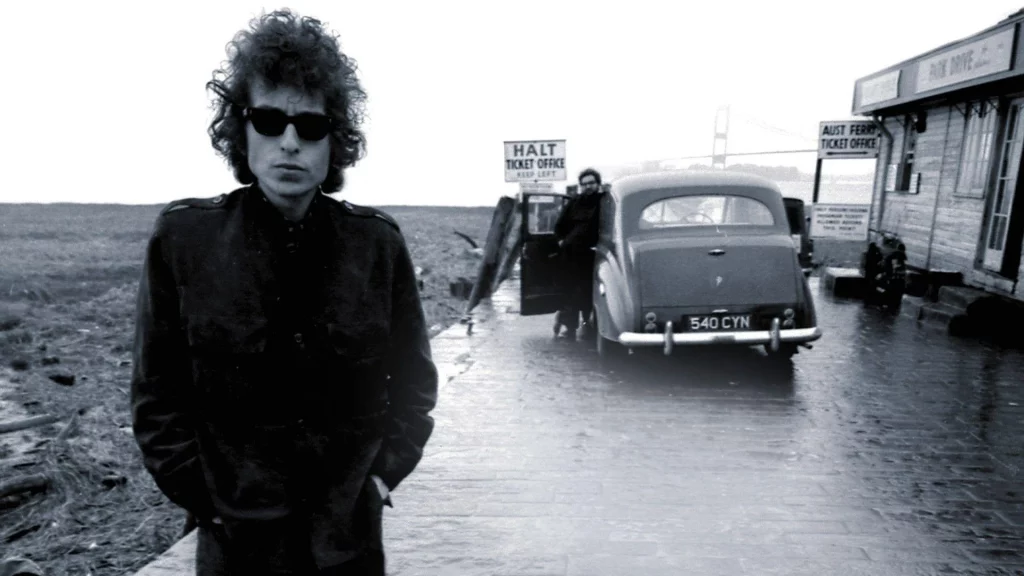
In 1975, an eclectic mix of artists hit the road on a wild, unconventional tour across America with Bob Dylan. Among them were iconic figures like folk legend Joni Mitchell, Roger McGuinn of The Byrds, and Beat poet Allen Ginsberg.

Yet, it was Joan Baez — Dylan’s former partner in both music and life — who left the deepest mark. Their complicated, heartfelt bond is tenderly portrayed in Rolling Thunder Revue: A Bob Dylan Story by Martin Scorsese, premiering on Netflix this Wednesday.

Blending documentary and concert film, Rolling Thunder Revue offers an intimate look at Dylan’s mythical 1975 tour, skillfully pieced together from 120 hours of newly restored, never-before-seen footage. The film also features fresh interviews with Dylan and Baez, both now 78, where they open up about their enduring connection.

“We could harmonize on anything. Sometimes, even lying in bed, I’d hear her voice,” Dylan reflects in his first on-camera interview in over a decade. “Joan’s bravery is otherworldly — she’s like someone who just fell from a star.”

Baez, equally effusive, says, “The charisma he carries is unmatched — I’ve never seen anything like it before or since.”

Their story began in 1961 amidst New York’s vibrant folk revival, where they met and soon became both musical allies and romantic partners. They spent the early ’60s touring and inspiring each other to channel their activism through protest songs, before parting ways around 1965 — a breakup immortalized in D. A. Pennebaker’s 1967 documentary Don’t Look Back.

Despite their romantic split, Dylan and Baez remained close, frequently reuniting onstage for duets like “Blowin’ in the Wind,” “The Water is Wide,” and “I Dreamed I Saw St. Augustine” — all featured in Rolling Thunder Revue.

“The film really captures the depth of their bond, forged during such formative years,” says producer Margaret Bodde. “When you create friendships that deep, they tend to last a lifetime. For fans, it’s a rare, beautiful window into their relationship.”

Beyond the performances, the documentary reveals candid, often playful backstage moments between the two. In one touching scene, Baez confides about marrying journalist David Harris, whom she later divorced in 1973. Another highlight features Baez humorously impersonating Dylan — donning his signature white face paint and floral hat, fooling even the crew.

“She literally became Bob for a moment,” Bodde notes. “It speaks volumes about their relationship and touches on the film’s broader themes — the blurred lines between identity, performance, and reality, which Scorsese so brilliantly explores.”

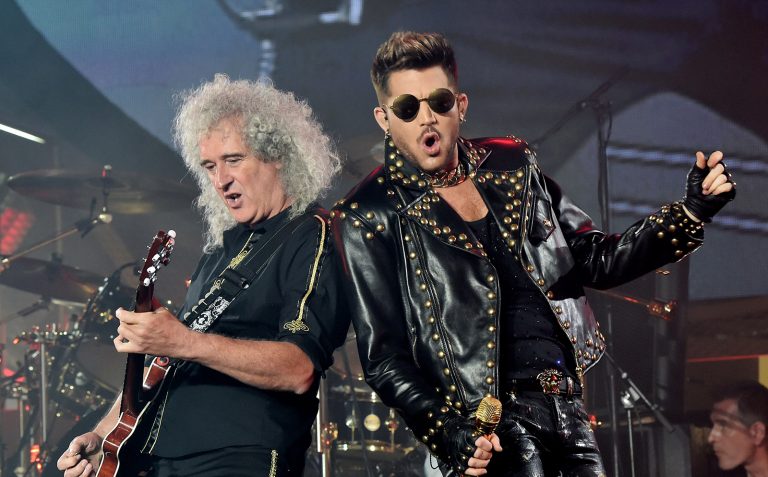
When Queen and Adam Lambert hit the stage in Ukraine for a mesmerizing rendition of “We Are the Champions”, it transcended a mere concert—it became a moment of unforgettable history. The atmosphere was charged with anticipation, as the crowd buzzed with excitement and an overwhelming sense of pride. The first notes of the song echoed through the venue, and suddenly, thousands of voices joined together, creating a wave of collective strength and unity that spread across the entire arena.

Standing at the center of it all, Adam Lambert commanded the stage with a perfect mix of respect and his own magnetic presence. His voice effortlessly captured the power of Freddie Mercury’s iconic legacy, while adding a fresh, personal touch that made the performance his own. Every lyric felt like a personal declaration, every note a tribute—not just to the timeless legacy of Queen, but to the resilience of the people who came together to share this unforgettable moment.

In the background, Brian May’s guitar roared with the same fiery passion that has defined Queen for decades, while Roger Taylor’s drums beat out the song’s rhythm with precision and strength. The connection between the band and the audience was palpable—an emotional bond that underscored the meaning of the song, especially in light of the historical significance of the location and the resilience of its people.

As the final chorus echoed through the venue—“We are the champions… of the world!”—the crowd became a part of the performance. Their voices blended with the band’s, creating an unstoppable roar of emotion, filled with tears, cheers, and raised fists. It wasn’t just a performance—it was a moment of powerful unity, of strength, and of hope. A reminder that no matter the challenges, champions will always rise.

Think you’ve seen every cover of Led Zeppelin’s “Whole Lotta Love”? Think again—because Bay Vergolino, a 9-year-old guitar prodigy better known online as The Only Bay, is here to blow your mind.

In a now-viral video, Bay grips his guitar with confidence far beyond his years and dives into the classic Zeppelin riff like he was born to play it. With lightning-fast fingers and pure rock energy, he doesn’t just perform the song—he completely owns it.

Viewers around the world were stunned. Comments poured in comparing Bay’s playing to the greats, with one fan declaring, “Jimmy Page would be proud!” Another simply said, “Rock just found its future.”

But Bay isn’t just mimicking the past—he’s breathing new life into it. His performance is more than a cover; it’s a full-on revival. He captures the spirit of rock with every note, reminding everyone that raw talent and passion still fuel the genre’s fire.

At just nine years old, Bay is turning heads and tuning hearts back to rock ’n’ roll. And if this performance is any sign of what’s to come, the future of rock isn’t just alive—it’s thriving, guitar in hand.

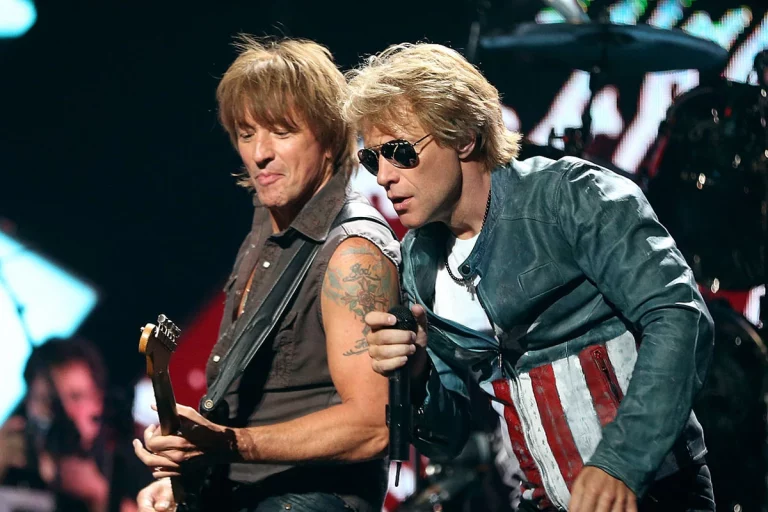
After more than 15 years, Bon Jovi and Jennifer Nettles are back together — this time with a powerful new message of hope and resilience.

The duo, who first topped the charts in 2006 with the hit “Who Says You Can’t Go Home,” have teamed up once again for a fresh take on Bon Jovi’s song “Do What You Can.” Originally written by Jon Bon Jovi during the early days of the COVID-19 pandemic, the song highlights strength and unity during tough times.

The inspiration for the track came from Jon’s wife, Dorothea, who snapped a photo of him volunteering at a New Jersey community kitchen. She posted it with the caption, “If you can’t do what you do… do what you can,” which sparked the idea for the song. Just a day later, Bon Jovi had written the lyrics — a tribute to perseverance when life turns upside down.

Now, Jon and Jennifer have recorded a country version of the track, complete with a brand-new music video. The video honors the everyday heroes of the pandemic — from frontline workers to neighbors lending a helping hand.

“In 2005, Jennifer helped bring ‘Who Says You Can’t Go Home’ to number one on the country charts,” Jon shared in a press release. “Her emotional and powerful voice brought that message to life, and I knew she was the right voice to carry this one too.”

Jennifer, who rose to fame as the lead singer of Sugarland, reflected on the collaboration with pride and gratitude.

“Working with Bon Jovi all those years ago was such a special moment in my career,” she said. “That song changed a lot for me, and I’m thrilled to continue our story with ‘Do What You Can’ — or maybe I should say ‘Duet What You Can.’”

On social media, Nettles shared a clip of their 2006 duet and added, “Fifteen years ago, I got to sing with one of my musical heroes. That memory means the world to me — and now, getting to sing together again is another full-circle moment I’ll never forget.”

The song will also appear on Bon Jovi’s upcoming album, 2020, set to be released next month.

Few songs have captured the human experience with such haunting grace as “Knockin’ on Heaven’s Door.” Written by Bob Dylan, one of America’s most iconic songwriters, this track has become more than just a folk classic—it’s a reflection on life’s final moments.

A Simple Song With Deep Emotion

At its core, the song speaks about facing death. With the opening line, “It’s getting dark, too dark to see,” Dylan sets a tone of quiet resignation. The imagery is simple but powerful, evoking the feeling of slipping away, of nearing the edge of consciousness.

Critics and fans alike have praised the track for its minimalism. Dylan biographer Clinton Heylin once called it “an exercise in splendid simplicity,” noting how its brevity adds to its emotional punch. While the song contains only a couple of verses, its impact lingers long after the last chord.

Written for the Screen

“Knockin’ on Heaven’s Door” wasn’t just a standalone single. Dylan wrote it as part of the soundtrack for the 1973 Western film Pat Garrett and Billy the Kid. The song underscores a poignant scene in which a wounded lawman, played by Slim Pickens, prepares to die. His wife stands by helplessly—a raw, quiet moment made unforgettable by Dylan’s mournful melody.

Universality in a Few Words

Though it was created for a specific moment in a movie, the song’s message resonates far beyond that. It touches on the one experience all humans share—the approach of death. That’s part of what has made the song so timeless: its ability to speak volumes in just a few lines.

A Global Anthem

Released as a single shortly after the movie’s debut, “Knockin’ on Heaven’s Door” quickly climbed the charts worldwide. It remains one of Dylan’s most recognized songs and has become a favorite for artists to cover.

From Eric Clapton’s soulful version to the hard-hitting rock adaptation by Guns N’ Roses, the song has seen countless reinterpretations, each one tapping into its emotional depth in a unique way.

Live Performances and Legacy

Dylan himself embraced the song’s significance, performing it live over 450 times between 1974 and 2003. It has also appeared on several of his live and bootleg albums, including Before the Flood, Bob Dylan at Budokan, and Dylan & the Dead.

In the decades since its release, “Knockin’ on Heaven’s Door” has become a musical companion for life’s quiet, heavy moments—an enduring reminder that even in the face of mortality, there’s beauty in simplicity.

A night of musical magic unfolded at Madison Square Garden as legendary guitarist Jeff Beck took the stage alongside rock icon Sting for an unforgettable performance of the timeless classic “People Get Ready.” The surprise collaboration brought the packed arena to its feet, proving once again the transcendent power of music.

Originally penned by Curtis Mayfield and made famous by The Impressions, “People Get Ready” has been reimagined by countless artists. But Beck’s haunting guitar work, paired with Sting’s emotive vocals, gave the song a fresh resonance that echoed through every corner of the Garden.

Audience members described the performance as “spiritual,” with many noting the chemistry between Beck’s expressive playing and Sting’s heartfelt delivery. The stage lights dimmed as the first notes rang out, creating an intimate atmosphere in the massive venue, and by the time the final chord faded, the crowd was roaring in approval.

The performance was a highlight in an evening filled with standout moments and special guests, and served as a poignant reminder of both artists’ enduring relevance and artistry.

Video clips of the duet have gone viral overnight, with fans and fellow musicians alike praising the performance as “iconic” and “goosebump-inducing.”