Category

Rock

Category

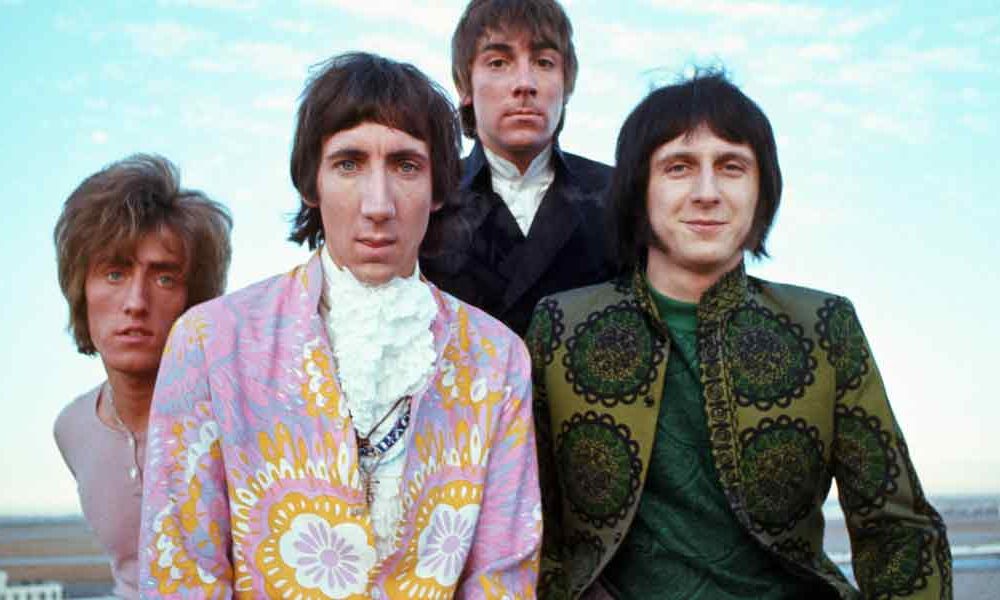
The Who delivered an unforgettable performance at the Super Bowl XLIV halftime show in 2010, bringing their legendary rock sound to millions around the world.

On February 7, 2010, at Sun Life Stadium in Miami Gardens, Florida, the iconic English rock band The Who took center stage for one of the most anticipated halftime shows in Super Bowl history. Their explosive setlist featured a medley of their greatest hits, blending electrifying guitar riffs with timeless lyrics.

Setlist Highlights (12-Minute Rock Spectacle)
“Pinball Wizard” – A high-energy opener that set the tone.
“Baba O’Riley” – A fan-favorite with its signature synth intro.
“Who Are You” – Instantly recognizable and packed with energy.
“See Me, Feel Me” – A soulful and emotional moment.
“Won’t Get Fooled Again” – A powerful finale that left the crowd roaring.
With their signature sound and dynamic stage presence, The Who turned the Super Bowl stage into a rock concert, making history with every chord.

https://www.facebook.com/photo/?fbid=122120708852639603&set=a.122106404882639603
In 1987, the album Trio took the music world by surprise. It was a dream collaboration between three of the most influential voices in country and rock—Dolly Parton, Linda Ronstadt, and Emmylou Harris.

The three artists had been close friends for years and had long envisioned working together on a project. However, conflicting schedules and record label restrictions kept their plans on hold. In fact, they had attempted to record together as early as the mid-1970s, but those sessions never fully materialized. Some of the songs from those early recordings did make their way into individual albums—Emmylou’s Evangeline featured Mr. Sandman, while Linda’s Get Closer included My Blue Tears, with both Parton and Harris contributing harmonies.

It wasn’t until late 1986 and early 1987 that they finally found the time to bring their vision to life. Produced by George Massenburg and released under Warner Bros. Records, Trio showcased their unmatched vocal chemistry and stunning harmonies.

Among the three, Emmylou was the only one to play an instrument on the album, while Parton was the sole songwriter of the group, contributing Wildflowers and The Pain of Loving You. The album was met with widespread acclaim, with Cashbox magazine calling it “an unqualified success” and praising the seamless harmonies and emotional depth of the songs.

Trio went on to become a massive commercial hit, selling over 4 million copies worldwide and earning multi-platinum certification. All four of its singles landed in the top ten, solidifying its place as a landmark album for women in country music.

Fans had gotten an early glimpse of their magic years before when the three performed together on Parton’s variety show, Dolly!. That performance, which included a rendition of J.B. Coats’ The Sweetest Gift, gave audiences a taste of the breathtaking harmony they would later bring to Trio. Their friendship and musical bond were undeniable, and the album remains one of the greatest collaborative works in country music history.

“Helplessly Hoping” is a beloved folk-rock classic by Crosby, Stills & Nash (CS&N), featured on their 1969 debut album. Written and led by Stephen Stills, the song captivates listeners with its hauntingly beautiful harmonies and poetic lyrics.

A hallmark of CS&N’s signature sound, the track showcases their flawless three-part vocal blend, with Stills’ acoustic guitar providing a delicate backdrop. The lyrics evoke themes of longing, vulnerability, and quiet desperation, perfectly reflected in the song’s gentle yet powerful delivery.

Widely regarded as one of their most iconic songs, Helplessly Hoping continues to resonate with fans, standing as a testament to the trio’s musical artistry and emotional depth.

When Eric Clapton and Jeff Beck share the stage, something truly special happens. Their rendition of Moon River isn’t just a cover—it’s a soulful, spellbinding masterpiece that redefines the classic.

From the first delicate notes, the audience is drawn into a world of pure emotion. Clapton’s warm, bluesy touch blends effortlessly with Beck’s hauntingly expressive phrasing, creating a conversation between two legendary guitars. Without flashy solos or grand theatrics, they let the music speak, filling every pause with depth and meaning.

Each note carries a quiet intensity, breathing new life into the timeless melody. More than just a performance, it’s a moment of musical magic—one that lingers in the heart long after the final chord fades. This is why Clapton and Beck are legends—not just for their skill, but for their ability to turn sound into pure emotion.

The Bee Gees stand as one of the most enduring and influential acts in music history, their legacy woven into the very fabric of popular sound. From their modest beginnings on the Isle of Man to their meteoric rise on the global stage, Barry, Robin, and Maurice Gibb transformed raw talent and relentless passion into a career that shaped generations.

From childhood, the Gibb brothers were drawn to music like moths to a flame, spending hours refining their harmonies until their voices blended seamlessly. This dedication became the foundation of their signature sound—a sound that would later captivate millions and define an era.

What truly set them apart was their distinct vocal style, with soaring falsettos that defied convention. Their high-pitched melodies, akin to the range of Morten Harket from A-ha, became an unmistakable trademark, allowing them to create music that felt both ethereal and electrifying.

Though British by birth, the Bee Gees’ music knew no borders. Songs like Stayin’ Alive pulsed through dance floors worldwide, embodying a universal rhythm that resonated across cultures. Yet, despite their international success, their interviews always carried a reminder of their roots—their unmistakable British accents adding a touch of charm to their mystique.

Vintage footage captures the Bee Gees in their early years, radiating talent and charisma. A 1963 video, for instance, playfully highlights the striking resemblance between Maurice and Robin, sparking jokes about them being mistaken for triplets, with Barry as the odd one out.

More than just a band, the Bee Gees remain a luminous thread in the grand tapestry of music. Their sound continues to inspire, proving that true artistry transcends time—and that sometimes, history’s greatest legacies begin with nothing more than a simple harmony.

When compiling a list of the most influential songwriters of the past century, two legends inevitably rise to the top—Bob Dylan and Joni Mitchell. Now in their 80s, both artists continue to leave their mark on music, occasionally stepping back into the spotlight to share new creations or reflections on their iconic careers.

But decades ago, before they became the towering figures we know today, one profoundly influenced the other, reshaping ideas about songwriting, expression, and the limitless possibilities within a song.

Bob Dylan has often been painted as a bit of a musical curmudgeon—a storyteller with a sharp tongue and a knack for calling it like he sees it. His 1965 single, “Positively 4th Street”, is a prime example. Beneath its catchy melody lies a biting critique, a lyrical takedown aimed at unnamed individuals who had clearly gotten under Dylan’s skin.

The track, which climbed to No. 7 on the Billboard Hot 100, plays like one long, poetic insult. It’s not heavy on metaphor or abstract imagery—instead, it’s raw, direct, and dripping with disdain. Released between two of Dylan’s most celebrated albums, Highway 61 Revisited and Blonde on Blonde, the song followed the smash hit “Like a Rolling Stone” but stood out for its bluntness.

This was Dylan at his most unfiltered. And it struck a chord—not just with fans, but with a young, aspiring songwriter named Joni Mitchell.

Joni Mitchell, two years Dylan’s junior, found something revelatory in “Positively 4th Street.” It wasn’t just another hit song—it was a door flung wide open. Reflecting on the moment years later, Mitchell said, “There came a point when I heard a Dylan song called ‘Positively 4th Street’ and I thought, ‘Oh my God, you can write about anything in songs.’ It was like a revelation to me.”

For Mitchell, Dylan’s unapologetic honesty and conversational style broke down barriers. It showed her that songwriting wasn’t confined to love ballads or abstract poetry—it could be deeply personal, raw, and real. This realization would shape her own approach to music, giving her the freedom to craft songs filled with vulnerability, insight, and her unmistakable voice.

Just three years later, Mitchell released her debut album Song to a Seagull in 1968, marking the beginning of her legendary career—a journey that may have taken a different path had she not heard Dylan’s cutting anthem.


When rock ‘n’ roll legend Chuck Berry teamed up with AC/DC’s guitar dynamo Angus Young, the stage didn’t just ignite—it exploded with raw energy. This rare meeting of two guitar icons fused decades of musical brilliance into a single, unforgettable moment.

From the first chord, Berry’s trailblazing riffs melded effortlessly with Young’s gritty, high-voltage sound. The audience was sent into a frenzy when both legends busted out Berry’s signature duckwalk, a moment that felt like a living tribute to rock’s rebellious roots. It wasn’t just a performance—it was a celebration of rock ‘n’ roll’s evolution, where Berry’s bluesy foundation collided head-on with Young’s hard-hitting edge.

As their guitars battled and harmonized, it was clear this wasn’t merely a duet—it was a dialogue between eras. Berry, the father of rock, and Young, its electric prodigy, wove a sonic tapestry that was both timeless and explosive.

With every screaming solo and earth-shaking riff, the crowd’s energy soared. By the end, the atmosphere crackled with the magic only legends can create—a powerful reminder that rock ‘n’ roll’s spirit is eternal.

Classic rock fans were in for an unforgettable night at the Big Ears Festival in Knoxville, Tennessee, when Led Zeppelin’s iconic bassist and multi-instrumentalist, John Paul Jones, took the stage to deliver a mesmerizing performance that bridged the past and present.

With dramatic flair, Jones made a striking entrance, rising from beneath the stage as the haunting notes of “Your Time Is Gonna Come” echoed from his pipe organ. The audience was instantly transported back to rock’s golden age, wrapped in nostalgia but ready for something new.

Seamlessly transitioning to the piano, Jones delivered a hauntingly powerful version of “No Quarter,” the atmospheric classic from Led Zeppelin’s 1973 Houses of the Holy. Throughout the set, he kept things fresh, switching effortlessly between instruments. From the gritty twang of the lap steel guitar on “When the Levee Breaks” to the soulful piano strains of “Since I’ve Been Loving You,” Jones showcased his remarkable versatility, reminding fans of the depth and range that made Led Zeppelin legendary.

But the night wasn’t just about revisiting old favorites. Jones brought a modern edge to the set, performing new material from his recent collaborations. He shared the stage with acclaimed cellist Anssi Karttunen and experimental guitarist Thurston Moore of Sonic Youth fame, blending rock roots with bold, avant-garde sounds that pushed musical boundaries.

Though Jones hasn’t embarked on many solo tours in recent years, his work with Dave Grohl and Josh Homme in the supergroup Them Crooked Vultures has kept fans eager for more.

As the final notes faded and the crowd roared in appreciation, it was clear that John Paul Jones hadn’t just revisited his past—he’d redefined it, proving that his musical journey is still very much alive and evolving.

In 1994, fourteen years after the tragic passing of Led Zeppelin’s powerhouse drummer, John Bonham, Jimmy Page and Robert Plant reunited—not to bask in nostalgia, but to forge a daring new musical path. The spark for this reunion came from an invitation to perform on MTV’s iconic Unplugged series. Yet, determined to break free from the shadows of their legendary past, Page and Plant chose a fresh direction, notably excluding bassist John Paul Jones from the project. They aptly named it Unledded, signaling both a departure from Zeppelin’s legacy and a leap into uncharted sonic territory.

Unledded became a groundbreaking fusion of East and West, blending reimagined Led Zeppelin classics with global sounds. The duo collaborated with an Egyptian orchestra, an Indian vocalist, and the London Metropolitan Orchestra, layering their iconic songs with lush, cinematic textures. But the project’s true soul emerged in Marrakesh, Morocco, where Page and Plant delved deep into the rich musical traditions of the Gnawa—a group descended from sub-Saharan Africans brought to Morocco as slaves centuries ago.

These sessions birthed three mesmerizing new tracks, created in collaboration with local Gnawa musicians. Their hypnotic rhythms, played on the traditional guembri and punctuated by metallic castanets, brought an earthy, bluesy pulse that echoed the rawness of the Mississippi Delta. “We’d never met the Gnawa when we went there,” Plant recalled in a 1994 interview. “But they were very patient, and smiling is a great currency.”

Gnawa music, rooted in spiritual healing and prayer, resonated deeply with Plant. “They play a kind of music which is much more akin to the music of the Mississippi Delta than it is to do with Arab music,” he reflected. “It’s haunting, seductive, and quite alluring.”

Through Unledded, Page and Plant didn’t just revisit their past—they transcended it, weaving together diverse musical threads to create something entirely original, soulful, and timeless.

On June 28, 2014, former Led Zeppelin frontman Robert Plant took the Pyramid Stage at Glastonbury Festival, Worthy Farm, Pilton, England, delivering a powerful and emotional set alongside his band, the Sensational Space Shifters.

Blending his gritty blues style with iconic Led Zeppelin classics, Plant offered the crowd a fresh yet nostalgic experience. Despite decades of legendary performances under his belt, Plant appeared genuinely moved and humbled by the audience’s overwhelming response, especially during electrifying renditions of “Whole Lotta Love” and “Rock and Roll.”

The setlist was a heartfelt nod to his Zeppelin roots, featuring fan favorites like “Babe I’m Gonna Leave You,” “Black Dog,” “What Is and What Should Never Be,” “Going to California,” and more. Each song carried a raw emotional edge, breathing new life into the classics and leaving many in the crowd on the verge of tears.

Glastonbury, the world’s second-largest outdoor music festival, is renowned not only for its stellar musical acts but also for its vibrant blend of dance, comedy, theater, and circus performances. Amidst this eclectic celebration, Plant’s performance stood out as a poignant reminder of his enduring influence and his ability to connect deeply with fans, old and new.