Category

Rock

Category

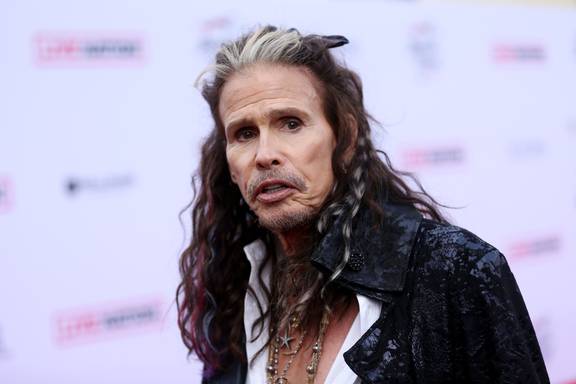
Steven Tyler made a thrilling comeback at the Hollywood Palladium, surprising fans with a powerful performance of Aerosmith classics. He was joined by an all-star lineup, including Chris Robinson, Nuno Bettencourt, Matt Sorum, Mick Fleetwood, and Aerosmith bassist Tom Hamilton, at his Janie’s Fund Grammy viewing party.

This return was especially exciting for fans after Aerosmith’s final tour was canceled in 2023 due to Tyler’s vocal cord injury. Although he briefly appeared on stage with The Black Crowes last spring, this was his first full performance since the injury.

Tyler started the night with Mick Fleetwood and Nuno Bettencourt, performing “More Than Words” before diving into Aerosmith hits like “Toys in the Attic,” “Dream On” (a duet with Lainey Wilson), “Sweet Emotion,” and “Walk This Way.” He closed the show with an electrifying cover of Led Zeppelin’s “Heartbreaker.”


Israel Kamakawiwo’ole possessed a profound mana, a concept in Hawaiian culture signifying one’s energy and essence, which emanated through his mesmerizing singing voice. His journey to musical acclaim began when he and his brother serenaded a graduation party with beat-up ukuleles, leaving the audience spellbound and paving the way for his future as a folk hero in Hawaii.

One of Kamakawiwo’ole’s most iconic recordings is the acoustic medley of “Somewhere Over The Rainbow” and “What A Wonderful World.” Recorded as an afterthought in the early hours of the morning, it became the track that propelled him to international stardom. Despite his imposing physical stature, Kamakawiwo’ole’s gentle demeanor charmed recording studio personnel, and he recorded the medley in a single take, seated on a specially procured steel chair.

The medley, added to his second solo album in 1993, captivated listeners worldwide, featuring prominently in commercials, films, and television shows. EMI reports that Kamakawiwo’ole’s rendition of “Somewhere Over The Rainbow” is the most requested version of the song, surpassing even the classic rendition by Judy Garland. Despite deviating from the original lyrics and melody, Kamakawiwo’ole’s poignant ukulele rendition redefined the timeless classic.

Tragically, Kamakawiwo’ole passed away in 1997 at the age of 38 due to respiratory failure. His popularity in Hawaii was such that his body lay in state at the Hawaii Capitol Building, and his ashes were ceremoniously taken to sea in a traditional voyaging canoe, accompanied by honking horns along the coastline of Oahu, a poignant farewell from the entire island.

In Hawaii, Kamakawiwo’ole is cherished for his music, advocacy for Hawaiian sovereignty, cultural contributions, and his undeniable mana, evident in every note he sang. Beyond Hawaii, he is immortalized for his rendition of “Over The Rainbow,” a testament to his enduring legacy and the profound impact of his music on listeners worldwide. As Milan Bertosa, the engineer who captured Kamakawiwo’ole’s historic recording, aptly remarked, one can choose to focus on the mistakes or simply listen to the song and smile.

At a Disturbed concert, lead singer David Draiman paused the show when he noticed a young girl in the crowd looking scared. Halting the music, he addressed her directly, reassuring her, “I’m very proud of you, you’re awesome. You’re welcome. Are you ok? What’s your name darling.” He introduced her to the crowd as Sophia, comforting her and apologizing for any fright.

This touching moment only grew more profound as David spoke to the entire audience about acceptance. He expressed his joy in seeing diverse fans attending their shows, emphasizing the inclusivity of their concerts. David praised the little girl for singing along to their songs, highlighting the familial atmosphere he aims to foster at their performances.

Reflecting on the concert’s diverse audience, David emphasized that Disturbed concerts are a place of acceptance and love for everyone, regardless of background or beliefs. He encouraged unity, reminding the crowd that they come to their shows to find solace from life’s hardships.

David Draiman, who has led the heavy metal group since 1996, shared this heartwarming moment on TikTok, emphasizing the band’s message of inclusivity and love with the hashtag ‘familyaffair.’

A fan who witnessed the event corroborated the video, explaining that the girl was invited onstage by David but became overwhelmed and started crying. David’s compassionate response exemplifies the humanity behind the music of this remarkable group.

Gene Simmons recently opened up about his colorful history during an interview on Howie Mandel Does Stuff, revealing intimate details about his past relationships and a personal moment of reckoning with his wife, Shannon Tweed.

When asked about long-standing rumors that he had been with 5,000 women, Simmons clarified, “I didn’t sleep with them,” but admitted to keeping meticulous records of his encounters, including names and photographs. “There were lists, books, and all that stuff. But I shamefully—or not—took photos of all of them,” Simmons shared.

In a surprising revelation, Simmons explained that he and Shannon decided to destroy these records. “We took all those big portfolios—there were lots—and we burned them together. Yep.” He added that the emotional process was especially hard on their children, Nick and Sophie. Reflecting on his past behavior, Simmons admitted, “If there would have been a king a—hole with a crown, it would have been yours truly.”

Controversy on Dancing With the Stars

Just days after his candid interview, Simmons made headlines for his appearance as a guest judge on Dancing With the Stars during ‘Hair Metal Night.’ His comments about actress Chandler Kinney caused a stir, as he remarked, “You’ve fogged up my glasses,” and later said, “It’s difficult to look at you and figure out which one is more hot, hot, hot.”

Simmons also faced criticism for giving contestants Phaedra Parks and Val Chmerkovskiy a score of five while other judges awarded sevens. The audience booed, and the contestants appeared confused, especially since Simmons didn’t offer negative feedback.

In response to the backlash, Simmons defended his remarks in an interview with Daily Mail, calling the criticism “clickbait.” He maintained his stance, saying, “The contestants were great. The show was great. Watch the show. It was a lot of fun.”

Thoughts on Beauty and Societal Standards

Simmons further addressed his views on beauty, linking it to societal norms like makeup and high heels. He doubled down on his unapologetic attitude, coining a new hashtag, #gof*ckyourself, which he claimed applies to everyone equally.

Despite the controversies, Simmons remains steadfast in his opinions, showing his characteristic boldness in the face of criticism. Whether it’s addressing his past or sparking debates on live TV, the rock icon continues to make waves

The “27 Club” is a cultural phenomenon that has captivated and perplexed the public for decades. It refers to the unsettling number of renowned musicians and artists who have met untimely deaths at the age of 27. While it’s easy to be drawn into the mystique surrounding this concept, it’s crucial to delve deeper and examine the factors contributing to these tragedies.

The Allure of the Myth

The human mind is naturally inclined to seek patterns and meaning, even in seemingly random events. The deaths of iconic figures like Jimi Hendrix, Janis Joplin, Kurt Cobain, and Amy Winehouse at age 27 have fueled the notion of a “cursed” age, capturing the imagination and sparking countless discussions about the perils of fame and the fragility of genius.

This fascination is further amplified by confirmation bias, our tendency to favor information that confirms pre-existing beliefs. We tend to focus on the artists who died at 27, while overlooking those who passed away at other ages. This selective attention reinforces the idea of 27 as a particularly dangerous age for creative individuals.

Beyond the Myth: Unpacking the Realities

While the “27 Club” may be a compelling narrative, it’s essential to acknowledge the lack of scientific evidence supporting the idea of a heightened risk of death for artists specifically at this age. A 2011 study published in the British Medical Journal debunked this myth, finding no statistically significant increase in mortality rates for musicians at 27.

However, the study did reveal a concerning trend: musicians in their 20s and 30s face a significantly higher risk of death compared to the general population. This elevated risk is likely linked to the unique pressures and lifestyle factors associated with a career in the music industry.

The Complexities of a Life in the Spotlight

The life of a musician, particularly one who achieves mainstream success, can be both exhilarating and incredibly demanding. The constant pressure to create, perform, and maintain a public image can take a toll on mental and physical health. Factors such as:

  • Substance Abuse: The prevalence of drugs and alcohol in the music scene can lead to addiction and its devastating consequences.
  • Mental Health Challenges: The high-pressure environment, coupled with the emotional intensity often associated with artistic expression, can contribute to anxiety, depression, and other mental health issues.
  • Irregular Lifestyles: Touring schedules disrupt sleep patterns, eating habits, and social connections, potentially leading to physical and emotional strain.
  • Lack of Access to Support: The stigma surrounding mental health and the “rock and roll” lifestyle can create barriers to seeking help.

Moving Forward: Protecting Artists and Promoting Well-being

The “27 Club” serves as a poignant reminder of the challenges faced by musicians and artists. Instead of perpetuating a myth, we need to focus on creating a supportive and sustainable environment for those who enrich our lives with their creativity. This includes:

  • Destigmatizing Mental Health: Encouraging open conversations about mental health and providing access to resources and support.
  • Promoting Healthy Lifestyles: Raising awareness about the risks of substance abuse and promoting healthy habits within the music industry.
  • Fostering a Culture of Support: Creating spaces where artists feel comfortable seeking help and prioritizing their well-being.

The tragic deaths of talented individuals at any age are a profound loss. By addressing the underlying issues and promoting a culture of well-being, we can honor their legacies and protect future generations of artists.

It’s true that the tragic deaths of artists like Amy Winehouse, Kurt Cobain, and Janis Joplin at age 27 have contributed to the myth of a “cursed” age for musicians. However, this idea is not supported by statistical evidence.

While these losses are undeniably heartbreaking, it’s important to remember that correlation does not equal causation. Many factors can contribute to premature death, particularly in the high-pressure world of entertainment. Substance abuse, mental health struggles, and the intense demands of touring can take a toll on even the most talented individuals.

Focusing solely on age 27 obscures the broader issue of the challenges faced by musicians and artists across all age groups. It’s crucial to support initiatives that promote mental and physical well-being in the creative community and to address systemic issues that may contribute to these tragedies.

The recent passing of Chance Perdomo is another sad reminder of the fragility of life. However, attributing his death to a numerical pattern ignores the individual circumstances and complexities surrounding each loss.

Instead of perpetuating the myth of the “27 Club,” we should honor the legacies of these artists by advocating for a healthier and more supportive environment for those who dedicate their lives to creating and sharing their art with the world.

The notion that 27 is a particularly dangerous age for musicians is a pervasive myth, often fueled by the tragic deaths of iconic figures like Jimi Hendrix, Janis Joplin, and Kurt Cobain. This misconception, however, is not supported by statistical evidence. A 2011 study published in the British Medical Journal examined mortality rates among musicians and found no significant increase in risk at age 27. While the study did reveal a higher risk of death for musicians in their 20s and 30s compared to the general population, this elevated risk is likely attributable to the lifestyle associated with touring and performing, which often involves substance abuse, irregular sleep patterns, and high levels of stress.

The human tendency to seek patterns and connections, even when they are purely coincidental, contributes to the perpetuation of the “Forever 27 Club” myth. This phenomenon, known as confirmation bias, leads people to focus on information that confirms their pre-existing beliefs while ignoring contradictory evidence. For instance, the deaths of musicians like Otis Redding, Gram Parsons, and Nick Drake at age 26 are often overlooked, while the deaths of those who died at 27 are highlighted to support the idea of a “cursed” age.

In reality, 27 is statistically no more dangerous for musicians than any other age. The increased risk observed in musicians in their 20s and 30s is a broader issue linked to the demands and pressures of the music industry. Addressing this elevated risk requires a focus on promoting mental health and well-being within the music community, rather than fixating on an arbitrary age.

The “Forever 27 Club” serves as a cautionary tale, reminding us of the importance of critical thinking and evidence-based reasoning. While the premature deaths of talented musicians are undoubtedly tragic, attributing them to a mythical curse obscures the real issues that need to be addressed to protect the health and well-being of artists.

Any admirer of Lou Reed’s music would readily declare that the ex-member of The Velvet Underground, a pioneering rock band, has a treasure trove of fantastic songs to his name.

This broad selection makes picking out just one as the pinnacle of his artistry a daunting task. Nevertheless, for the musician himself, there was no quandary when it came to naming his crowning achievement: “Walk on the Wild Side.”

As revealed in the 2001 documentary titled Classic Albums: Lou Reed: Transformer, Reed was candid about the inception of this unique track.

The birthplace of the song was the 1956 novel, A Walk on the Wild Side, penned by the notable American writer Nelson Algren.

Lou Reed drew inspiration from Algren’s narrative, using it as a stepping stone to craft his musical storytelling.

However, Reed’s creative process didn’t stop there. As the melody of “Walk on the Wild Side” evolved and matured, Reed started to interweave elements of his personal experiences into the narrative.

Each verse of the song introduced a persona from his life – the “superstars” from Andy Warhol’s legendary New York studio, The Factory. Names like Holly Woodlawn, Candy Darling, Joe Dallesandro, Joe Campbell, and Jackie Curtis were immortalized in the lyrics.

Reed once confessed in an interview with Classic Rock Stories, “If I were to step back from music now, ‘Walk on the Wild Side’ is the song I’d want to be remembered by. It’s my magnum opus.”

Originally conceived as a musical theatre piece, the song didn’t quite transpire as Reed initially envisioned.

Despite this divergence from his original concept, Reed elected to press on. “The theatrical piece didn’t materialize, but I wasn’t about to let the time and energy I invested in the track go to waste,” Reed asserted.

This determination proved fortuitous, as thousands of music enthusiasts today gratefully laud his resolve. The decision led to the creation of one of the most distinctive, beautiful tracks, a standout gem in his vast and successful discography.

In the swirling vortex of Fleetwood Mac’s creative zenith lay a tapestry of breathtaking disorder and raw beauty.

As if drawn from the depths of their souls, the band’s timeless classics emerged, each born from the crucible of personal anguish and heartache during the recording of Rumours.

Yet, an even more scintillating chapter awaited them while crafting the enigmatic album Tusk.

Empowered by newfound resources, Fleetwood Mac established a sonic sanctuary, a melting pot of boundless experimentation.

Each luminary songwriter retreated into their distinct corners of inspiration, echoing the mesmerizing tapestry The Beatles wove on The White Album, morphing into sidemen on each other’s symphonies.

The ethereal anthem of this saga was Stevie Nicks’ haunting ballad, ‘Sara,’ an ode to her unborn child conceived amidst turbulent choices.

Her soulful vocals entreated her lover to linger just a fleeting moment longer. Yet, harmonizing with the piano’s tender grace proved a herculean task for the rhythmic virtuoso, Mick Fleetwood.

Renowned as a drumming powerhouse in the British blues epoch, Fleetwood faced an audacious metamorphosis in the band’s evolution towards mellower sounds, driven by Nicks and Buckingham’s artistry.

In candid interviews, Mick Fleetwood delved into the relentless pursuit of perfecting ‘Sara’s’ rhythm, a drummer’s riddle demanding delicate brushwork and unyielding softness.

The studio witnessed his fervent toil, dripping sweat, as if time itself were subservient to his beat. Three days it took, before the celestial cadence embraced Stevie Nicks’ haunting verses, akin to an ancient incantation.

Fleetwood’s zealous pursuit of sonic perfection was no stranger to the annals of their legend. The drumming maestro had labored extensively to birth the enigmatic off-kilter rhythm of ‘Go Your Own Way’ during the Rumours era.

Beyond ‘Sara,’ Tusk unfurled a kaleidoscope of auditory wonders, a double album opus traversing a labyrinth of musical landscapes. Emboldened by boundless resources, Buckingham even recorded backing vocals mid-pushup, infusing a dash of eccentricity into the creative cosmos.

Unyielding in their artistic pilgrimage, Fleetwood Mac crafted an ethereal reverie during the late 1970s. ‘Sara’ emerged as the quintessence of that magical epoch, an otherworldly hymn, nearly ecclesiastical in its divine essence.

Stevie Nicks, the sorceress of melody, paid homage to her muse through this haunting tapestry woven by the indefatigable Mick Fleetwood. Their symphony, an eternal tribute to the harmonious chaos of Fleetwood Mac’s unforgettable odyssey.

The Beatles achieved an impressive feat, securing a total of 20 #1 hits on the US Billboard Hot 100. Their songwriting partnership, led by John Lennon and Paul McCartney, not only set records but also established a new trend in the music industry.

They became pioneers in writing and performing their own songs, paving the way for countless bands to follow suit.

Let’s take a closer look at some tracks credited to Lennon-McCartney, which were either solely written by Lennon or with a little assistance from McCartney.

Ticket To Ride (Help!, 1965)

The origin of this song’s creation is a bit perplexing. Lennon mentioned that McCartney’s involvement was limited to “the way Ringo played the drums.”

However, McCartney himself claimed they spent a full three-hour songwriting session together, crafting the lyrics, harmonies, and all the intricate parts.

I Feel Fine (B-Side “She’s A Woman”, 1964)

While recording “Eight Days a Week,” Lennon came up with the catchy riff for “I Feel Fine.” Initially, he doubted the song’s potential, but after giving it a try, they realized it had the charm of an A-side track, prompting its release.

All You Need Is Love (B-Side “Baby, You’re A Rich Man”, 1967)

As a powerful anthem of the Summer of Love, this song became part of “Our World,” the first live international satellite television production.

Paul McCartney described it as primarily John’s creation, although each band member contributed some impromptu ad-libs during its recording. The simple chorus conveys a profound message, while the verses carry a more intricate meaning that McCartney admittedly struggled to grasp fully.

A Hard Day’s Night (A Hard Day’s Night, 1964)

Ringo Starr famously coined the term “A Hard Day’s Night” after an exhausting day and night of work. It was suggested by director Dick Lester and later used as the title for the movie and song. The name had originated from one of Ringo’s off-the-cuff remarks, which became known as a “Ringo-ism.”

Help! (Help!, 1965)

John Lennon composed this song during what he called his “fat Elvis period,” where he felt overwhelmed and lost. It reflects on his younger days and the ease of life compared to the challenges he was facing. McCartney contributed to the song, providing a countermelody that complemented John’s emotional expression.

Come Together (Abbey Road, 1969)

Lennon wrote “Come Together” as part of Timothy Leary’s campaign for governor of California. It remains one of his personal favorites, boasting a funky and bluesy style that showcases his impressive vocal performance.

The Beatles’ music continues to resonate with audiences worldwide, and their songwriting legacy remains an integral part of music history.